Loading...
Done
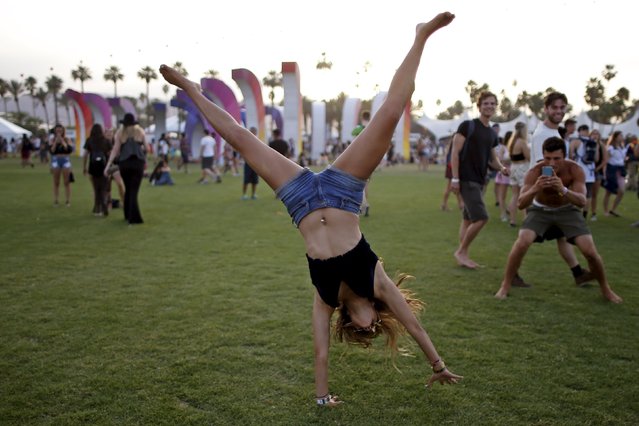
A woman cartwheels through the Coachella Valley Music and Arts Festival in Indio, California April 10, 2015. (Photo by Lucy Nicholson/Reuters)

A woman cartwheels through the Coachella Valley Music and Arts Festival in Indio, California April 10, 2015. (Photo by Lucy Nicholson/Reuters)
Details
12 Apr 2015 07:41:00
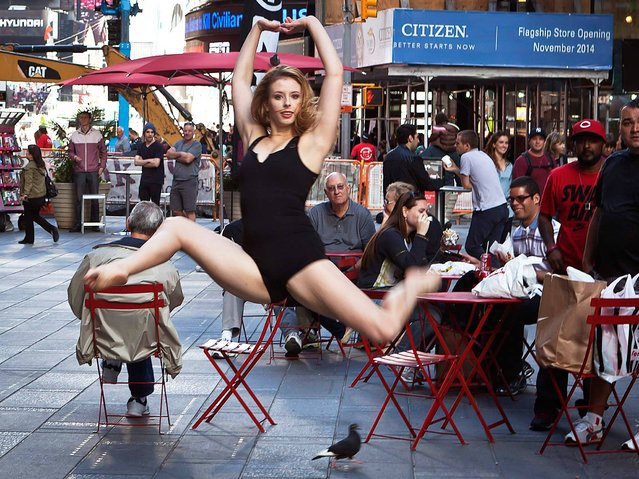
A dancer poses for a photograph as part of the “Dance as Art” photo project in Times Square in New York, on September 22, 2014. (Photo by Carlo Allegri/Reuters)

A dancer poses for a photograph as part of the “Dance as Art” photo project in Times Square in New York, on September 22, 2014. (Photo by Carlo Allegri/Reuters)
Details
26 Oct 2014 12:54:00
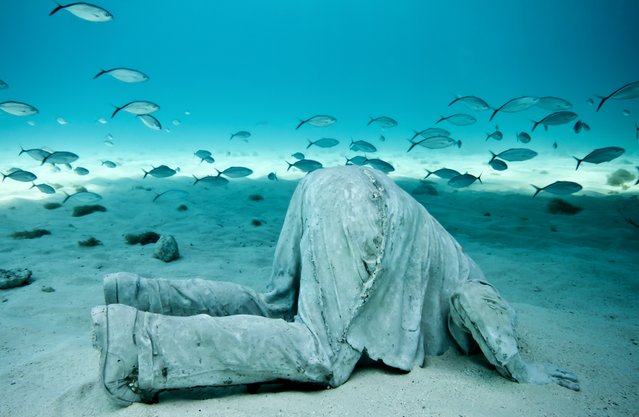
“The banker”. Underwater Sculpture, Museo Subacuático de Arte, Cancun. (Photo by Jason deCaires Taylor/UnderwaterSculpture)

“The banker”. Underwater Sculpture, Museo Subacuático de Arte, Cancun. (Photo by Jason deCaires Taylor/UnderwaterSculpture)
Details
28 Mar 2014 11:28:00
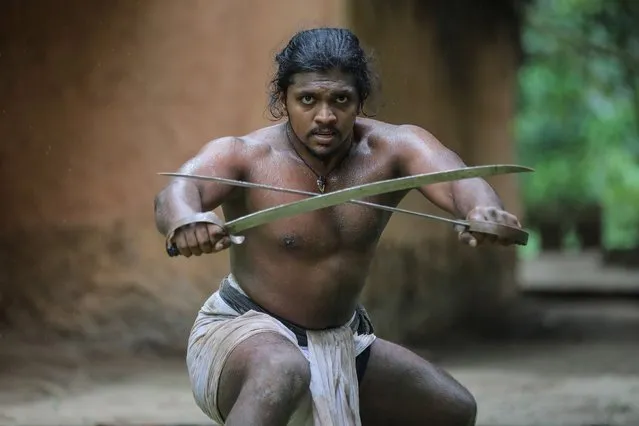
A student of the Sri Lankan ancient martial art “Angampora” performs during a practice session at the angam maduwa or fighting field, in Korathota, a suburb of Colombo, Sri Lanka, 07 September 2022. Sri Lanka's ancient martial art, Angampora, is thought to be thousands of years old. Anga translates to “body parts” and Angampora is a fighting art that uses body parts. Martial arts practitioners in Angampora were mostly in the king's service, and they were tasked with protecting the king and his kingdom. Angampora was practiced in secret for most centuries because the British, who colonized Sri Lanka, banned it in 1818 after seeing it as a threat. (Photo by Chamila Karunarathne/EPA/EFE)

A student of the Sri Lankan ancient martial art “Angampora” performs during a practice session at the angam maduwa or fighting field, in Korathota, a suburb of Colombo, Sri Lanka, 07 September 2022. Sri Lanka's ancient martial art, Angampora, is thought to be thousands of years old. Anga translates to “body parts” and Angampora is a fighting art that uses body parts. Martial arts practitioners in Angampora were mostly in the king's service, and they were tasked with protecting the king and his kingdom. Angampora was practiced in secret for most centuries because the British, who colonized Sri Lanka, banned it in 1818 after seeing it as a threat. (Photo by Chamila Karunarathne/EPA/EFE)
Details
14 Oct 2022 04:47:00
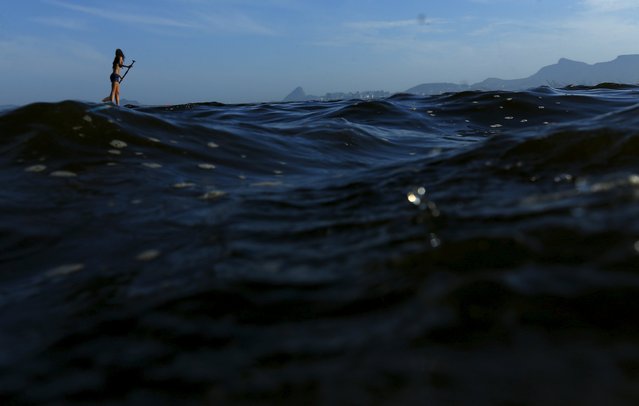
A girl paddles on her stand-up board on the waters of Guanabara bay at Bica beach in Rio de Janeiro Brazil, January 10, 2016. (Photo by Ricardo Moraes/Reuters)

A girl paddles on her stand-up board on the waters of Guanabara bay at Bica beach in Rio de Janeiro Brazil, January 10, 2016. Few features capture the beauty, or the problems, of one of the world's most dramatic urban landscapes like Guanabara Bay - the finger-like inlet that forms the shoreline and harbor for Rio de Janeiro. The bay, which carves into southeast Brazil from the Atlantic Ocean, literally gave Rio its name when Portuguese mariners mistook it for a “rio”, or “river”. Four centuries later, the bay is preparing to welcome another sort of seafarer – Olympic sailors, who will navigate the bay when the 2016 Rio Olympics kick off in August. (Photo by Ricardo Moraes/Reuters)
Details
28 Apr 2016 12:13:00
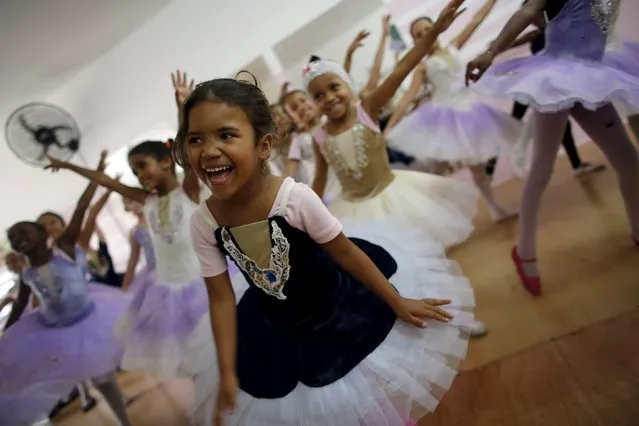
Young girls take ballet lessons at the New Dreams dance studio in the Luz neighborhood known to locals as Cracolandia (Crackland) in Sao Paulo, Brazil, August 14, 2015. (Photo by Nacho Doce/Reuters)

Young girls take ballet lessons at the New Dreams dance studio in the Luz neighborhood known to locals as Cracolandia (Crackland) in Sao Paulo, Brazil, August 14, 2015. For the young girls learning to jump and plie, the dance studio provides a way forward and out of the difficult environment they have grown up in. Brazil is one of the world's highest consuming countries of crack cocaine, and Cracolandia, or “Crack Land”, located in the outskirts of Sao Paulo, is one of the most intense and brutal hubs. (Photo by Nacho Doce/Reuters)
Details
18 Aug 2015 13:59:00
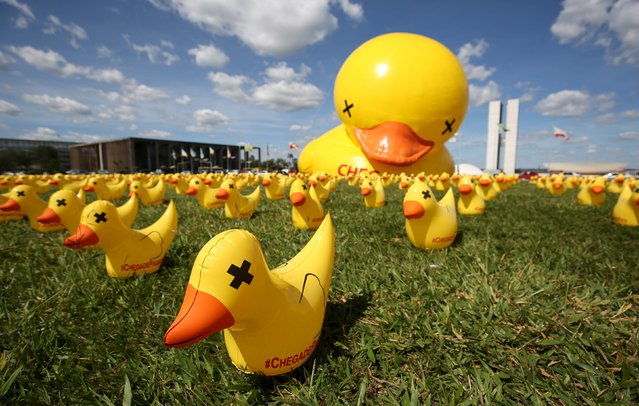
Inflatable dolls in the shape of ducks are seen in front of the National Congress during a protest against tax increases in Brasilia, Brazil, March 29, 2016. The campaign “I will not pay the Duck” is organized by the Federation of Industries of Sao Paulo (FIESP) and uses the duck symbol in reference to industries that pay high taxes. (Photo by Gregg Newton/Reuters)

Inflatable dolls in the shape of ducks are seen in front of the National Congress during a protest against tax increases in Brasilia, Brazil, March 29, 2016. The campaign “I will not pay the Duck” is organized by the Federation of Industries of Sao Paulo (FIESP) and uses the duck symbol in reference to industries that pay high taxes. (Photo by Gregg Newton/Reuters)
Details
30 Mar 2016 11:27:00
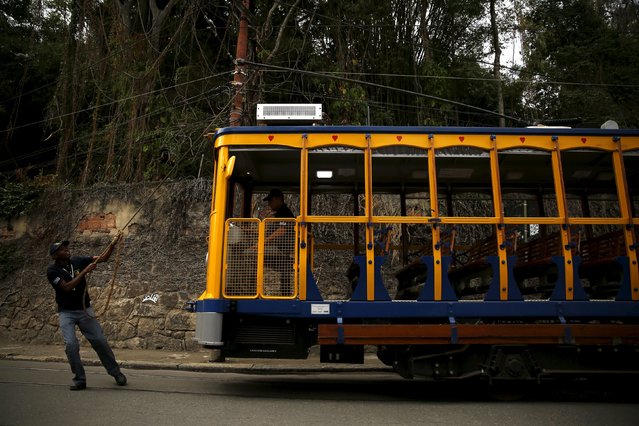
A worker manually changes the direction of the bonde, the typical tram line in Santa Teresa neighborhood, using a rope in Rio de Janeiro, Brazil, September 9, 2015. (Photo by Pilar Olivares/Reuters)

A worker manually changes the direction of the bonde, the typical tram line in Santa Teresa neighborhood, using a rope in Rio de Janeiro, Brazil, September 9, 2015. The Santa Teresa bonde, called “Bondinho” in Portuguese, is running with passengers as a part of a test period, after the service was suspended in 2011 following an accident that killed six people, according to residents. (Photo by Pilar Olivares/Reuters)
Details
11 Sep 2015 12:53:00