Gifts for the homeless are handed out during Santa Bar Crawl, Oxford, England on December 5, 2017. Here: Oxford university students on a Santa-themed pub crawl. (Photo by Greg Blatchford/Rex Features/Shutterstock)
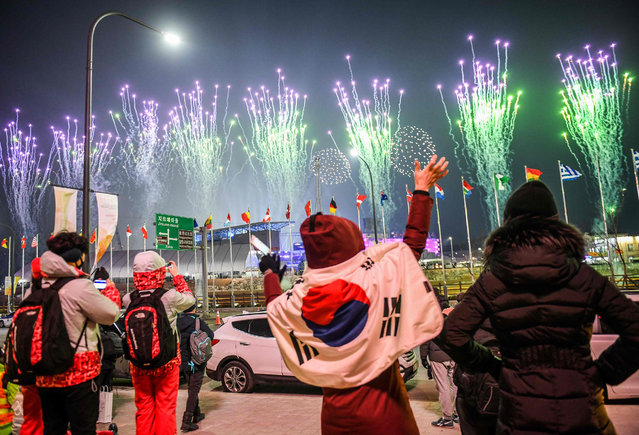
People with a South Korean flag waves as fireworks get off outside the stadium during the opening ceremony of the Pyeongchang 2018 Winter Olympic Games at the Pyeongchang Stadium on February 9, 2018. (Photo by Martin Bernetti/AFP Photo)
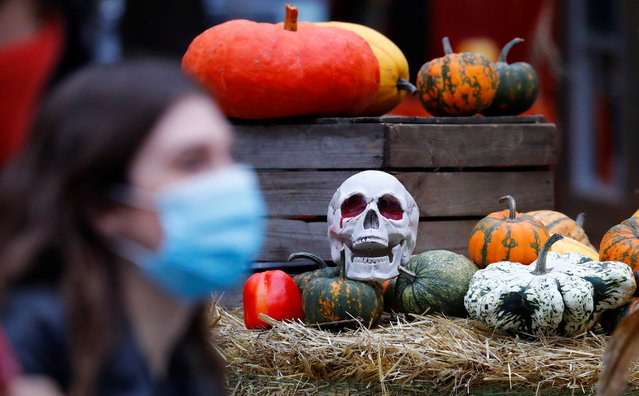
Pumpkins and a mock up skull are seen ahead of Halloween at Wilmersdorfer Strasse shopping street, as the coronavirus disease (COVID-19) outbreak continues, in Berlin, Germany, October 26, 2020. (Photo by Fabrizio Bensch/Reuters)
Michelle Rodriguez attends the De Grisogono Party during the 71st annual Cannes Film Festival at on May 15, 2018 in Antibes, France. (Photo by INSTARimages.com)
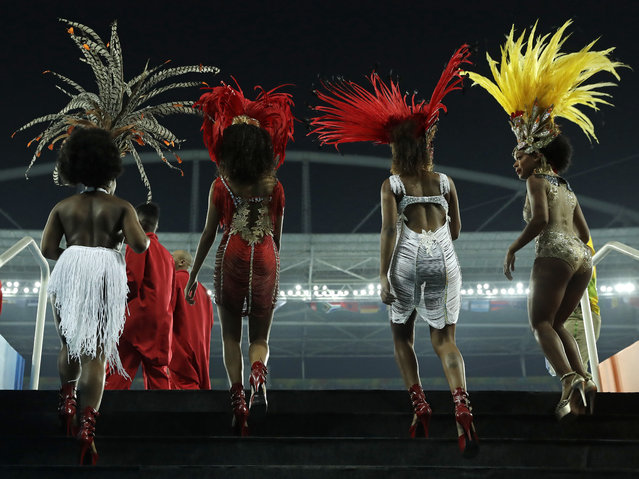
Samba dancers arrive to perform ahead of the athletics competitions of the 2016 Summer Olympics at the Olympic stadium in Rio de Janeiro, Brazil, Sunday, August 14, 2016. (Photo by Jae C. Hong/AP Photo)
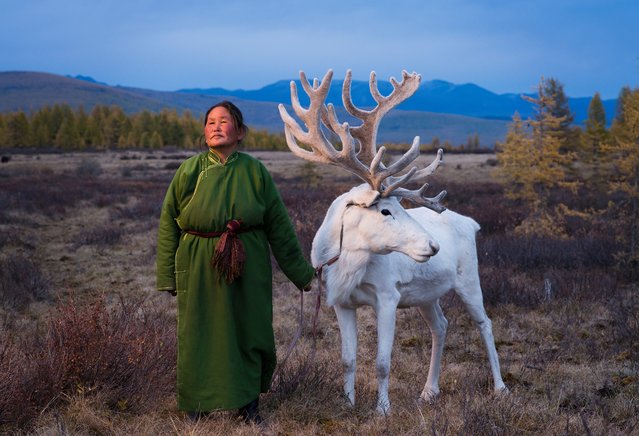
Saintsetseg Jambaldorj, a member of the Tsaatan ethnic minority, one of the last remaining groups of nomadic reindeer herders in East Taiga, Mongolia, wearing a traditional deel, on July 5, 2016. (Photo by Madoka Ikegami/Barcroft Images)
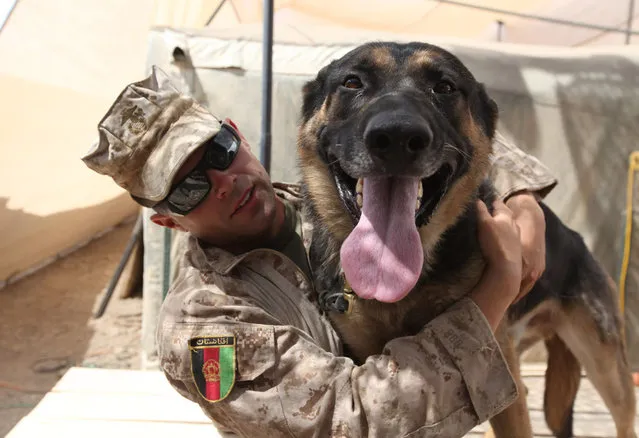
Throughout the course of the long war in Afghanistan, Coalition troops have relied on thousands of military working dogs to help keep them safe, and make their jobs easier. The dogs are trained to detect explosives, to find illegal drugs, to search for missing comrades, or target enemy combatants. Not only are they active on the front lines, but behind the lines they serve as therapy dogs, service dogs, and loyal companions. They also share the same risks as the ground troops, suffering injuries and sometimes death on the battlefields. Gathered here are images of these dogs and their handlers in Afghanistan and back home, from over the past several years, part of the ongoing series here on Afghanistan.