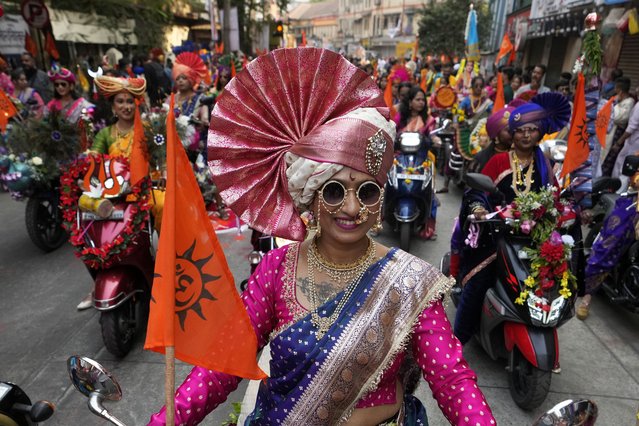
Women dressed in traditional attire participate in a procession to mark Gudi Padwa or the Marathi New Year in Mumbai, India, Sunday, March 30, 2025. (Photo by Rajanish Kakade/AP Photo)
American socialite and actress Karrueche Tran at Revolve Festival: The Eighth Annual Fashion, Music and Lifestyle Event on April 12, 2025 in Thermal, California. (Photo by Chad Salvador/Rex Features/Shutterstock)
A member of the Unidos do Viradouro samba school performs during the last night of the Carnival parade at the Marques de Sapucai Sambadrome in Rio de Janeiro, Brazil, on February 13, 2024. (Photo by Pablo Porciuncula/AFP Photo)
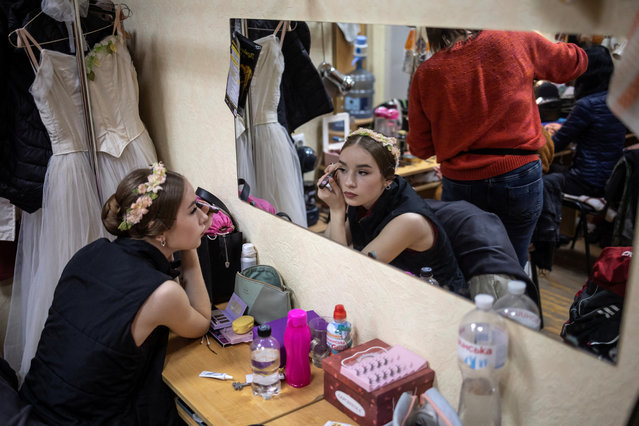
A ballerina puts makeup on before practising for the revival of the classical ballet “Chopiniana”, the first since Russia's full-scale invasion of Ukraine in 2022, in the underground area of the National Academic Opera and Ballet Theatre amid ongoing attacks, in Kharkiv, Ukraine, on April 27, 2025. (Photo by Marko Djurica/Reuters)
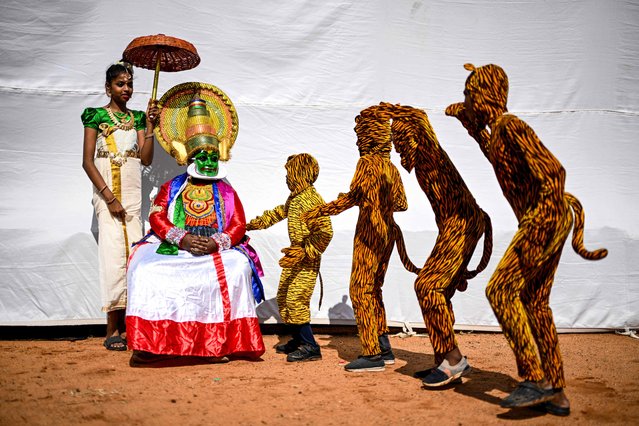
A Kathakali classical dancer (2L) watches artists rehearse the traditional folk dance Pulikkali (Tiger Dance) as they wait backstage before their performance at a cultural festival in Chennai on July 12, 2025. (Photo by R. Satish Babu/AFP Photo)
Gdańsk is a Polish city on the Baltic coast. The city's professional football club is Lechia Gdansk. Founded in 1945, they play in the Ekstraklasa, Poland's top division. The European Football Championship will take place in Gdansk 2012.
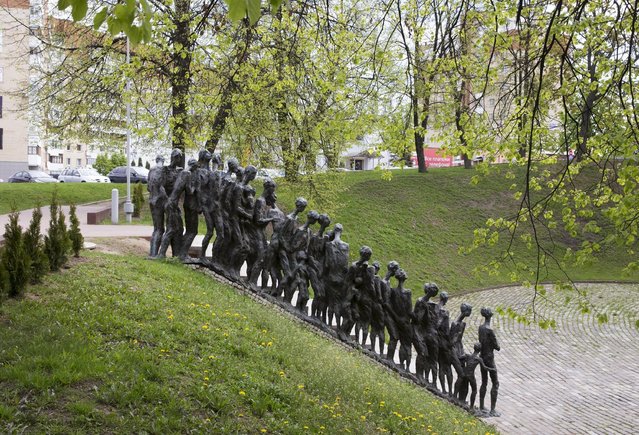
The “Yama” (Pit) memorial is seen in the centre of Minsk May 5, 2015. The memorial is dedicated of the destruction of the Minsk ghetto during World War Two, when several hundred thousands of Jews were slaughtered. Belarus will mark Victory Day on May 9, the 70th anniversary of the Soviet Union's victory over Nazi Germany. (Photo by Vasily Fedosenko/Reuters)
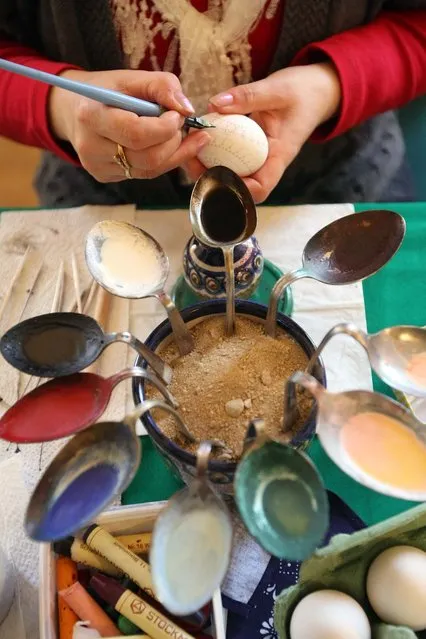
A Sorb egg painter decorates an Easter egg while using bent spoons full of melted wax as coloring at the annual Easter egg market on March 16, 2013 in Schleife, Germany. Easter is a particularly important time of year for Sorbs, a Slavic minority in eastern Germany, and the period includes the tradition of painting Easter eggs that include visual elements intended to ward off evil. Many Sorbs still speak Sorbian, a language closely related to Polish and Czech. (Photo by Adam Berry)