Loading...
Done
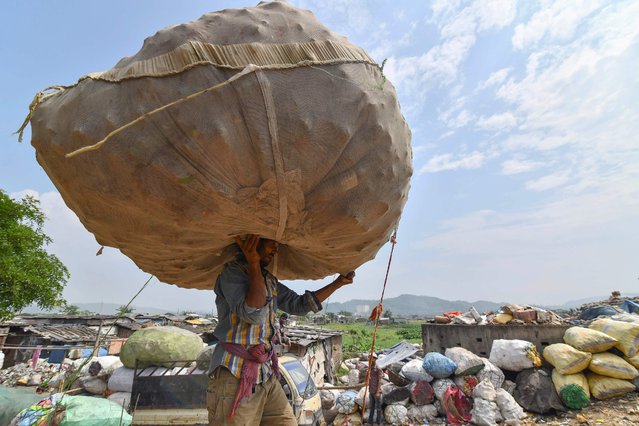
An Indian labourer carries a sack of plastic bottles on his head near one of the largest disposal sites in north-east India, ahead of the “World Environment Day” in Boragaon area of Guwahati on June 4, 2018. World Environment Day is marked annually on June 5, and aims at promoting awareness and action to protect the environment. (Photo by Biju Boro/AFP Photo)

An Indian labourer carries a sack of plastic bottles on his head near one of the largest disposal sites in north-east India, ahead of the “World Environment Day” in Boragaon area of Guwahati on June 4, 2018. World Environment Day is marked annually on June 5, and aims at promoting awareness and action to protect the environment. (Photo by Biju Boro/AFP Photo)
Details
12 Jun 2018 00:03:00
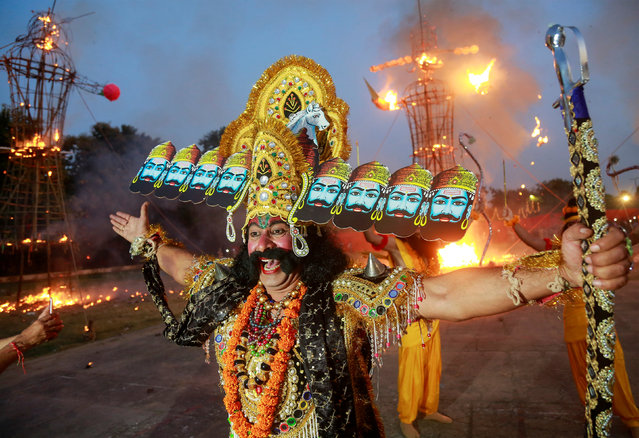
An artist dressed as demon King Ravana reacts as he participates in Vijaya Dashmi, or Dussehra festival celebrations in Chandigarh, India October 19, 2018. (Photo by Ajay Verma/Reuters)

An artist dressed as demon King Ravana reacts as he participates in Vijaya Dashmi, or Dussehra festival celebrations in Chandigarh, India October 19, 2018. (Photo by Ajay Verma/Reuters)
Details
26 Oct 2018 00:05:00
A young girl sits on a mat, as worshippers arrive to pray to mark the Muslim Eid-al-Adha (Festival of Sacrifices) without observationg precautionary measures to curb the spread of COVID-19, in Kara, Ogun State in southwest Nigeria, on July 31, 2020. Nigerian Muslim faithfuls joined their counterparts across the world to celebrate Eid-El-Adha, Islamic festival of sacrifice. (Photo by Pius Utomi Ekpei/AFP Photo)

A young girl sits on a mat, as worshippers arrive to pray to mark the Muslim Eid-al-Adha (Festival of Sacrifices) without observationg precautionary measures to curb the spread of COVID-19, in Kara, Ogun State in southwest Nigeria, on July 31, 2020. Nigerian Muslim faithfuls joined their counterparts across the world to celebrate Eid-El-Adha, Islamic festival of sacrifice. (Photo by Pius Utomi Ekpei/AFP Photo)
Details
21 Aug 2020 00:03:00
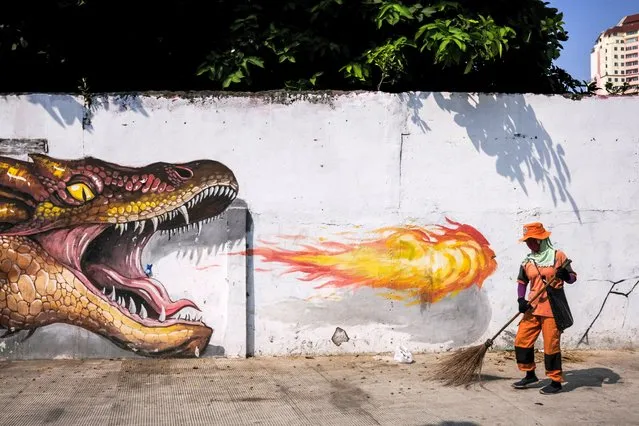
A worker wearing a protective face mask, cleans up the road in front of a mural in Jakarta, Indonesia, 24 July 2020. Indonesian government has assigned a new team to rebuild the national economy amid the coronavirus pandemic. The country has started to ease COVID-19 lock-down restrictions in an effort to restart the economies and help people in their daily routines after the outbreak of coronavirus pandemic. (Photo by Mast Irham/EPA/EFE)

A worker wearing a protective face mask, cleans up the road in front of a mural in Jakarta, Indonesia, 24 July 2020. Indonesian government has assigned a new team to rebuild the national economy amid the coronavirus pandemic. The country has started to ease COVID-19 lock-down restrictions in an effort to restart the economies and help people in their daily routines after the outbreak of coronavirus pandemic. (Photo by Mast Irham/EPA/EFE)
Details
06 Sep 2020 00:05:00
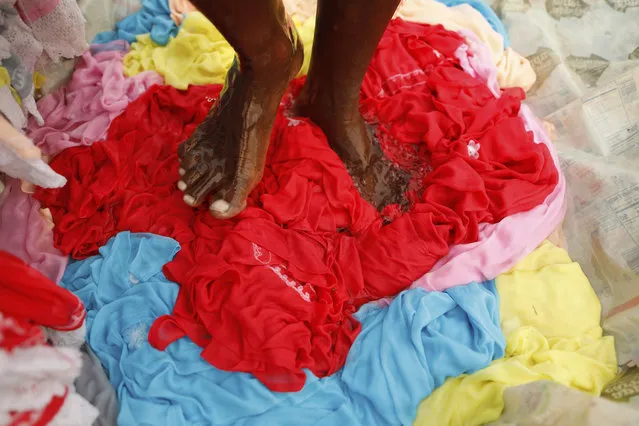
A dhobi, or a washerman washes cloths on the banks of the River Gomti in Lucknow, India, Saturday, September 12, 2020. Dhobis are traditional laundry workers who wash clothes by hand and dry them in the sun, an occupation which has been in existence for generations. Most cities in India have a Dhobi Ghat, or washermen's area, where the city's pile of clothes is laundered. This practice is still popular in India, despite of modern technology. Around 1,000 families work in Lucknow's Dhobi Ghat. However, in light of the novel coronavirus, their wages have decreased drastically. With each family earning around US$100-200 per month. (Photo by Rajesh Kumar Singh/AP Photo)

A dhobi, or a washerman washes cloths on the banks of the River Gomti in Lucknow, India, Saturday, September 12, 2020. Dhobis are traditional laundry workers who wash clothes by hand and dry them in the sun, an occupation which has been in existence for generations. Most cities in India have a Dhobi Ghat, or washermen's area, where the city's pile of clothes is laundered. This practice is still popular in India, despite of modern technology. Around 1,000 families work in Lucknow's Dhobi Ghat. However, in light of the novel coronavirus, their wages have decreased drastically. With each family earning around US$100-200 per month. (Photo by Rajesh Kumar Singh/AP Photo)
Details
25 Sep 2020 00:03:00
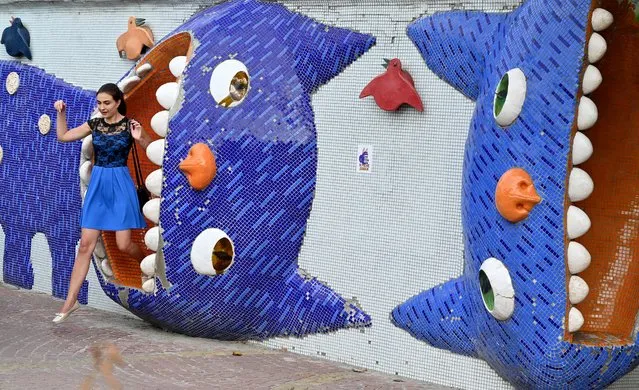
A woman jumps out of a street art object in the center of the Ukrainian capital of Kiev during a warm autumn day on September 25, 2020. (Photo by Sergei Supinsky/AFP Photo)

A woman jumps out of a street art object in the center of the Ukrainian capital of Kiev during a warm autumn day on September 25, 2020. (Photo by Sergei Supinsky/AFP Photo)
Details
09 Oct 2020 00:05:00
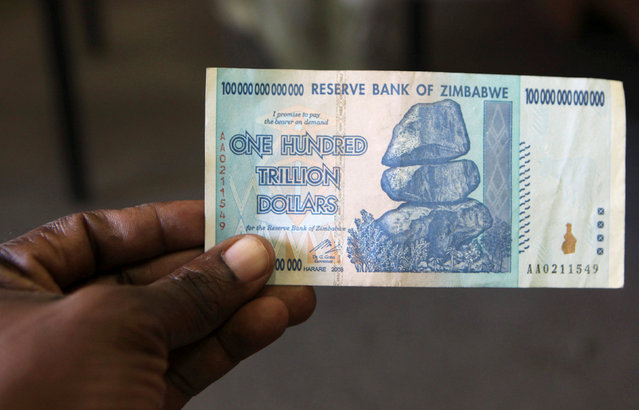
A man holds up for a picture a one hundred trillion Zimbabwean dollars note inside a shop in Harare, Zimbawe, June 12, 2015. (Photo by Philimon Bulawayo/Reuters)

A man holds up for a picture a one hundred trillion Zimbabwean dollars note inside a shop in Harare, Zimbawe, June 12, 2015. Hyperinflation in Zimbabwe was a period of currency instability that began in the late 1990s shortly after the confiscation of private farms from landowners, towards the end of Zimbabwean involvement in the Second Congo War. During the height of inflation from 2008 to 2009, it was difficult to measure Zimbabwe's hyperinflation because the government of Zimbabwe stopped filing official inflation statistics. However, Zimbabwe's peak month of inflation is estimated at 79.6 billion percent in mid-November 2008. (Photo by Philimon Bulawayo/Reuters)
Details
25 Oct 2016 10:08:00
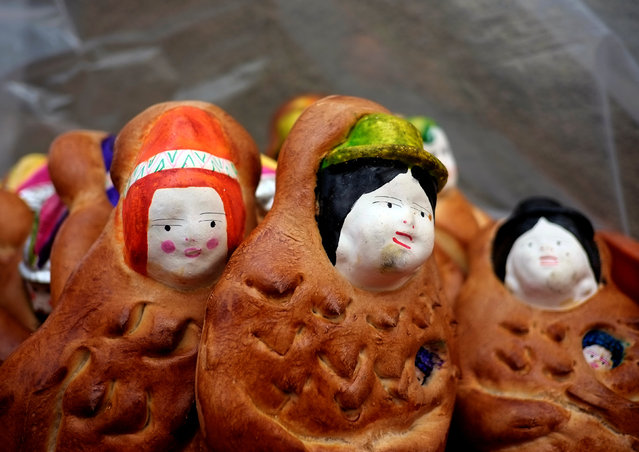
“T'antawawas” (children's bread) are displayed in a popular market to commemorate All Saints Day in La Paz, October 30, 2016. (Photo by David Mercado/Reuters)

“T'antawawas” (children's bread) are displayed in a popular market to commemorate All Saints Day in La Paz, October 30, 2016. (Photo by David Mercado/Reuters)
Details
01 Dec 2016 12:36:00