Loading...
Done
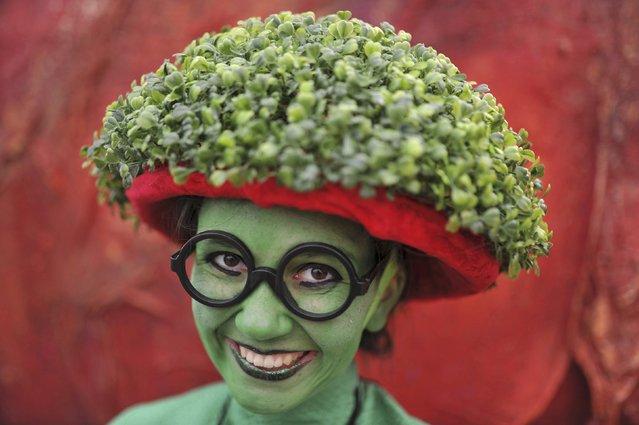
Caoimhe Cooburn-Gray poses for a picture on St. Patrick's day in Dublin, Ireland March 17, 2016. (Photo by Clodagh Kilcoyne/Reuters)

Caoimhe Cooburn-Gray poses for a picture on St. Patrick's day in Dublin, Ireland March 17, 2016. Saint Patrick's Day is a cultural and religious celebration held on 17 March, the traditional death date of Saint Patrick (c. AD 385–461), the foremost patron saint of Ireland. Celebrations generally involve public parades and festivals, céilithe, and the wearing of shamrocks, as well as green or orange attire. (Photo by Clodagh Kilcoyne/Reuters)
Details
18 Mar 2016 12:39:00
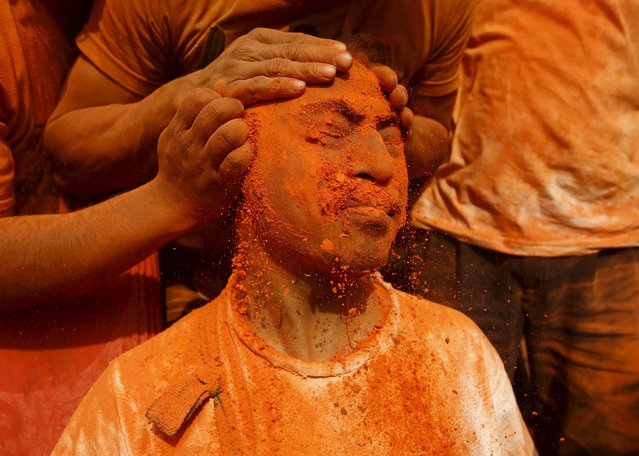
A devotee is smeared with a vermillion powder while celebrating the “Sindoor Jatra” vermillion powder festival at Thimi, in Bhaktapur, Nepal, April 14, 2016. (Photo by Navesh Chitrakar/Reuters)

A devotee is smeared with a vermillion powder while celebrating the “Sindoor Jatra” vermillion powder festival at Thimi, in Bhaktapur, Nepal, April 14, 2016. Devotees mark the festival by playing traditional drums, singing, dancing and carrying chariot of various deities around town while throwing vermillion powder to welcome the advent of spring and the New Year. (Photo by Navesh Chitrakar/Reuters)
Details
15 Apr 2016 11:30:00
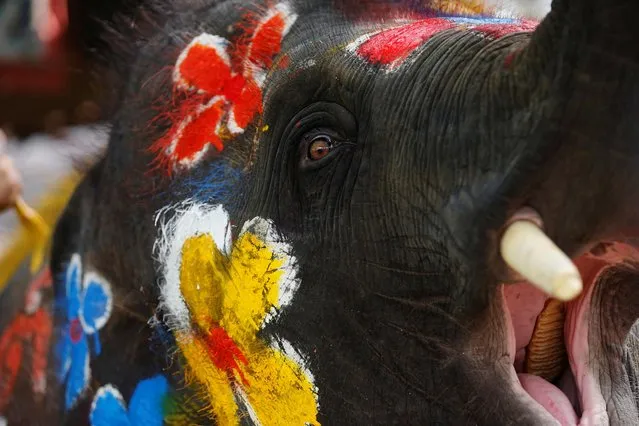
An elephant calf yawns as mahouts paint elephants ahead of celebrations for the water festival of Songkran in Ayutthaya, Thailand on April 11, 2019. (Photo by Soe Zeya Tun/Reuters)

An elephant calf yawns as mahouts paint elephants ahead of celebrations for the water festival of Songkran in Ayutthaya, Thailand on April 11, 2019. The annual elephant Songkran event is held to promote the tourism industry. Songkran Festival is held also to mark the Thai traditional New Year falling annually on 13 April, and it is celebrated with people splashing water and putting powder on each other faces as a symbolic sign of cleansing and washing away the sins from the past year. (Photo by Soe Zeya Tun/Reuters)
Details
13 Apr 2019 00:05:00
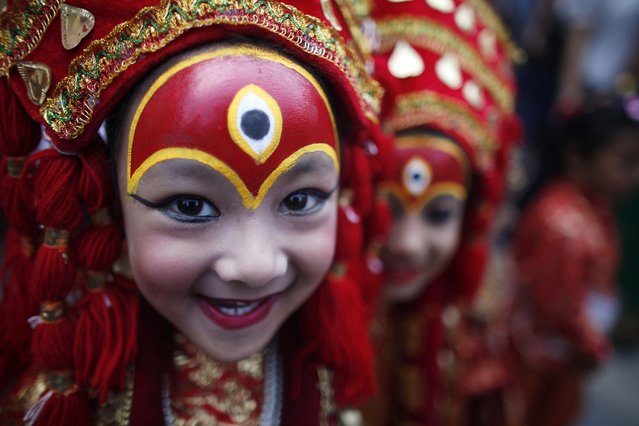
A young Nepalese girl dressed as a Kumari or living Goddess, smiles for camera as she waits for Kumari puja at Hanuman Dhoka, Basantapur Durbar Square in Katmandu, Nepal, Tuesday, Sept 17, 2013. More than hundred girls under the age of nine gathered for Kumari puja, a tradition of worshiping young pre-pubescent girls as manifestations of the divine female energy. The ritual holds a strong religious significance in Newar community. It is a community affair held primarily to save small girls from diseases and bad luck in the years to come. (AP Photo/Niranjan Shrestha)

The festival marks the end of the monsoon season and beginning of autumn. More than hundred girls under the age of nine gathered for the tradition of worshiping young pre-pubescent girls as manifestations of the divine female energy. The ritual holds a strong religious significance in Newar community. It is a community affair held primarily to save small girls from diseases and bad luck in the years to come. Photo: A young Nepalese girl dressed as a Kumari or living Goddess, smiles for camera as she waits for Kumari puja at Hanuman Dhoka, Basantapur Durbar Square in Katmandu, Nepal, Tuesday, September 17, 2013. (Photo by Niranjan Shrestha/AP Photo)
Details
18 Sep 2013 09:33:00
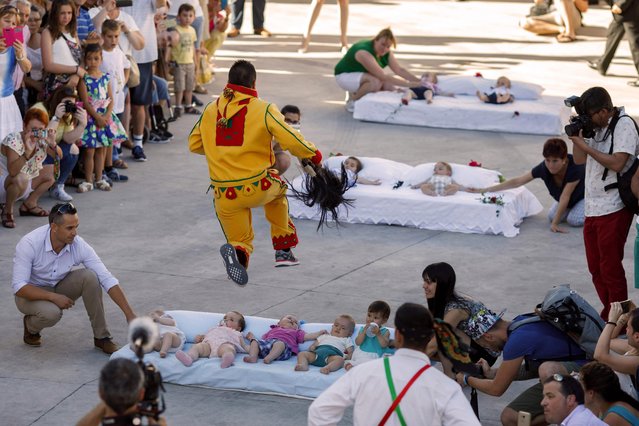
A man dressed up as the devil jumps over babies lying on a mattress in the street during “El Colacho”, the “baby jumping festival” in the village of Castrillo de Murcia, near Burgos on June 18, 2017. Baby jumping (El Colacho) is a traditional Spanish practice dating back to 1620 that takes place annually to celebrate the Catholic feast of Corpus Christi. During the act – known as El Salto del Colacho (the devil's jump) or simply El Colacho – men dressed as the Devil jump over babies born in the last twelve months of the year who lie on mattresses in the street. (Photo by Cesar Manso/AFP Photo)

A man dressed up as the devil jumps over babies lying on a mattress in the street during “El Colacho”, the “baby jumping festival” in the village of Castrillo de Murcia, near Burgos on June 18, 2017. Baby jumping (El Colacho) is a traditional Spanish practice dating back to 1620 that takes place annually to celebrate the Catholic feast of Corpus Christi. During the act – known as El Salto del Colacho (the devil's jump) or simply El Colacho – men dressed as the Devil jump over babies born in the last twelve months of the year who lie on mattresses in the street. (Photo by Cesar Manso/AFP Photo)
Details
20 Jun 2017 07:29:00
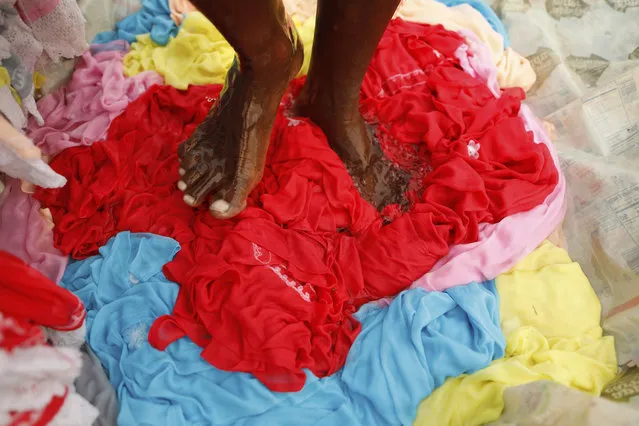
A dhobi, or a washerman washes cloths on the banks of the River Gomti in Lucknow, India, Saturday, September 12, 2020. Dhobis are traditional laundry workers who wash clothes by hand and dry them in the sun, an occupation which has been in existence for generations. Most cities in India have a Dhobi Ghat, or washermen's area, where the city's pile of clothes is laundered. This practice is still popular in India, despite of modern technology. Around 1,000 families work in Lucknow's Dhobi Ghat. However, in light of the novel coronavirus, their wages have decreased drastically. With each family earning around US$100-200 per month. (Photo by Rajesh Kumar Singh/AP Photo)

A dhobi, or a washerman washes cloths on the banks of the River Gomti in Lucknow, India, Saturday, September 12, 2020. Dhobis are traditional laundry workers who wash clothes by hand and dry them in the sun, an occupation which has been in existence for generations. Most cities in India have a Dhobi Ghat, or washermen's area, where the city's pile of clothes is laundered. This practice is still popular in India, despite of modern technology. Around 1,000 families work in Lucknow's Dhobi Ghat. However, in light of the novel coronavirus, their wages have decreased drastically. With each family earning around US$100-200 per month. (Photo by Rajesh Kumar Singh/AP Photo)
Details
25 Sep 2020 00:03:00
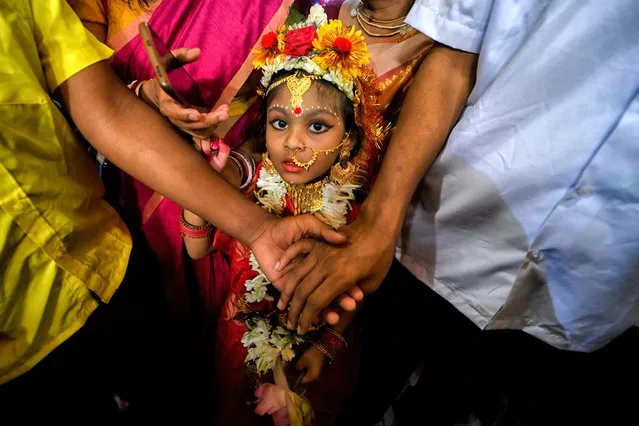
A little girl seen waiting in a queue to participate in the Kumari Puja ritual in Kolkata, India on March 30, 2023. Kumari Puja is an Indian Hindu Tradition mainly celebrated during the Durga Puja / Basanti Puja / Navratri according to Hindu calendar. Kumari actually describes a young virgin girl from the age 1 to 16 who is getting worshipped during the transition of Ashtami / Navami tithi of Durga Puja / Navaratri according to Hindu mythology. Young girls seen being worshipped during the Kumari Puja by their mothers at Adyapith Temple, It is believed that Kumari Puja grant many blessings to the worshipers and as well as the little Girl too. Devotees believe it will overcome all barriers, dangers for the little girls in the coming future and also, she will be empowered to handle any stress and obstruction in her coming life. (Photo by Avishek Das/SOPA Images/Rex Features/Shutterstock)

A little girl seen waiting in a queue to participate in the Kumari Puja ritual in Kolkata, India on March 30, 2023. Kumari Puja is an Indian Hindu Tradition mainly celebrated during the Durga Puja / Basanti Puja / Navratri according to Hindu calendar. Kumari actually describes a young virgin girl from the age 1 to 16 who is getting worshipped during the transition of Ashtami / Navami tithi of Durga Puja / Navaratri according to Hindu mythology. (Photo by Avishek Das/SOPA Images/Rex Features/Shutterstock)
Details
25 Apr 2023 03:26:00
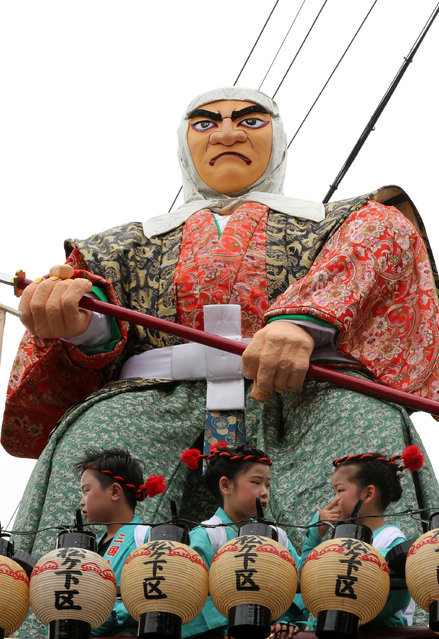
Children dressed in festival costume sit on the huge paper doll of historical Japanese figure named Hashi-Benkeii on the carts during the Mikuini annual festival on May 20, 2014 in Sakai, Japan. The annual festival takes place from May 19-21 and is attended by thousands of visitors. During the festival people dressed in traditional Japanese costumes pull carts carrying 6 meter high dolls of Japanese historical figures through the narrow streets. The origins of the festival are unclear but its history can be traced back more than 250 years. (Photo by Buddhika Weerasinghe/Getty Images)

Children dressed in festival costume sit on the huge paper doll of historical Japanese figure named Hashi-Benkeii on the carts during the Mikuini annual festival on May 20, 2014 in Sakai, Japan. The annual festival takes place from May 19-21 and is attended by thousands of visitors. During the festival people dressed in traditional Japanese costumes pull carts carrying 6 meter high dolls of Japanese historical figures through the narrow streets. The origins of the festival are unclear but its history can be traced back more than 250 years. (Photo by Buddhika Weerasinghe/Getty Images)
Details
21 May 2014 08:49:00