Visitors take masks off to take pictures as hydrangea flowers are fully blooming at Meigetsu-in Buddhist temple Friday, June 11, 2021, in Kamakura, south of Tokyo. (Photo by Kiichiro Sato/AP Photo)
A girl looks out of a car at a checkpoint set up by Venezuelan security forces in Taguanes, Venezuela, February 21, 2019. (Photo by Andres Martinez Casares/Reuters)
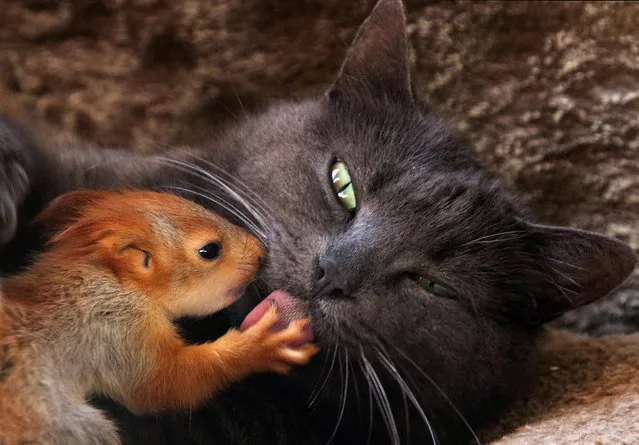
Pusha the cat, which adopted four bereaved baby squirrels and currently feeds and lives with them, lies at a local park of miniatures in Bakhchisaray, Crimea on April 25, 2019. (Photo by Alexey Pavlishak/Reuters)
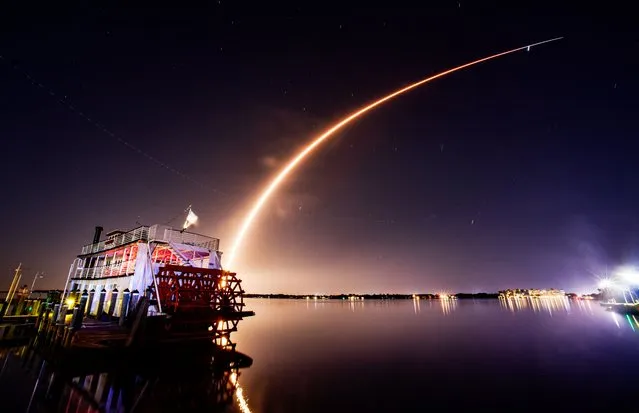
A SpaceX Falcon 9 rocket lifts off in Florida on Saturday, October 21, 2023. The rocket is carrying 23 Starlink satellites. (Photo by Malcolm Denemark/AP Photo)
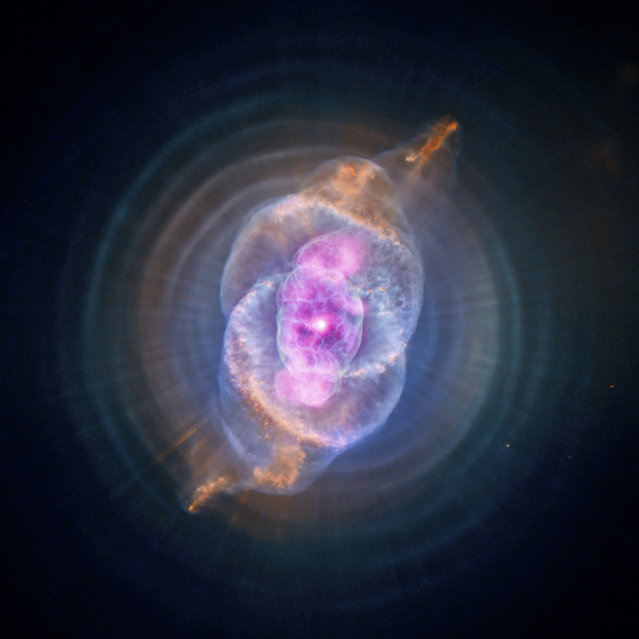
This image is NGC 6543 known as the Cat's Eye Nebula as it appears to the Chandra X-Ray Observatory and Hubble Telescope. A planetary nebula is a phase of stellar evolution that the sun should experience several billion years from now, when it expands to become a red giant and then sheds most of its outer layers, leaving behind a hot core that contracts to form a dense white dwarf star. This image was released October 10, 2012. (Photo by J. Kastner/NASA/CXC/RIT)
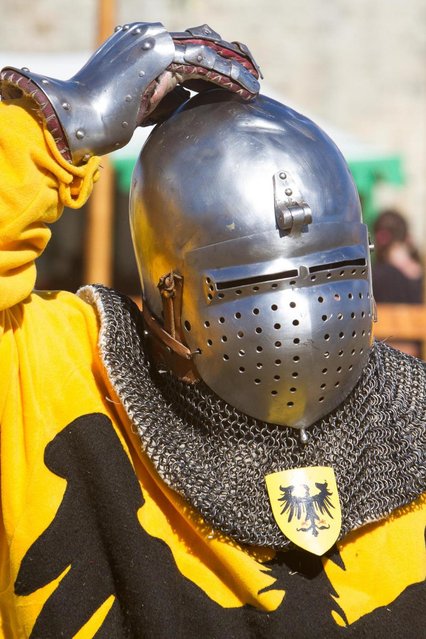
A German contestant adjusts his helmet during the “Battle of Nations” in Aigues-Mortes, southern France, Friday, May 10, 2013 where Middle Ages fans attend the historical medieval battle competition. The championship will be attended by 22 national teams, which is twice the number it was last year. The battle lasts until May 12. (Photo by Philippe Farjon/AP Photo)
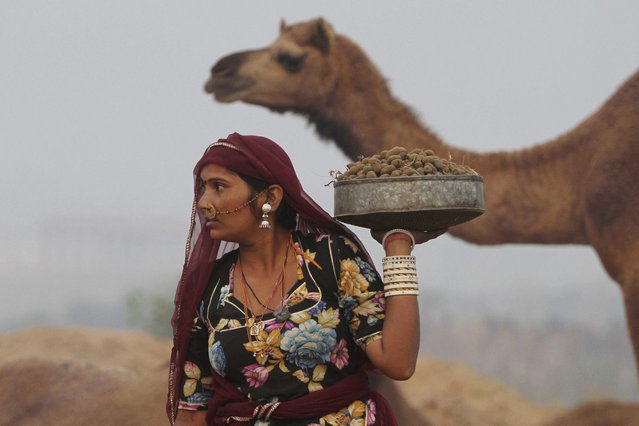
An Indian woman collects camel dung during the annual cattle fair in Pushkar, in the western Indian state of Rajasthan, Sunday, November 10, 2013. Pushkar, located on the banks of Pushkar Lake, is a popular Hindu pilgrimage spot that is also frequented by foreign tourists who come to the town for the annual cattle fair and camel races. (Photo by Ajit Solanki/AP Photo)
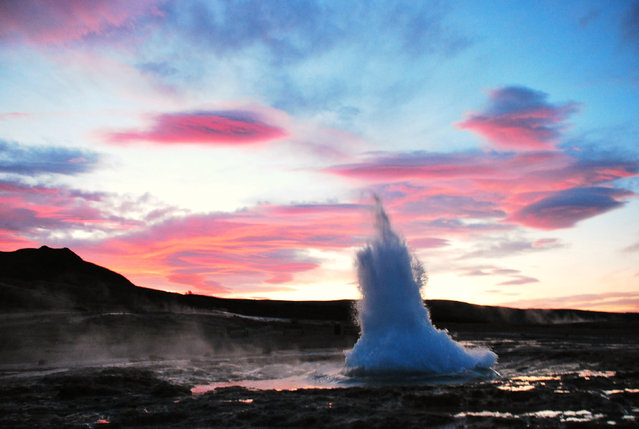
Strokkur geyser against cloudy sky at sunset. Strokkur is a fountain geyser located in a geothermal area beside the Hvítá River in Iceland in the southwest part of the country, east of Reykjavík. It is one of Iceland's most famous geysers, erupting once every 6–10 minutes. Its usual height is 15–20 m, although it can sometimes erupt up to 40 m high. (Photo by Teatsche Dijkhuis/Getty Images/EyeEm)