Loading...
Done
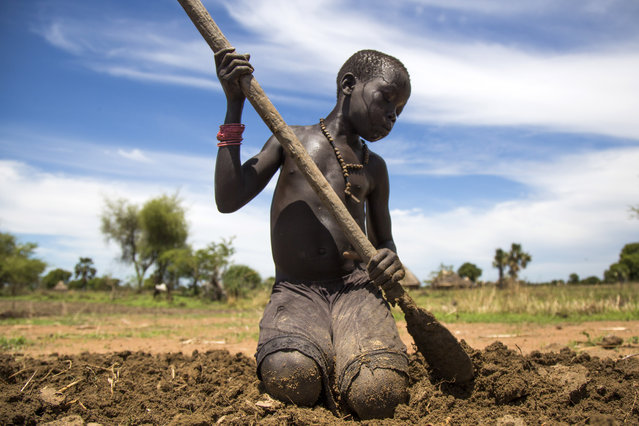
Nyibol Lual, 13 years old, helps her family to prepare the land for cultivation on May 31, 2017, in Panthau, Northern Bahr al Ghazal, South Sudan. The family has a small land where they cultivate sorghum. An estimated 63 per cent of the population in Northern Bahr al Ghazal is experiencing severe food insecurity, according to the latest Integrated Food Security Phase Classification (IPC) report. The situation is particularly bad in Aweil West and Aweil South counties, where the exhaustion of household food stocks and growing dependence on financially inaccessible markets have left the population facing Emergency levels of food insecurity. (Photo by Albert Gonzalez Farran/AFP Photo)

Nyibol Lual, 13 years old, helps her family to prepare the land for cultivation on May 31, 2017, in Panthau, Northern Bahr al Ghazal, South Sudan. The family has a small land where they cultivate sorghum. An estimated 63 per cent of the population in Northern Bahr al Ghazal is experiencing severe food insecurity, according to the latest Integrated Food Security Phase Classification (IPC) report. The situation is particularly bad in Aweil West and Aweil South counties, where the exhaustion of household food stocks and growing dependence on financially inaccessible markets have left the population facing Emergency levels of food insecurity. (Photo by Albert Gonzalez Farran/AFP Photo)
Details
01 Jun 2017 10:10:00
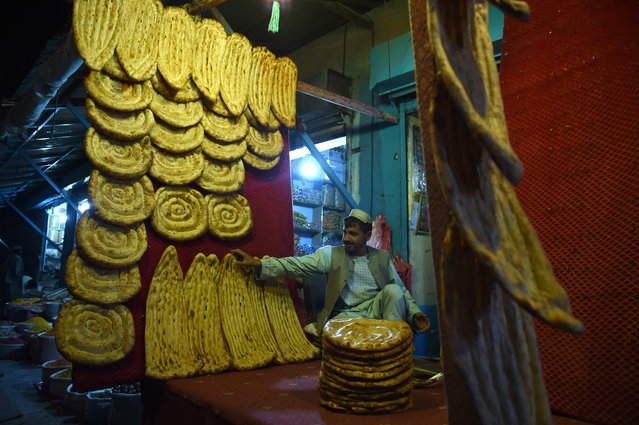
In this photograph taken on October 4, 2016, an Afghan baker prepares bread at his shop as he waits for customers in Lashkar Gah, the capital city of Helmand province For years Helmand was the centerpiece of the Western military intervention in Afghanistan only for it to slip deeper into a quagmire of instability, with almost the entire southern province teetering on the verge of collapse. Intensified fighting has killed hundreds and forced thousands to flee to besieged capital Lashkar Gah, sparking a humanitarian crisis as the city – one of the last government- held enclaves – risks falling to the Taliban' s repeated ferocious assaults. (Photo by Wakil Kohsar/AFP Photo)

In this photograph taken on October 4, 2016, an Afghan baker prepares bread at his shop as he waits for customers in Lashkar Gah, the capital city of Helmand province. For years Helmand was the centerpiece of the Western military intervention in Afghanistan only for it to slip deeper into a quagmire of instability, with almost the entire southern province teetering on the verge of collapse. Intensified fighting has killed hundreds and forced thousands to flee to besieged capital Lashkar Gah, sparking a humanitarian crisis as the city – one of the last government- held enclaves – risks falling to the Taliban' s repeated ferocious assaults. (Photo by Wakil Kohsar/AFP Photo)
Details
08 Dec 2016 12:41:00
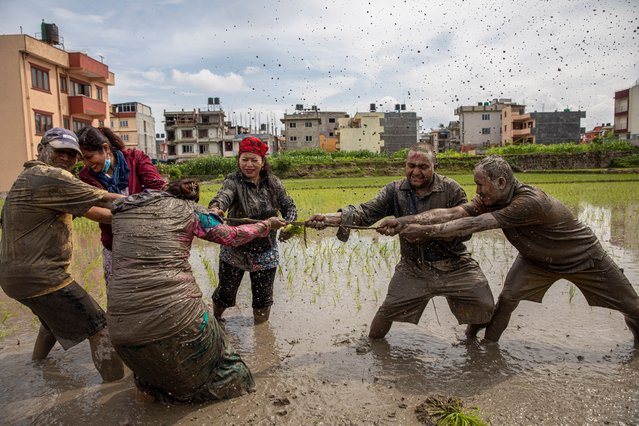
Farmers play tug of war in a paddy field on National Paddy Day in Tokha village, on the outskirt of capital Kathmandu, Nepal, 29 June 2021. Nepal is celebrating National Paddy Day with various events on 29 June. On this day, known as Asar Pandra, farmers begin the annual rice planting season and mark the day with various festivities such as preparing rice meals with muddy water, mud being a symbol for a prosperous season. Sixty percent of Nepal's agriculture industry relies on monsoon rain while 40 percent is carried out through irrigation. Agriculture is a major contributor to the country's GDP. (Photo by Narendra Shrestha/EPA/EFE)

Farmers play tug of war in a paddy field on National Paddy Day in Tokha village, on the outskirt of capital Kathmandu, Nepal, 29 June 2021. Nepal is celebrating National Paddy Day with various events on 29 June. On this day, known as Asar Pandra, farmers begin the annual rice planting season and mark the day with various festivities such as preparing rice meals with muddy water, mud being a symbol for a prosperous season. Sixty percent of Nepal's agriculture industry relies on monsoon rain while 40 percent is carried out through irrigation. Agriculture is a major contributor to the country's GDP. (Photo by Narendra Shrestha/EPA/EFE)
Details
26 Feb 2022 04:53:00
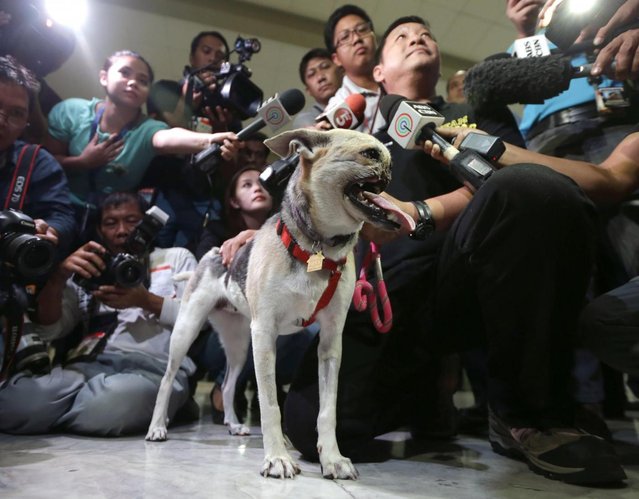
Dr. Anton Lim is interviewed by the media as he holds Kabang, a two-year-old injured mixed breed, upon arrival at the Ninoy Aquino International Airport in Pasay city, south of Manila, Philippines, early Saturday June 8, 2013 from San Francisco, Calif. Kabang lost her snout and upper jaw saving two girls' lives in the Philippines was headed back to its owner following treatment at the University of California, Davis veterinary hospital. (Photo by Bullit Marquez/AP Photo)

Dr. Anton Lim is interviewed by the media as he holds Kabang, a two-year-old injured mixed breed, upon arrival at the Ninoy Aquino International Airport in Pasay city, south of Manila, Philippines, early Saturday June 8, 2013 from San Francisco, Calif. Kabang lost her snout and upper jaw saving two girls' lives in the Philippines was headed back to its owner following treatment at the University of California, Davis veterinary hospital. (Photo by Bullit Marquez/AP Photo)
Details
09 Jun 2013 07:37:00
Xiren Wang, Lili Wat, and Sitong Chen join the pageant’s opening routine, dancing to “The Boys”, a song by K-Pop group «Girls’ Generation». While the women come from a range of professional backgrounds – including economics, nursing, and acting – every contestant is looking for her big break into the entertainment industry. (Photo and caption by John Brecher/Sahra Vang Nguyen/NBC News)

Xiren Wang, Lili Wat, and Sitong Chen join the pageant’s opening routine, dancing to “The Boys”, a song by K-Pop group «Girls’ Generation». While the women come from a range of professional backgrounds – including economics, nursing, and acting – every contestant is looking for her big break into the entertainment industry. Most contestants said they would prefer to have a career in the U.S. but would go wherever the opportunity lies. (Photo and caption by John Brecher/Sahra Vang Nguyen/NBC News)
Details
03 Sep 2014 10:50:00
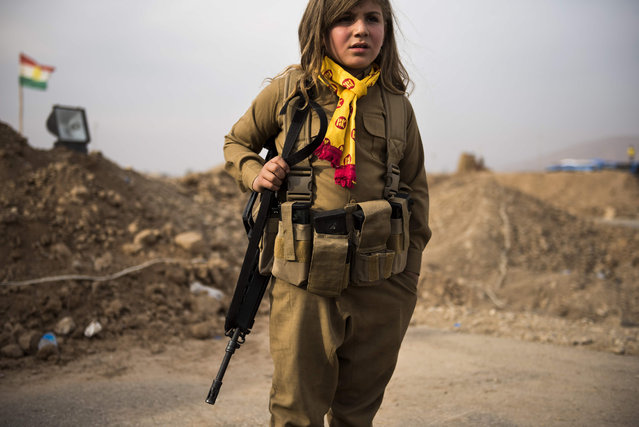
A Kurdish girl wears her relative's assault rifle and ammunition belt as she waits at the  Iraqi Kurdish Shaqouli checkpoint, some 35 kilometres east of Mosul, on November 10, 2016. Since the start of the Mosul offensive the Kurds have moved their border some 10 kms closer to Iraq's second city, marking it out with a line in the sand. (Photo by Odd Andersen/AFP Photo)

A Kurdish girl wears her relative's assault rifle and ammunition belt as she waits at the Iraqi Kurdish Shaqouli checkpoint, some 35 kilometres east of Mosul, on November 10, 2016. Since the start of the Mosul offensive the Kurds have moved their border some 10 kms closer to Iraq's second city, marking it out with a line in the sand. (Photo by Odd Andersen/AFP Photo)
Details
11 Nov 2016 08:02:00
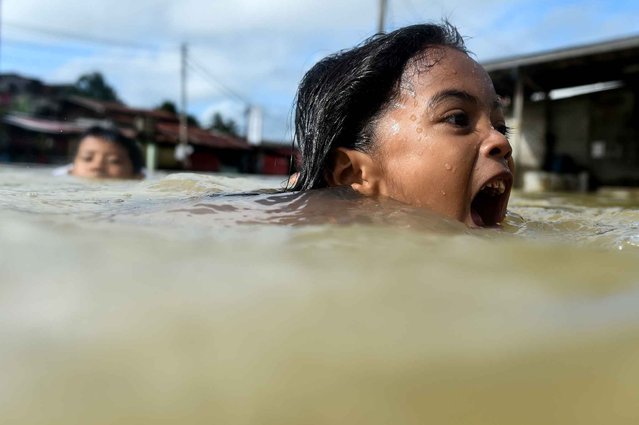
A girl swims in floodwaters in Malaysia' s northeastern town of Rantau Panjang, which borders Thailand, on January 5, 2017 Floods in two northeast Malaysian states have now forced almost 23,000 people from their homes and extra relief centres have been opened, rescue officials said on January 4. (Photo by Mohd Rasfan/AFP Photo)

A girl swims in floodwaters in Malaysia' s northeastern town of Rantau Panjang, which borders Thailand, on January 5, 2017 Floods in two northeast Malaysian states have now forced almost 23,000 people from their homes and extra relief centres have been opened, rescue officials said on January 4. (Photo by Mohd Rasfan/AFP Photo)
Details
05 Jan 2017 13:50:00

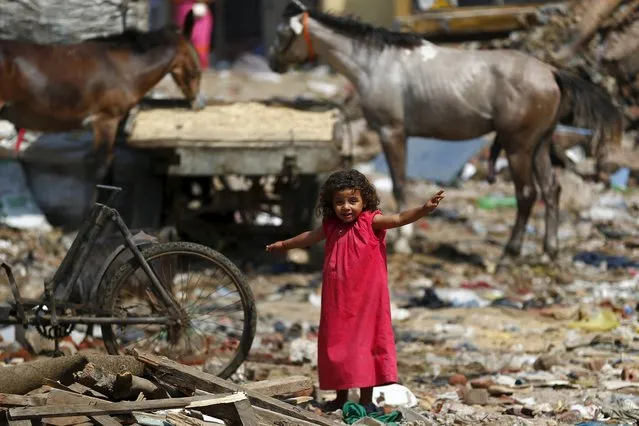
A girl plays in the Eshash el-Sudan slum in the Dokki neighbourhood of Giza, south of Cairo, Egypt September 2, 2015. (Photo by Amr Abdallah Dalsh/Reuters)

A girl plays in the Eshash el-Sudan slum in the Dokki neighbourhood of Giza, south of Cairo, Egypt September 2, 2015. Residents of the slum clashed with police in late August, when about 50 ramshackle huts were destroyed and at least 20 people were injured by teargas, local media reported, as authorities attempt to clear the area and rehouse residents. The slum dwellers, some of whom have called Eshash el-Sudan home for 50 years, say there are not enough apartments built nearby to house them. The residents of the slum eke out a living by disposing of rubbish or baking bread. Schooling is too expensive for most of their children, who play with salvaged rubbish amid shacks made out of discarded wood and leather. (Photo by Amr Abdallah Dalsh/Reuters)
Details
11 Sep 2015 12:47:00