Loading...
Done
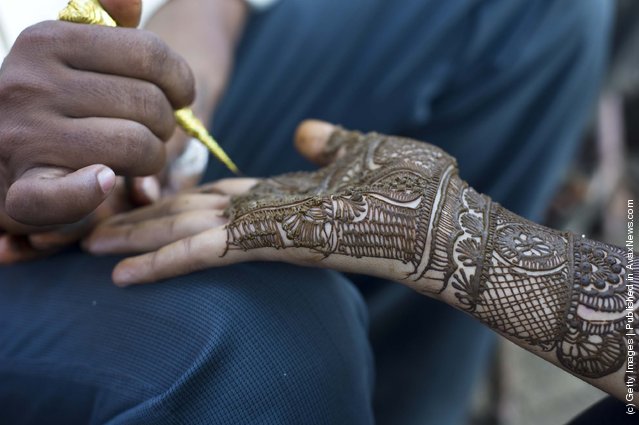
Application of henna or “Mehndi”  to a girls hand in a market in Jaipur, India

“Mehndi or menhdi is the application of henna as a temporary form of skin decoration in India, as well as by expatriate communities from the country. The word mehndi is derived from the Sanskrit word mendhikā. The use of mehndi and turmeric is described in the earliest Vedic ritual books. Haldi (Staining oneself with turmeric paste) as well as mehndi are important Vedic customs as a symbolic representation of the Outer and the Inner Sun. Vedic customs are meant to awaken the “inner light” and so the gold of the inner Sun has an important symbolic function”. – Wikipedia

Photo: Application of henna or “Mehndi” to a girls hand in a market on October 18, 2010 in Jaipur, India. (Photo by Simon de Trey-White/Getty Images)
Details
23 Nov 2011 13:33:00
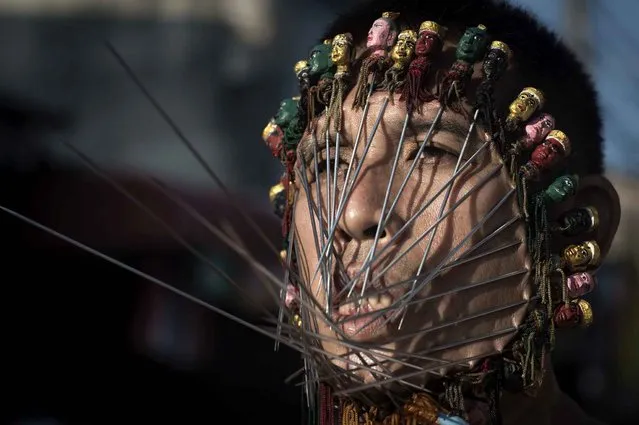
A devotee of the Chinese Jui Tui Shrine has his face pierced with metal rods during a street procession during the annual Vegetarian Festival in the southern Thai town of Phuket on October 19, 2015. During the festival, which begins on the first evening of the ninth lunar month and lasts nine days, religious devotees slash themselves with swords, pierce their cheeks with sharp objects and commit other painful acts to purify themselves, taking on the sins of the community. (Photo by Nicolas Asfouri/AFP Photo)

A devotee of the Chinese Jui Tui Shrine has his face pierced with metal rods during a street procession during the annual Vegetarian Festival in the southern Thai town of Phuket on October 19, 2015. During the festival, which begins on the first evening of the ninth lunar month and lasts nine days, religious devotees slash themselves with swords, pierce their cheeks with sharp objects and commit other painful acts to purify themselves, taking on the sins of the community. (Photo by Nicolas Asfouri/AFP Photo)
Details
21 Oct 2015 08:05:00
Valery Bystritskii, 10, gets a fellow student into a lock at Bunny's Gym in July 2015 in Winchester, Tennessee. (Photo by Mike Saliba/Barcroft USA)

Valery Bystritskii, 10, gets a fellow student into a lock at Bunny's Gym in July 2015 in Winchester, Tennessee. (Photo by Mike Saliba/Barcroft USA)
Details
30 Dec 2015 08:06:00
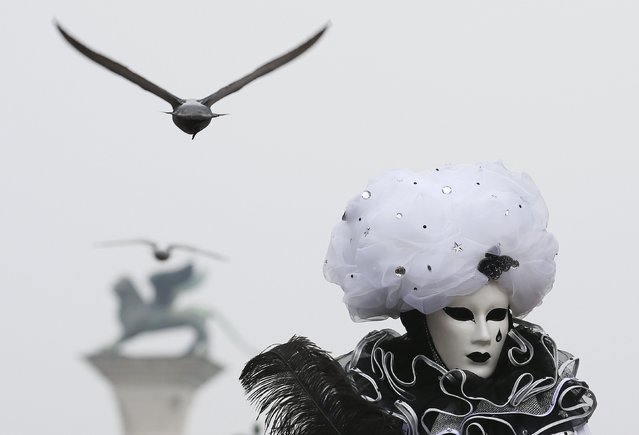
A masked reveller poses in San Marco Piazza during the Venice Carnival, January 30, 2016. (Photo by Alessandro Bianchi/Reuters)

A masked reveller poses in San Marco Piazza during the Venice Carnival, January 30, 2016. (Photo by Alessandro Bianchi/Reuters)
Details
31 Jan 2016 09:18:00
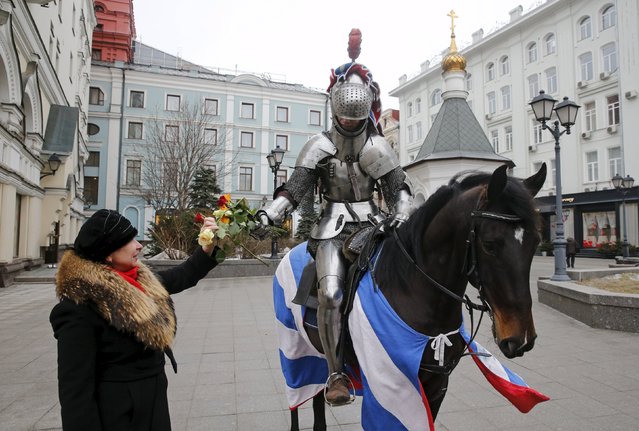
A participant, riding a horse and dressed as a knight, presents flowers to women during an event marking Valentine's Day in central Moscow, Russia, February 14, 2016. (Photo by Maxim Zmeyev/Reuters)

A participant, riding a horse and dressed as a knight, presents flowers to women during an event marking Valentine's Day in central Moscow, Russia, February 14, 2016. (Photo by Maxim Zmeyev/Reuters)
Details
15 Feb 2016 10:34:00
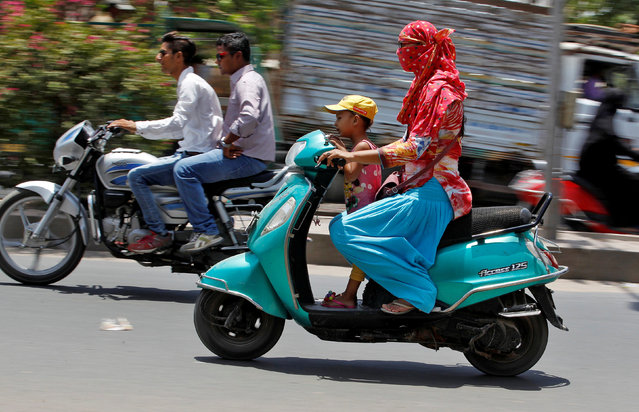
A woman shields her face from the sun as she rides her scooter in Ahmedabad, India May 20, 2016. (Photo by Amit Dave/Reuters)

A woman shields her face from the sun as she rides her scooter in Ahmedabad, India May 20, 2016. (Photo by Amit Dave/Reuters)
Details
23 May 2016 09:28:00
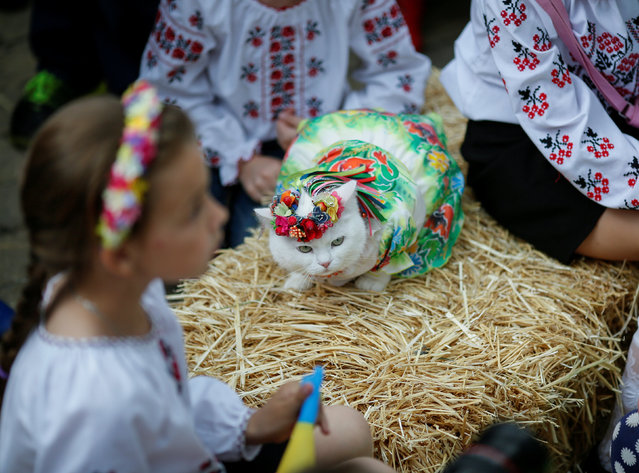
A cat dressed in a traditional Ukrainian embroidered shirt takes part in a parade in Kiev, Ukraine on May 28, 2016. (Photo by Gleb Garanich/Reuters)

A cat dressed in a traditional Ukrainian embroidered shirt takes part in a parade in Kiev, Ukraine on May 28, 2016. (Photo by Gleb Garanich/Reuters)
Details
30 May 2016 09:03:00
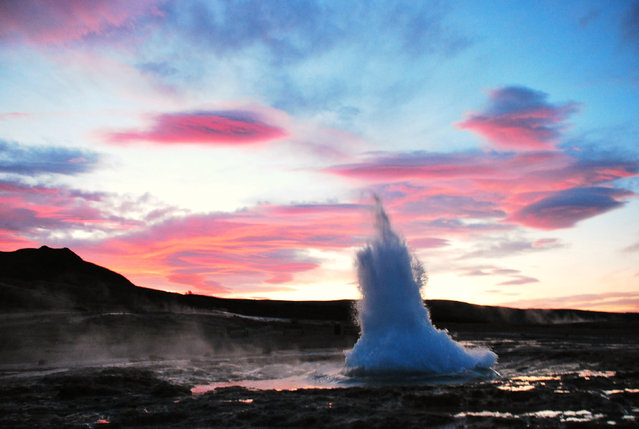
Strokkur geyser against cloudy sky at sunset. Strokkur is a fountain geyser located in a geothermal area beside the Hvítá River in Iceland in the southwest part of the country, east of Reykjavík. It is one of Iceland's most famous geysers, erupting once every 6–10 minutes. Its usual height is 15–20 m, although it can sometimes erupt up to 40 m high. (Photo by Teatsche Dijkhuis/Getty Images/EyeEm)

Strokkur geyser against cloudy sky at sunset. Strokkur is a fountain geyser located in a geothermal area beside the Hvítá River in Iceland in the southwest part of the country, east of Reykjavík. It is one of Iceland's most famous geysers, erupting once every 6–10 minutes. Its usual height is 15–20 m, although it can sometimes erupt up to 40 m high. (Photo by Teatsche Dijkhuis/Getty Images/EyeEm)
Details
18 Oct 2016 12:43:00