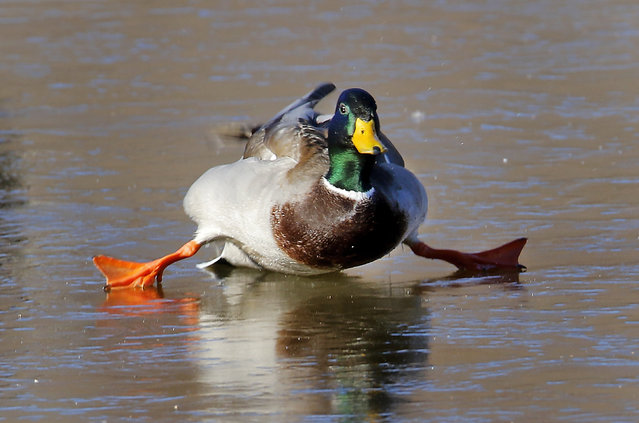
In this photo taken on Monday, January 5, 2015, a mallard duck attempts to walk on a frozen pond in Yukon, Okla. (Photo by Steve Gooch/AP Photo/The Oklahoman)
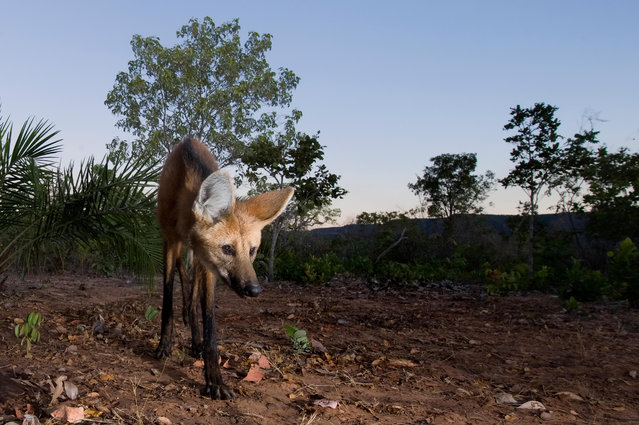
Global wildlife populations will decline by 67% by 2020 unless urgent action is taken to reduce human impact on species and ecosystems, warns the biennial Living Planet Index report from WWF (World Wide Fund for Nature) and ZSL (Zoological Society of London). From elephants to eels, here are some of the wildlife populations most affected by human activity. Here: The maned wolf is among the large mammals in the Brazilian Cerrado that are threatened by the increasing conversion of grasslands into farmland for grazing and growing crops. (Photo by Ben Cranke/Nature Picture Library/Alamy Stock Photo)
American reality show contestant Courtney Stodden is caught kissing a mystery woman on the beach in Santa Monica, CA on September 16, 2016. Courtney and the mystery brunette couldn't keep their hands of each other and didn't seem to care who saw their antics as they frolicked on the sand. (Photo by Canham/Splash News)
A beluga whale sprays water towards visitors during a summer attraction at the Hakkeijima Sea Paradise aquarium in Yokohama, suburban Tokyo on July 20, 2015. Tokyo's temperature climbed over 34 degree Celsius on July 20, one day after the end of the rainy season. (Photo by Toshifumi Kitamura/AFP Photo)
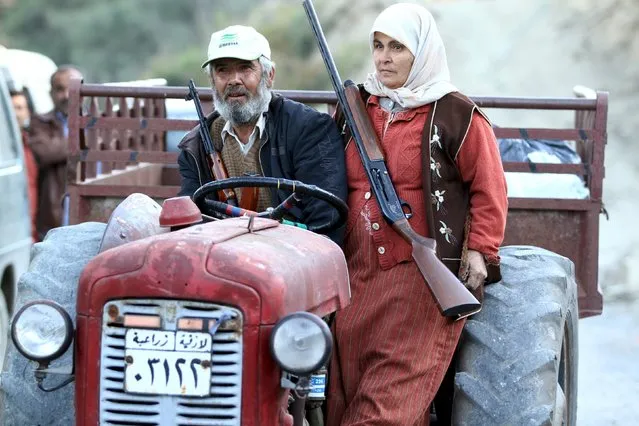
Armed Syrian Turkmen villagers are seen near the northern Syrian village of Yamadi, near the Turkish-Syrian border, Syria, November 24, 2015. Turkey shot down a Russian warplane near the Syrian border on Tuesday saying it had repeatedly violated its air space, one of the most serious publicly acknowledged clashes between a NATO member country and Russia for half a century. (Photo by Reuters/Stringer)
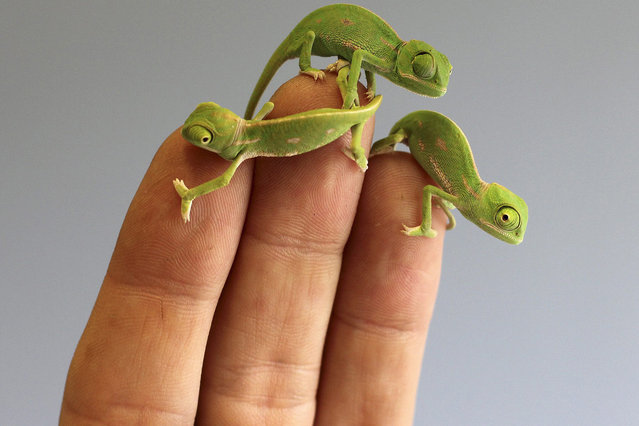
A handout image released by the Taronga Zoo shows Veiled Chameleon hatchlings at Taronga Zoo in Sydney, Australia, 11 March 2015. Taronga has welcomed more than 20 baby chameleons, with the last of three clutches of eggs hatching this week. Veiled Chameleons, or Chamaeleo calyptratus, are native to Saudi Arabia and Yemen and can live up to five years. (Photo by EPA/Taronga Zoo)