Loading...
Done
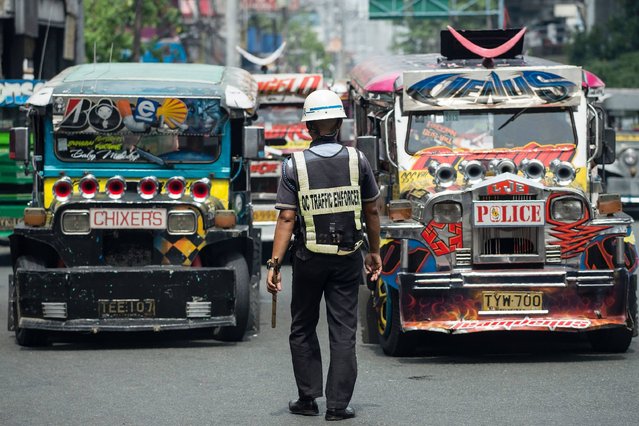
Jeepneys are seen as an enforcer manages traffic at a busy street in Manila on May 30, 2017. Jeepneys, once hailed as the “King of the Road” and a cultural symbol in the Phillipines to rival New York's yellow taxis, may soon disappear from Manila's gridlocked streets, as authorities move to phase out the Philippines' iconic World War II-era minibuses, citing pollution and safety concerns. (Photo by Noel Celis/AFP Photo)

Jeepneys are seen as an enforcer manages traffic at a busy street in Manila on May 30, 2017. Jeepneys, once hailed as the “King of the Road” and a cultural symbol in the Phillipines to rival New York's yellow taxis, may soon disappear from Manila's gridlocked streets, as authorities move to phase out the Philippines' iconic World War II-era minibuses, citing pollution and safety concerns. (Photo by Noel Celis/AFP Photo)
Details
31 May 2017 07:14:00
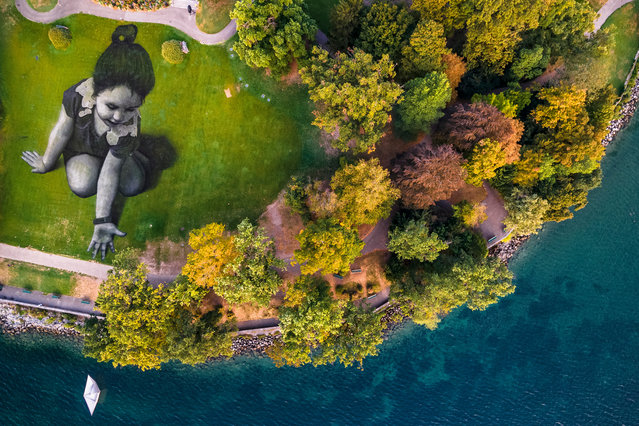
A picture taken with a drone shows the giant landart painting entitled “Message From Future” by French artist Saype in the park “La Perle du Lac” in Geneva, Switzerland, 16 September 2018 (issued 17 September). The artwork covering 5,000 square meters was produced with biodegradable paints made from natural pigments. The artist called the little girl “Future” as a symbol of the generations from the future and the small origami boats that she drops into Lake Geneva aims to represent a message of hope sent to the world. (Photo by Valentin Flauraud/EPA/EFE)

A picture taken with a drone shows the giant landart painting entitled “Message From Future” by French artist Saype in the park “La Perle du Lac” in Geneva, Switzerland, 16 September 2018 (issued 17 September). The artwork covering 5,000 square meters was produced with biodegradable paints made from natural pigments. The artist called the little girl “Future” as a symbol of the generations from the future and the small origami boats that she drops into Lake Geneva aims to represent a message of hope sent to the world. (Photo by Valentin Flauraud/EPA/EFE)
Details
19 Oct 2018 00:01:00
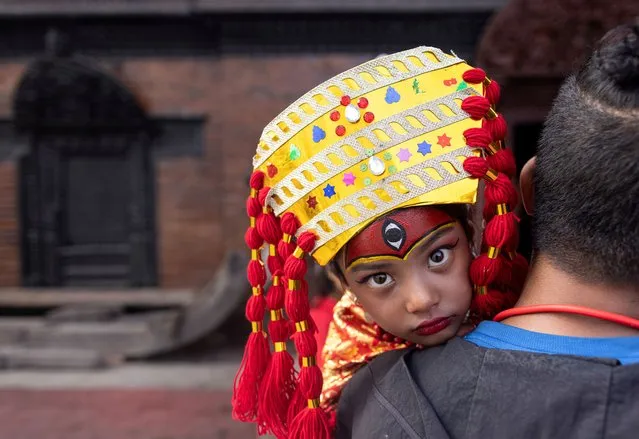
A Nepalese girl in traditional attire takes part in Kumari Puja, a mass worship ceremony for preteen girls, in Kathmandu, Nepal on September 27, 2023. In Nepal, Kumari Puja is the tradition of selecting a Kumari, usually a preadolescent girl, to worship symbolically as a goddess. More than hundred girls under the age of nine from across the country gathered for the mass worship. Performing Kumari Puja for three continuous years is believed to protect the girls from diseases throughout their entire life. (Photo by Narendra Shrestha/EPA/EFE)

A Nepalese girl in traditional attire takes part in Kumari Puja, a mass worship ceremony for preteen girls, in Kathmandu, Nepal on September 27, 2023. In Nepal, Kumari Puja is the tradition of selecting a Kumari, usually a preadolescent girl, to worship symbolically as a goddess. More than hundred girls under the age of nine from across the country gathered for the mass worship. Performing Kumari Puja for three continuous years is believed to protect the girls from diseases throughout their entire life. (Photo by Narendra Shrestha/EPA/EFE)
Details
07 Oct 2023 04:02:00
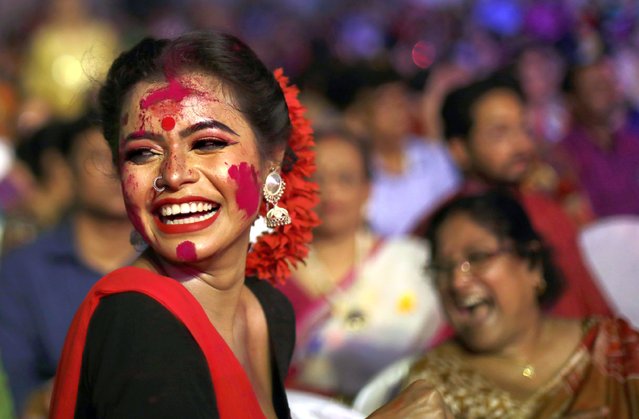
Students of Rabindrabharati University apply colour dust or Gulal on each other during a celebration the festival of colour Holi in Kolkata, Eastern India, 23 March 2024. Holi, also known as the Festival of Colors, is an ancient Hindu festival symbolizing the victory of good over evil and marking the arrival of spring. It is observed with joyful gatherings during which revelers cover each other in colored powders. (Photo by Piyal Adhikary/EPA/EFE)

Students of Rabindrabharati University apply colour dust or Gulal on each other during a celebration the festival of colour Holi in Kolkata, Eastern India, 23 March 2024. Holi, also known as the Festival of Colors, is an ancient Hindu festival symbolizing the victory of good over evil and marking the arrival of spring. It is observed with joyful gatherings during which revelers cover each other in colored powders. (Photo by Piyal Adhikary/EPA/EFE)
Details
05 Jul 2025 03:40:00
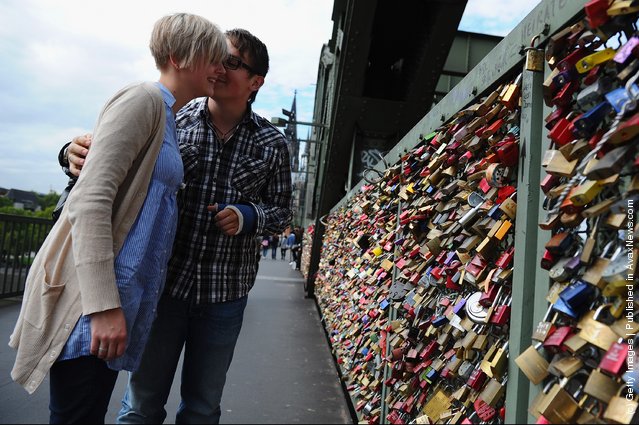
Love Locks

People stop to look at the thousands of so-called “love locks”, or “love padlocks”, that hang from a fence across the Hohenzollernbruecke bridge on September 13, 2011 in Cologne, Germany. Love locks are a growing phenomenon in cities across Europe and are meant by the couples who leave them behind as a symbol of their powerful and undying love for one another. (Photo by Dennis Grombkowski/Getty Images)
Details
15 Sep 2011 11:12:00
Fireworks Welcome In The New Year In Utrecht

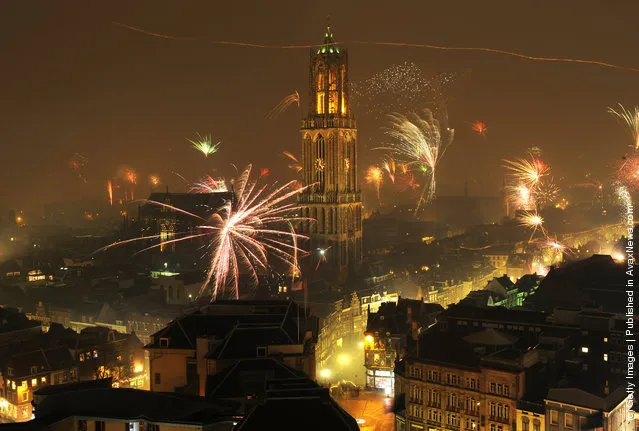
New Year's Eve fireworks display illuminates the sky over the Dom Tower on January 01, 2012 in Utrecht, Netherlands. The Dom tower is with 112.5 metres high the tallest church tower of the Netherlands. Built in Gothic-style, the tower, part of the Cathedral of Saint Martin, is the symbol of the city of Utrecht. (Photo by Jasper Juinen/Getty Images)
Details
01 Jan 2012 11:27:00
Iconatomy by George Chamoun

George Chamoun creates a visual mashup of two different Hollywood eras. The name Iconatomy is coined from the words "icon" (starts, celebrities, etc) and "anatomy". It took Chamoun a lot of time and energy trying to find two perfect photographs to digitally pair together. The results are in no way morphed, but collaged together to create an iconic symbol of looks, fortune and fame.
Details
19 Sep 2012 06:48:00
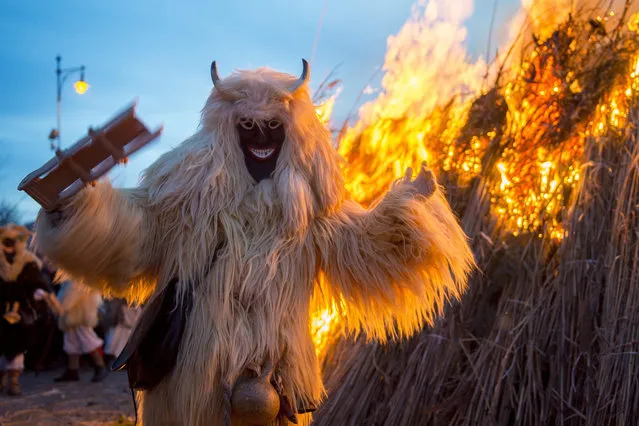
A reveler wearing sheepfur costume is seen in front of a bonfire on which they burn a coffin symbolizing winter during the closing ceremony of the traditional carnival parade in Mohacs, 189 kms south of Budapest, Hungary, 07 February 2016. (Photo by Tamas Soki/EPA)

A reveler wearing sheepfur costume is seen in front of a bonfire on which they burn a coffin symbolizing winter during the closing ceremony of the traditional carnival parade in Mohacs, 189 kms south of Budapest, Hungary, 07 February 2016. The carnival parade of people, the so-called busos, dressed in such costumes and frightening wooden masks, using various noisy wooden rattlers is traditionally held on the seventh weekend before Easter to drive away winter, and is a revival of a legend, which says that ethnic Croats ambushed the Osmanli Turkish troops, who escaped in panic seeing the terrifying figures during the Turkish occupation of Hungary. (Photo by Tamas Soki/EPA)
Details
09 Feb 2016 14:02:00