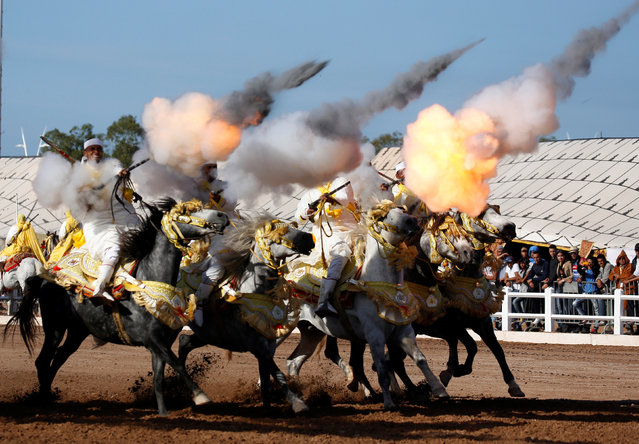
Horse riders perform with guns during the El-Jadida International Horse Show in El-Jadida, south of Casablanca, Morocco, October 15, 2016. (Photo by Youssef Boudlal/Reuters)
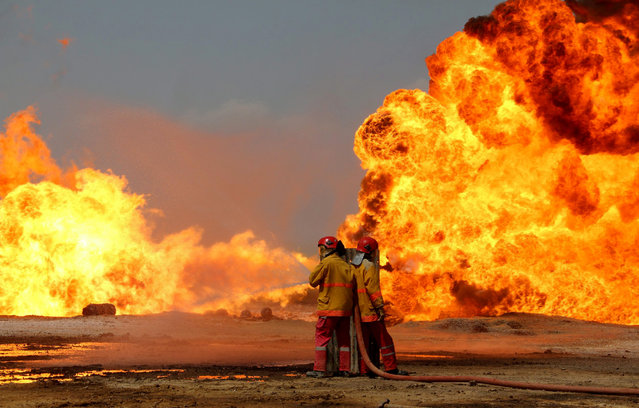
Iraqi firefighters try to stop the fire of burning oil wells in Kirkuk, northern Iraq, 02 June 2016. Two Khabbaz oil field wells in Kirkuk Province, northern Iraq, exploded by suspected insurgents, a security official said. (Photo by EPA/Stringer)
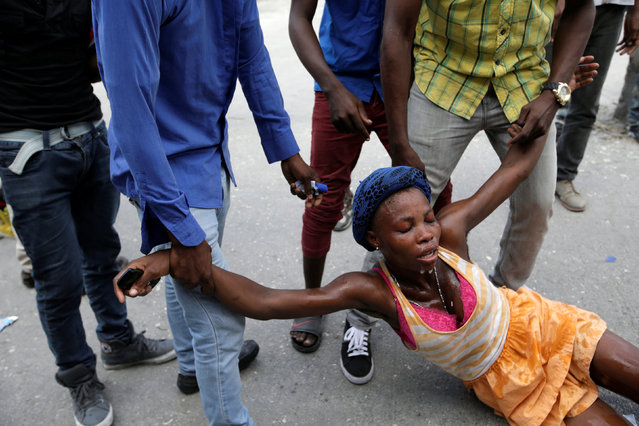
Men help a woman affected by tear gas used by National Police officers to disperse a demonstration of supporters of Fanmi Lavalas political party in the streets of Port-au-Prince, Haiti, November 22, 2016. (Photo by Andres Martinez Casares/Reuters)
A woman wearing a protective face mask makes merit during the Songkran holiday which marks the Thai New Year during the coronavirus disease (COVID-19) outbreak, in Bangkok, Thailand, April 13, 2022. (Photo by Chalinee Thirasupa/Reuters)
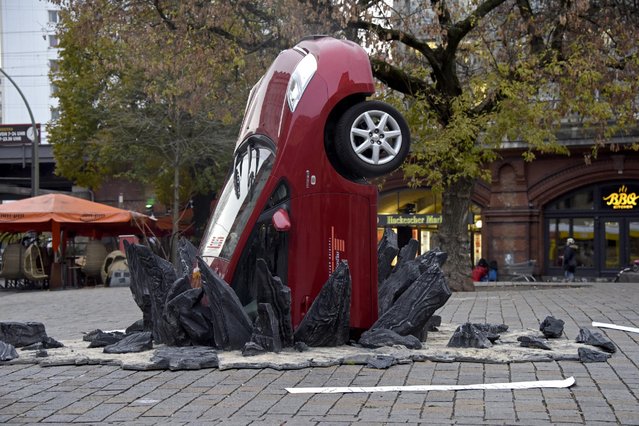
A car “crashed” into the ground at Hackescher Markt in Berlin, Germany on November 15, 2016, ahead of the launch of Jeremy Clarkson, Richard Hammond and James May's new show, “The Grand Tour”, on Amazon Prime Video, on Friday. (Photo by Clemens Bilan/Getty Images for Amazon Prime Video)
Animal rights activists covered with fake blood sit on the floor during a protest against the use of animals in research to mark World Day for Animals in Laboratories in central Madrid April 24, 2014. The sign reads, “How many rabbits do your shampoo kill?”. (Photo by Andrea Comas/Reuters)
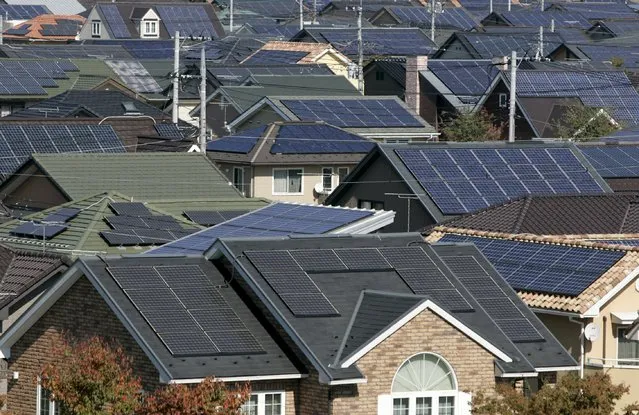
Rooftops of solar powered houses are pictured in Ota, 80 km northwest of Tokyo in this October 28, 2008 file photo. One by one, Japan is turning off the lights at the giant oil-fired power plants that propelled it to the ranks of the world's top industrialised nations. With nuclear power in the doldrums after the Fukushima disaster, it's solar energy that is becoming the alternative. Solar power is set to become profitable in Japan as early as this quarter, according to the Japan Renewable Energy Foundation (JREF), freeing it from the need for government subsidies and making it the last of the G7 economies where the technology has become economically viable. (Photo by Yuriko Nakao/Reuters)