Loading...
Done
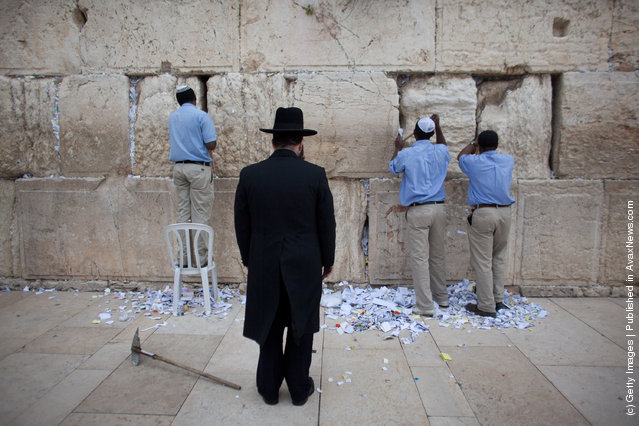
Prayers And Messages To God Are Removed From The Western Wall

Men help remove messages and prayers written by thousands of people addressed to God from the cracks in the Western Wall in preparation for the up coming Jewish Passover holiday on March 28, 2012 in Jerusalem's old city, Israel. All the notes once collected will be buried in a special place at the Mount of Olives.according tro Jewish law. Passover begins in the evening of Friday, April 6 and commemorates the story of the Exodus where the ancient Israelites were freed from slavery in Egypt. (Photo by Uriel Sinai/Getty Images)
Details
29 Mar 2012 12:32:00
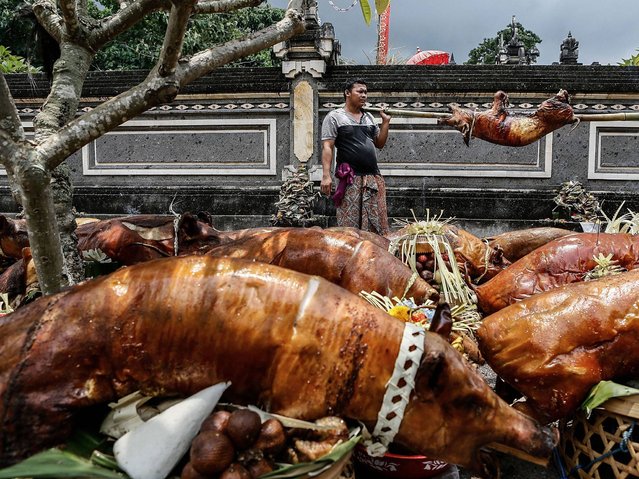
Villager searches for a place for the roasted pigs in Dalem Temple at Timbrah Village in Karangasem. (Photo by Putu Sayoga/Getty Images)

Villager search for a place for the roasted pigs in Dalem Temple at Timbrah Village on February 27, 2014 in Karangasem, Bali, Indonesia. Usaba Dalem is an annual ritual held by the people of Timbrah Village, during this ritual all the villagers will cook roasted pigs and carry them to Dalem Temple as an offering to God and an expression of gratitude for a successful harvest. (Photo by Putu Sayoga/Getty Images)
Details
28 Feb 2014 07:28:00


Tiësto, Mabel – God Is A Dancer (Official Video)
Details
16 Oct 2019 00:01:00
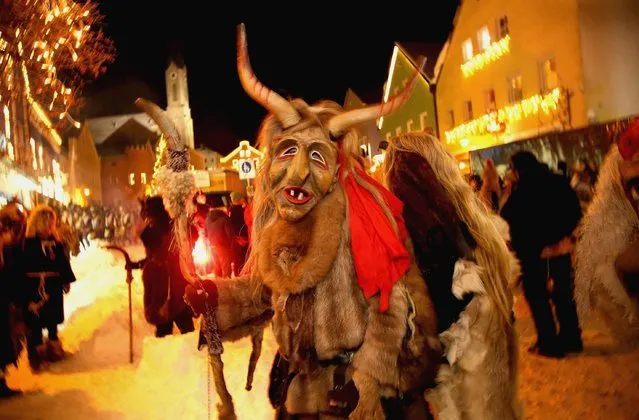
Locals dressed as “Perchten”, a traditional demonic creature in German and Austrian Alpine folklore, parade through the town center during the annual “Rauhnacht” gathering on January 5, 2017 in Waldkirchen, Germany. (Photo by Johannes Simon/Getty Images)

Locals dressed as “Perchten”, a traditional demonic creature in German and Austrian Alpine folklore, parade through the town center during the annual “Rauhnacht” gathering on January 5, 2017 in Waldkirchen, Germany. (Photo by Johannes Simon/Getty Images)
Details
07 Jan 2017 14:09:00
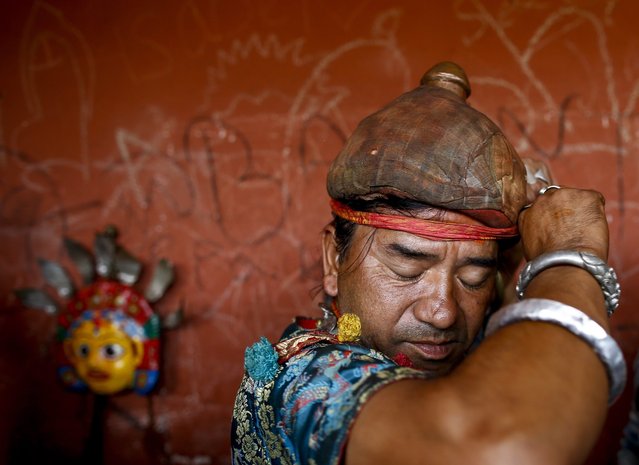
A Nepalese devotee prepares for a religious mask performance during the Seekaali Festival in Khokna village, near Kathmandu, Nepal, 07 October 2016. During the 300-year-old Seekali festival, elderly ethnic Newari devotees wear masks of 14 various goddesses including Lord Ganesha, Lord Shiva, Lord Laxmi, Lord Brahma and Lord Bishnu. The Khokna people celebrate the Seekaali festival as an alternative of the Dashain festival which is biggest festival of Nepalese Hindus that celebrates the victory of the gods over demons. (Photo by Narendra Shrestha/EPA)

A Nepalese devotee prepares for a religious mask performance during the Seekaali Festival in Khokna village, near Kathmandu, Nepal, 07 October 2016. During the 300-year-old Seekali festival, elderly ethnic Newari devotees wear masks of 14 various goddesses including Lord Ganesha, Lord Shiva, Lord Laxmi, Lord Brahma and Lord Bishnu. The Khokna people celebrate the Seekaali festival as an alternative of the Dashain festival which is biggest festival of Nepalese Hindus that celebrates the victory of the gods over demons. (Photo by Narendra Shrestha/EPA)
Details
09 Oct 2016 07:14:00
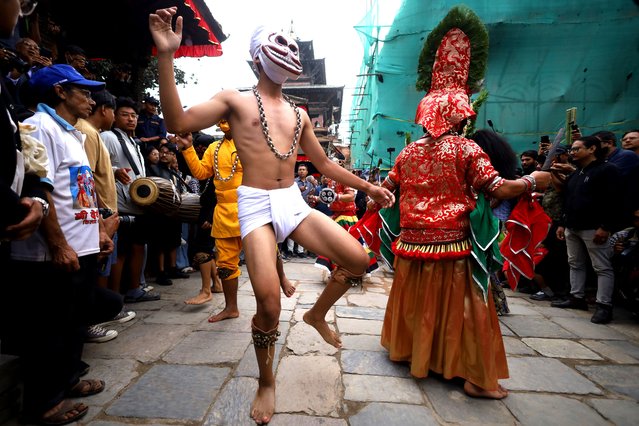
Masked dancers perform a ritualistic dance at Kathmandu Durbar Square during the procession of erecting a sacred pole locally called “Ya: Shi”, marking the formal start of Indra Jatra dedicated to rain god Indra in Kathmandu, Nepal, on September 15, 2024. The festival lasts for eight days with singing, mask dancing, and other rituals. Indra Jatra festival falls on the fourth day of the waxing moon in the month of Bhadra as per the lunar calendar. Legends say that the Indra Jatra festival observes the victory of the gods over the demons to release Jayanta, the son of Lord Indra. Indra, the god of rain, is worshiped in this festival primarily celebrated by the Newar communities following both Hinduism and Buddhism. (Photo by Subaas Shrestha/NurPhoto/Rex Features/Shutterstock)

Masked dancers perform a ritualistic dance at Kathmandu Durbar Square during the procession of erecting a sacred pole locally called “Ya: Shi”, marking the formal start of Indra Jatra dedicated to rain god Indra in Kathmandu, Nepal, on September 15, 2024. (Photo by Subaas Shrestha/NurPhoto/Rex Features/Shutterstock)
Details
24 Sep 2024 03:27:00
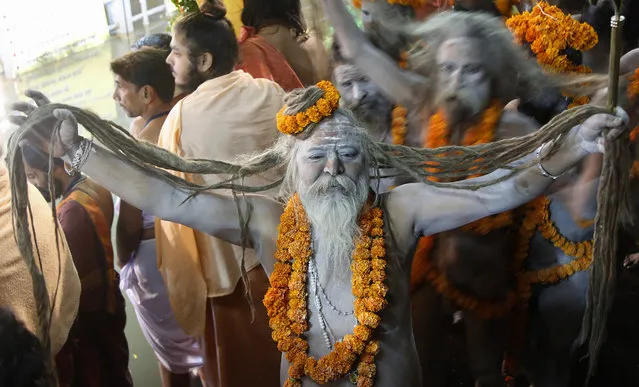
A naked Hindu holy man arrives to bath in the Godavari River during Kumbh Mela, or Pitcher Festival, at Trimbakeshwar in Nasik, India, Saturday, August 29, 2015. (Photo by Rajanish Kakade/AP Photo)

A naked Hindu holy man arrives to bath in the Godavari River during Kumbh Mela, or Pitcher Festival, at Trimbakeshwar in Nasik, India, Saturday, August 29, 2015. Hindus believe taking a dip in the waters of a holy river during the festival, will cleanse them of their sins. According to Hindu mythology, the Kumbh Mela celebrates the victory of gods over demons in a furious battle over a nectar that would give them immortality. (Photo by Rajanish Kakade/AP Photo)
Details
30 Aug 2015 11:34:00
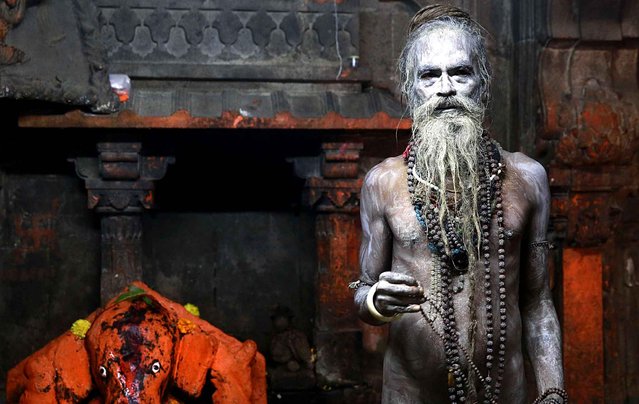
A Naga sadhu, or naked Hindu holy man, poses for a picture after taking a holy dip in the Godavari River during Kumbh Mela, or Pitcher Festival, at Trimbakeshwar in Nasik, India, Sunday, September 13, 2015. Hindus believe taking a dip in the waters of a holy river during the festival, will cleanse them of their sins. (Photo by Rafiq Maqbool/AP Photo)

A Naga sadhu, or naked Hindu holy man, poses for a picture after taking a holy dip in the Godavari River during Kumbh Mela, or Pitcher Festival, at Trimbakeshwar in Nasik, India, Sunday, September 13, 2015. Hindus believe taking a dip in the waters of a holy river during the festival, will cleanse them of their sins. According to Hindu mythology, the Kumbh Mela celebrates the victory of gods over demons in a furious battle over a nectar that would give them immortality. (Photo by Rafiq Maqbool/AP Photo)
Details
14 Sep 2015 13:31:00