Loading...
Done
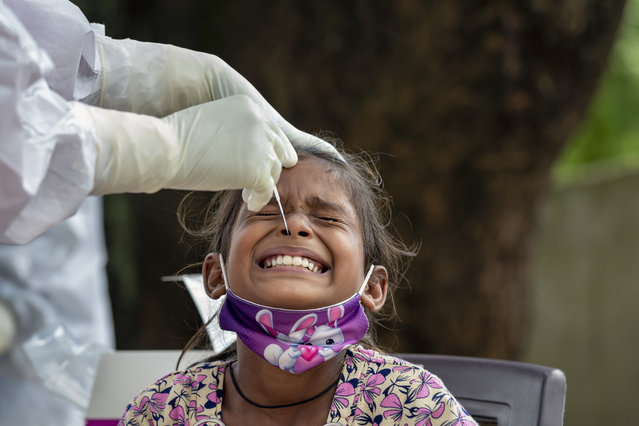
An Indian girl cries as a medical worker collect her swab sample for COVID-19 test at a rural health center in Bagli, outskirts of Dharmsala, India, Monday, September 7, 2020. India's coronavirus cases are now the second-highest in the world and only behind the United States. (Photo by Ashwini Bhatia/AP Photo)

An Indian girl cries as a medical worker collect her swab sample for COVID-19 test at a rural health center in Bagli, outskirts of Dharmsala, India, Monday, September 7, 2020. India's coronavirus cases are now the second-highest in the world and only behind the United States. (Photo by Ashwini Bhatia/AP Photo)
Details
09 Sep 2020 00:07:00
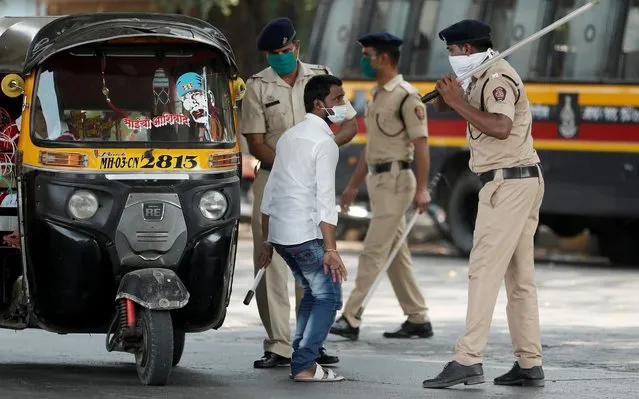
A policeman wields his baton at an autorickshaw rider as punishment for breaking the lockdown rules, after India ordered a 21-day nationwide lockdown to limit the spreading of coronavirus disease (COVID-19) in Mumbai, India on March 25, 2020. (Photo by Francis Mascarenhas/Reuters)

A policeman wields his baton at an autorickshaw rider as punishment for breaking the lockdown rules, after India ordered a 21-day nationwide lockdown to limit the spreading of coronavirus disease (COVID-19) in Mumbai, India on March 25, 2020. (Photo by Francis Mascarenhas/Reuters)
Details
26 Mar 2020 00:07:00
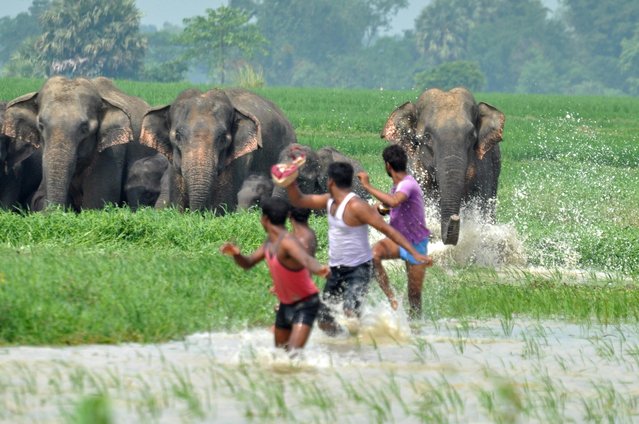
These men are chased by the defiant elephants on May 4, 2013. Taken by Biplab Hazra in Bishnupur, India, the images show the extreme lengths the inhabitants of the town go to to deter elephants from damaging their crops and property. Elephants encroaching out of their habitats is an increasingly common occurrence with deforestation in much of India. (Photo by Biplab Hazra/Caters News Agency)

These men are chased by the defiant elephants on May 4, 2013. Taken by Biplab Hazra in Bishnupur, India, the images show the extreme lengths the inhabitants of the town go to to deter elephants from damaging their crops and property. Elephants encroaching out of their habitats is an increasingly common occurrence with deforestation in much of India. (Photo by Biplab Hazra/Caters News Agency)
Details
31 Mar 2019 00:05:00
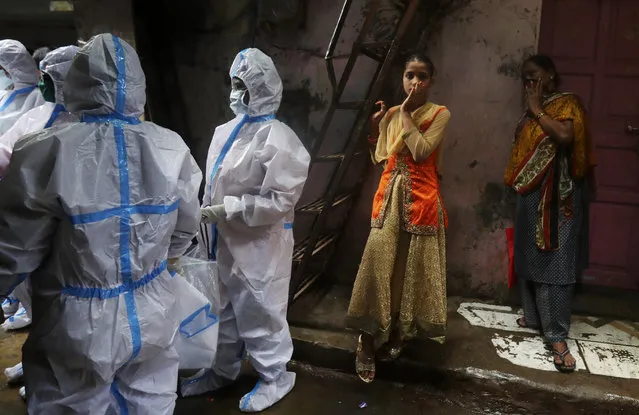
Health workers screen residents for COVID-19 symptoms at Dharavi, one of Asia's biggest slums, in Mumbai, India, Monday, August 3, 2020. India is the third hardest-hit country by the pandemic in the world after the United States and Brazil. (Photo by Rafiq Maqbool/AP Photo)

Health workers screen residents for COVID-19 symptoms at Dharavi, one of Asia's biggest slums, in Mumbai, India, Monday, August 3, 2020. India is the third hardest-hit country by the pandemic in the world after the United States and Brazil. (Photo by Rafiq Maqbool/AP Photo)
Details
05 Aug 2020 00:07:00
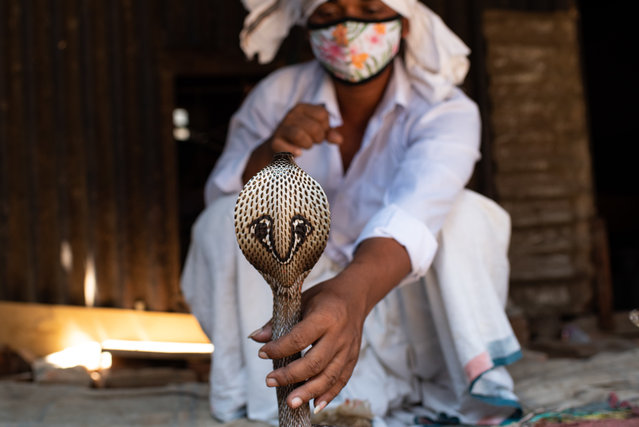
A gypsy man doing their traditional performance with a Cobra snack during the outbreak of coronavirus disease (COVID-19) at Savar the outskirts of Capital Dhaka, Bangladesh on April 24, 2021. The river gypsies in Bangladesh locally known as “Bede” community. (Photo by Fatima-Tuj Johora/ZUMA Wire/Rex Features/Shutterstock)

A gypsy man doing their traditional performance with a Cobra snack during the outbreak of coronavirus disease (COVID-19) at Savar the outskirts of Capital Dhaka, Bangladesh on April 24, 2021. The river gypsies in Bangladesh locally known as “Bede” community. (Photo by Fatima-Tuj Johora/ZUMA Wire/Rex Features/Shutterstock)
Details
20 May 2021 08:52:00
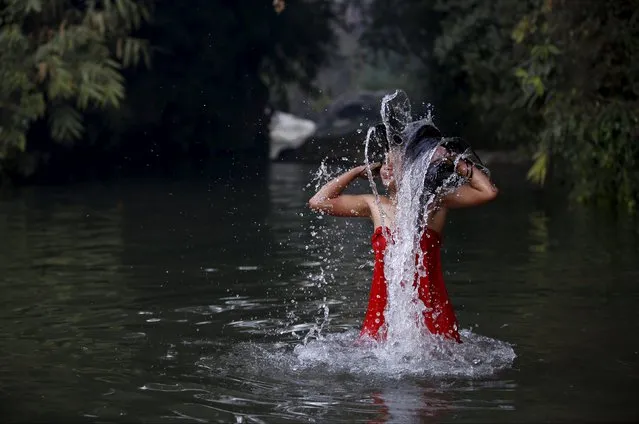
A devotee takes a holy bath in River Saali in Sankhu during the Swasthani Brata Katha festival in Kathmandu, Nepal, January 24, 2016. (Photo by Navesh Chitrakar/Reuters)

A devotee takes a holy bath in River Saali in Sankhu during the Swasthani Brata Katha festival in Kathmandu, Nepal, January 24, 2016. During the month long festival, devotees recite one chapter of a Hindu tale daily from the 31-chapter sacred Swasthani Brata Katha book that is dedicated to God Madhavnarayan and Goddess Swasthani, alongside various other gods and goddess and the miraculous feats performed by them. The devotees also go on pilgrimages to various temples, perform religious rituals, take a holy bath in the rivers and fast for a month, especially among women who believe fasting helps in their family's well-being or in getting them a good husband. (Photo by Navesh Chitrakar/Reuters)
Details
25 Jan 2016 12:05:00
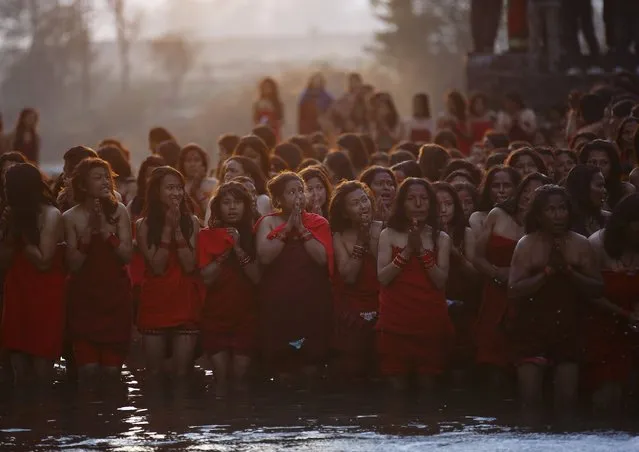
Devotees offer prayers before taking a holy bath during the Swasthani Bratakatha festival in the Triveni River in Panauti near Kathmandu January 24, 2015. (Photo by Navesh Chitrakar/Reuters)

Devotees offer prayers before taking a holy bath during the Swasthani Bratakatha festival in the Triveni River in Panauti near Kathmandu January 24, 2015. During the month long festival, devotees recite one chapter of a Hindu tale daily from the 31-chapter sacred Swasthani Brata Katha book that is dedicated to the God Madhavnarayan and the Goddess Swasthani, alongside various other gods and goddess and the miraculous feats performed by them. The devotees also go on pilgrimages to various temples, perform religious rituals, take a holy bath in the rivers and fast for a month, especially among women who believe fasting helps in their family's well-being or in getting them a good husband. (Photo by Navesh Chitrakar/Reuters)
Details
25 Jan 2015 10:02:00
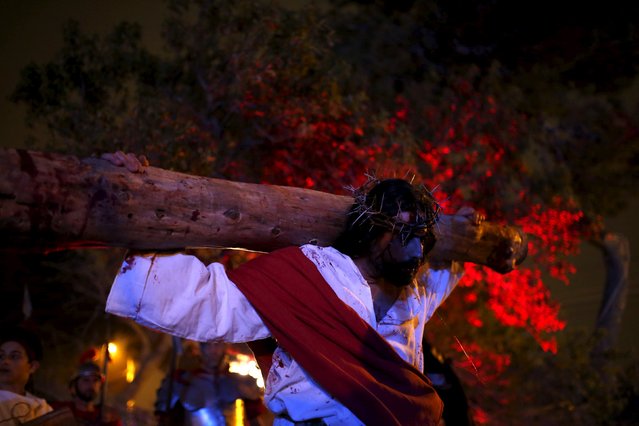
An actor portraying Jesus Christ takes part in the interactive street-theatre Passion play “Il-Mixja” (The Way), one of a series of Holy Week activities in the run-up to Easter, in the grounds of Mount Carmel Mental Hospital in Attard, outside Valletta, Malta, March 22, 2016. (Photo by Darrin Zammit Lupi/Reuters)

An actor portraying Jesus Christ takes part in the interactive street-theatre Passion play “Il-Mixja” (The Way), one of a series of Holy Week activities in the run-up to Easter, in the grounds of Mount Carmel Mental Hospital in Attard, outside Valletta, Malta, March 22, 2016. (Photo by Darrin Zammit Lupi/Reuters)
Details
25 Mar 2016 13:21:00