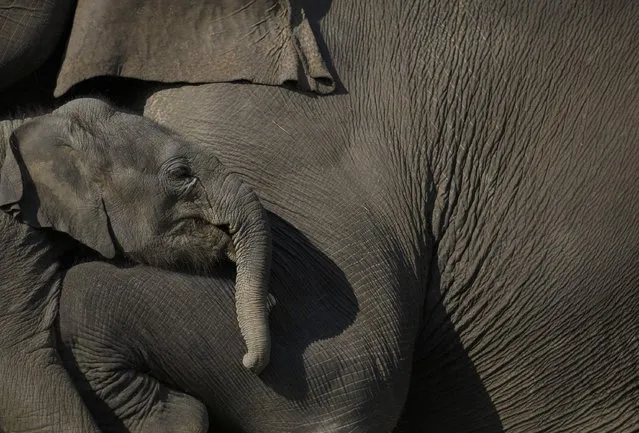
A one and a half months old baby elephant stands close to its mother at Chitwan National Park in Chitwan, south of Kathmandu December 30, 2014. (Photo by Navesh Chitrakar/Reuters)
Labourers stack dried bricks inside a kiln, where they will be fired, at a brick factory on the outskirt of Sanaa, Yemen, June 1, 2016. Traditional mud brick tower houses have always been a source of pride to Yemenis, and over a year into a devastating civil war, they are also providing some much-needed jobs in the ancient capital Sanaa. (Photo by Mohamed al-Sayaghi/Reuters)
A Palestinian holding a weapon takes cover between buildings amid clashes with Israeli troops during an Israeli raid in Nablus in the Israeli-occupied West Bank on June 13, 2023. (Photo by Raneen Sawafta/Reuters)
In more “raccoons are getting more like us” news, a drunk raccoon was found in a liquor store in Virginia, US in the first decade of December 2025. The animal had got into the shop via some loose ceiling tiles, knocked bottles of spirits off the shelves, lapped up the contents and passed out in the toilets. Once it had sobered up, it was released back into the wild – no doubt with a crashing hangover. (Photo by AP Photo)
Folk dancers in Ahmedabad, western India, rehearsing on September 14, 2025 for the Hindu festival of Navaratri, which begins next week. (Photo by Sam Panthaky/Getty Images)
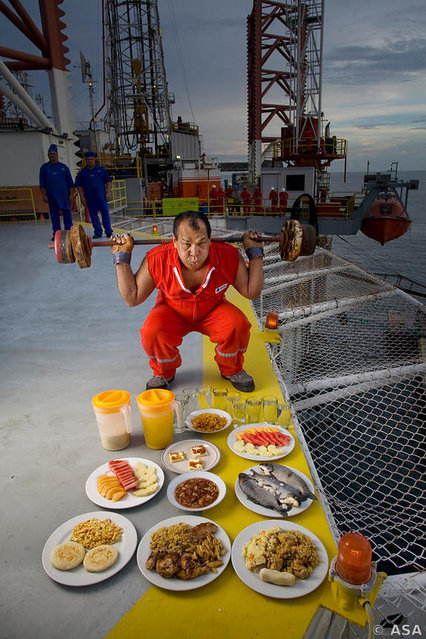
A stunning photographic collection featuring portraits of people from 30 countries and the food they eat in one day. In this fascinating study of people and their diets, 80 profiles are organized by the total number of calories each person puts away in a day. Featuring a Japanese sumo wrestler, a Massai herdswoman, world-renowned Spanish chef Ferran Adria, an American competitive eater, and more, these compulsively readable personal stories also include demographic particulars, including age, activity level, height, and weight. Essays from Harvard primatologist Richard Wrangham, journalist Michael Pollan, and others discuss the implications of our modern diets for our health and for the planet. This compelling blend of photography and investigative reportage expands our understanding of the complex relationships among individuals, culture, and food.
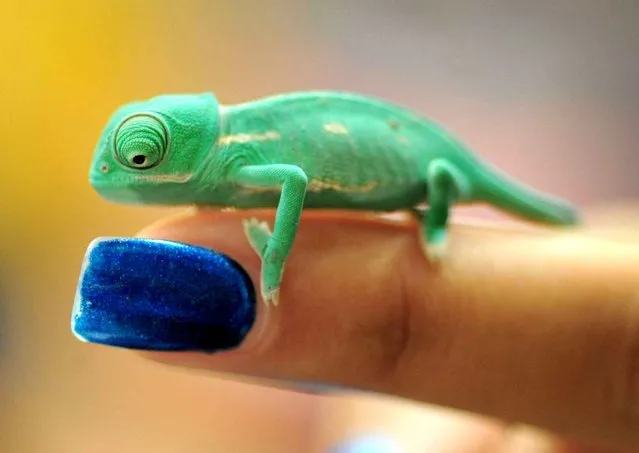
A one month old Turquoise colored Green Veiled Chameleon perches on a finger in the Cardin's Chameleons boothat Repticon 2014 Sunday, August 3, 2014 in Jacksonville, Fla. The vendor specializes in captive bred and born Veiled Chameleons and this particular specimen cost $40.00. The Repticon reptile and Exotic Animal show made its stop in Jacksonville over Saturday and Sunday offering a variety of cold blooded critters and related supplies for sale at the University Center on the University of North Florida campus. The show, which travels nationally stops in Jacksonville several times a year according to event vendor team leader Patty Healey. (Photo by Bob Self/AP Photo/The Florida Times-Union)