Loading...
Done
Klementinum Library, Prague, Czech Republic

The Clementinum (Klementinum in Czech) is a historic complex of buildings in Prague. Until recently the complex hosted the National, University and Technical libraries, the City Library also being located nearby on Mariánské Náměstí. The Technical library and the Municipal library have moved to the Prague National Technical Library at Technická 6 since 2009. It is currently in use as the National Library of the Czech Republic. In 2005, the Czech National Library received the UNESCO Jikji prize (Memory of the World).
Details
15 Sep 2013 10:04:00


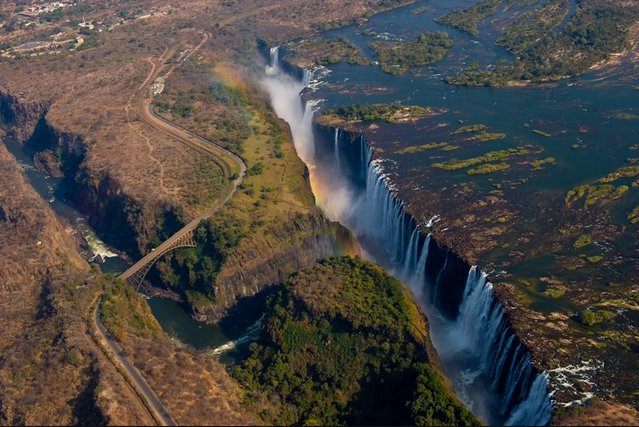
Victoria Falls is a town in the province of Matabeleland North, Zimbabwe. It lies on the southern bank of the Zambezi River at the western end of the Victoria Falls themselves. It is connected by road and railway to Hwange (109 km away) and Bulawayo (440 km away), both to the south-east.


See Also: “Devil's Pool”
Details
09 Oct 2013 11:06:00
Longsheng Rice Terraces

The Longsheng Rice Terraces are located in Longsheng County, about 100 km (2 hours drive) from Guilin, Guangxi, China. The most popular are Ping An Rice Terrace and Jinkeng Rice Terrace. The terraced fields are built along the slope winding from the riverside up to the mountain top, the highest part being 880 m in elevation while the lowest part is 380 m[citation needed]. The coiling line that starts from the mountain foot up to the mountain top divides the mountain into layers of water glittering in the sun in spring, layers of green rice shoots in summer, layers of golden rice in fall, and layers of silvery frost in winter. The terraced fields were mostly built during the Ming Dynasty, about 500 years ago.
Details
18 Oct 2013 12:45:00
Pyrite Cubic Crystals

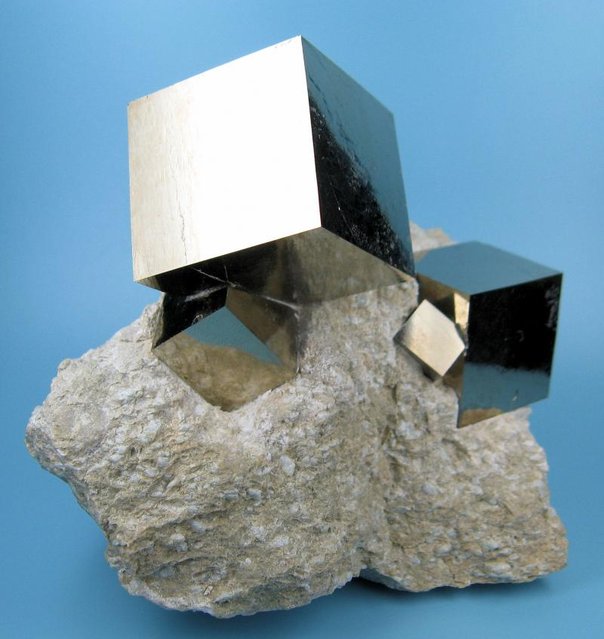
The mineral pyrite, or iron pyrite, also known as fool's gold, is an iron sulfide with the formula FeS2. This mineral's metallic luster and pale brass-yellow hue give it a superficial resemblance to gold, hence the well-known nickname of fool's gold. The color has also led to the nicknames brass, brazzle, and Brazil, primarily used to refer to pyrite found in coal.
In crystallography, the cubic (or isometric) crystal system is a crystal system where the unit cell is in the shape of a cube. This is one of the most common and simplest shapes found in crystals and minerals.
Details
23 Nov 2013 13:31:00
Seven Sisters Waterfall, Norway

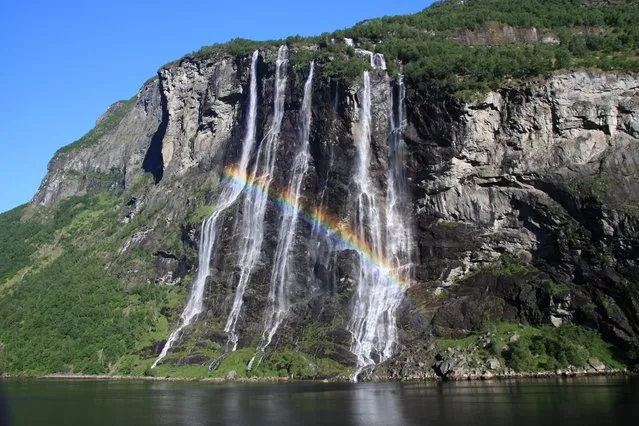
The Seven Sisters is the 39th tallest waterfall in Norway. The waterfall consists of seven separate streams, and the tallest of the seven has a free fall that measures 250 metres (820 ft). The waterfall is located along the Geirangerfjorden in Stranda Municipality in Møre og Romsdal county, Norway. The waterfall is located just south of the historic Knivsflå farm, across the fjord from the old Skageflå farm. The falls are about 6.5 kilometres (4.0 mi) west of the village of Geiranger. It is part of the Geiranger World Heritage Site.
Details
11 Dec 2013 10:13:00
Mitchell Falls Australia

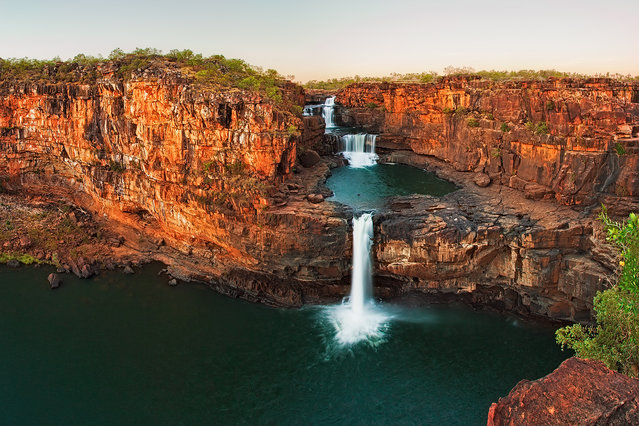
Mitchell Falls are a chain of four waterfalls located in the remote north of the Kimberley Region (Western Australia, a little more than 2,000 kilometers northeast of Perth.). It is a part of Mitchell River National Park (one of the protected areas of Western Australia), Mitchell Falls are probably one of the park’s main attractions.
Details
14 Dec 2013 13:29:00
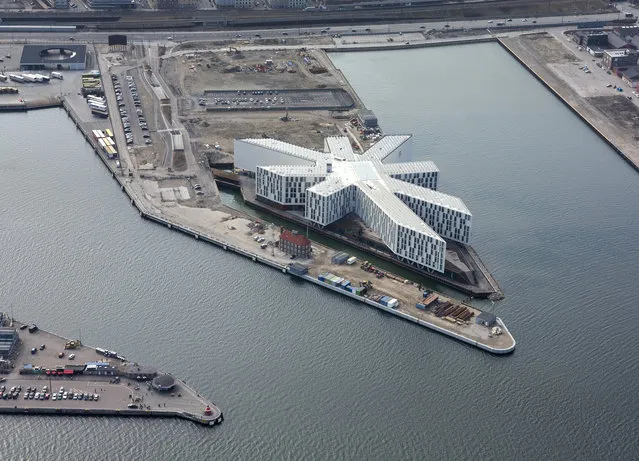
UN City In Copenhagen

Cooperation is key to success. This motto was used by the Government of Denmark when they decided to create a project that bore the name of UN City. This compound was designed to house all nine Copenhagen based UN agencies under a single roof. This embodies the core idea of the United Nations, since this project allows for better efficiency and practicality thanks to joint effort. The first plans for the UN City were hatched in 2002. After 11 years, in 2013 the first stage of the project was finally finished. Presently, Campus 1 of UN City accommodates 1,300 staff member, while Campus 2 is going to become the largest humanitarian warehouse in the whole world.
Details
28 Feb 2015 16:17:00
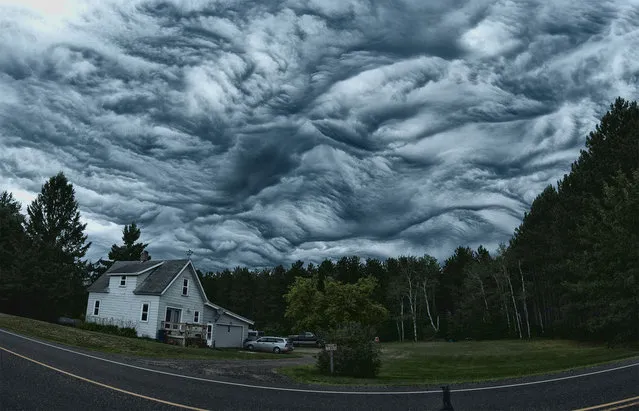
Undulatus asperatus Is A Cloud Formation

Undulatus asperatus (or alternately, asperatus) is a cloud formation, proposed in 2009 as a separate cloud classification by the founder of the Cloud Appreciation Society. If successful it will be the first cloud formation added since cirrus intortus in 1951 to the International Cloud Atlas of the World Meteorological Organization. The name translates approximately as “roughened or agitated waves”.
Details
18 Sep 2014 12:00:00