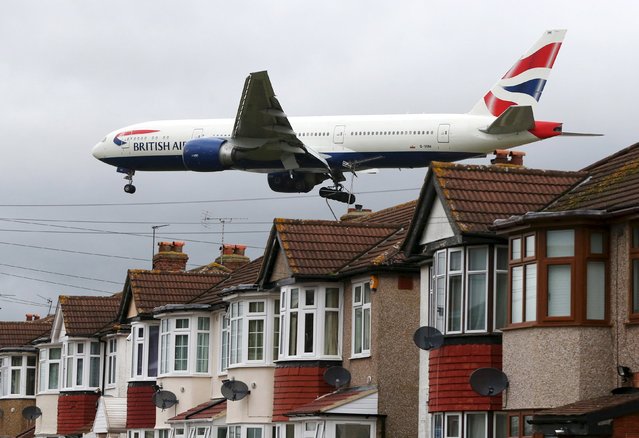
An aircraft passes over houses at it lands at Heathrow Airport near London, Britain, December 11, 2015. Picture taken December 11, 2015. (Photo by Neil Hall/Reuters)
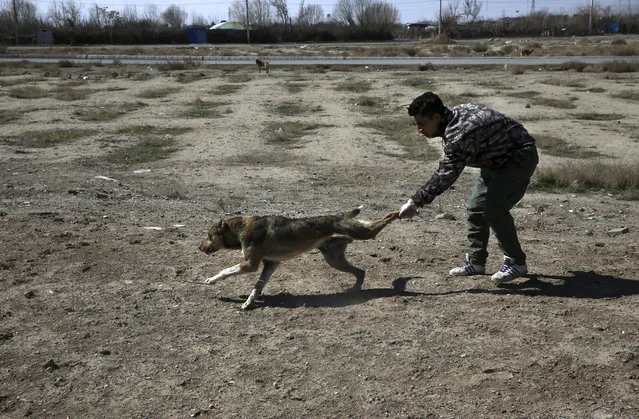
In this picture taken on Sunday, March 5, 2017, a Tehran's urban animal control worker catches a stray dog after being shot with his anesthetic dart on the outskirts of the capital Tehran, Iran. The shelter has been hired by the Tehran city government to take a new, more humane approach to deal with the burgeoning problem of stray dogs in the capital. It’s a sign of changing attitudes among officials in a country where Islamic authorities long saw dogs as “un-Islamic” and would at times confiscate them from people who kept them as pets. (Photo by Vahid Salemi/AP Photo)
Billy Robinson, from Galax, Va., rides Gentleman Jim during the Professional Bull Riders Buck Off, in New York's Madison Square Garden, Saturday, January 17, 2015. The top 35 bull riders compete during the PBR event, returning to New York for the ninth consecutive year. (Photo by Richard Drew/AP Photo)
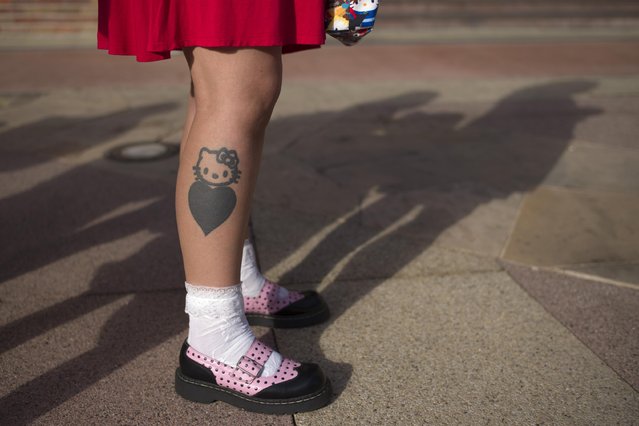
A woman with a Hello Kitty tattoo waits in line to attend the Hello Kitty Con, the first-ever Hello Kitty fan convention, held at the Geffen Contemporary at MOCA Thursday, October 30, 2014, in Los Angeles. The convention was held to honor the character's 40th birthday. (Photo by Jae C. Hong/AP Photo)
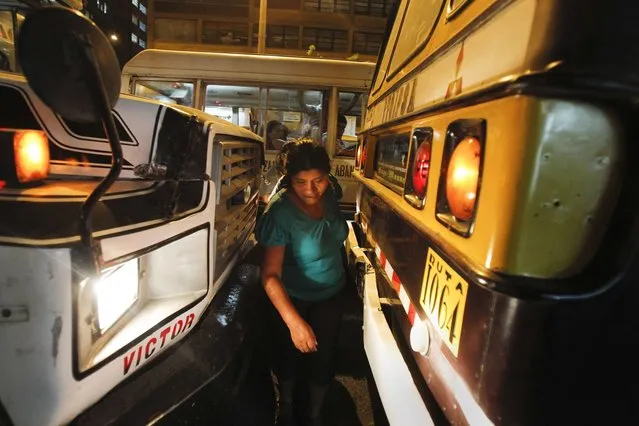
A woman squeezes between two public buses in downtown Lima, March 17, 2014. Bogota and two other Latin American capitals – Mexico City, and Lima in Peru – were named as the three capitals with the least safe transport systems for women in the Thomson Reuters Foundation poll of more than 6,550 women and gender and city planning experts. Women in Latin America say they face a wide range of daily threats on public transport, and not enough is done to ensure their safety. (Photo by Enrique Castro-Mendivil/Reuters)
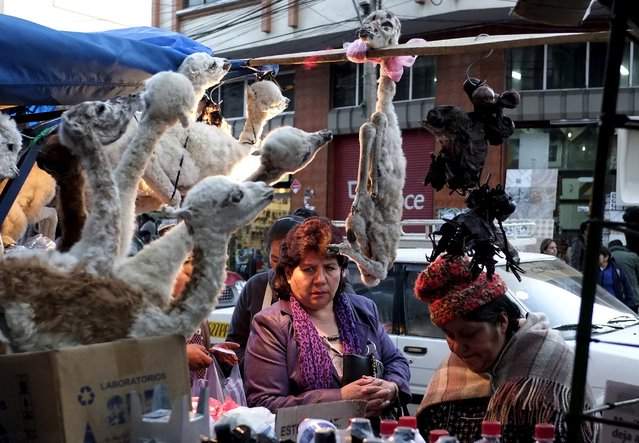
A woman (C) shops for an offering at the witch doctor's street in La Paz, July 31, 2015. According to Andean culture, the all the month of August is a time to give offerings to “Pachamama” to give thanks for their farms and health. The Aymaras use coca leaves, candies, animal fat, llama fetuses, some dried fruits, powdered minerals and alcohol during these rituals. (Photo by David Mercado/Reuters)