Loading...
Done
Wooden Churches - Travelling In The Russian North By Richard Davies Part 2

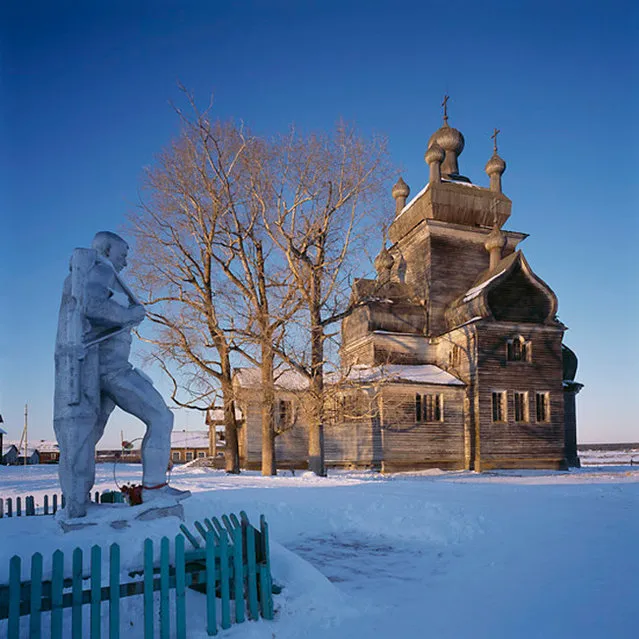
While communism, collectivism, worms, dry rot and casual looting failed to destroy the majestic wooden churches of Russia, it may be ordinary neglect that finally does them in. Dwindled now to several hundred remaining examples, these glories of vernacular architecture lie scattered amid the vastness of the world’s largest country. Just over a decade ago, Richard Davies, a British architectural photographer, struck out on a mission to record the fragile and poetic structures. Austerely beautiful and haunting, “Wooden Churches: Traveling in the Russian North” (White Sea Publishing; $132) is the result. Covering thousands of miles, Mr. Davies described how he and the writer Matilda Moreton tracked down the survivors from among the thousands of onion-domed structures built after Prince Vladimir converted to Christianity in 988.

See also: Wooden Churches Part1
Details
28 Nov 2013 12:13:00
A reveler jumps over a bonfire during the night of San Juan in Alcobendas near Madrid, Spain, Wednesday, June 24, 2015. The San Juan night coincides with the Summer solstice and it's the welcome to Summer. This celebration takes place during the shortest night of the year in almost all cities and towns of Spain. (Photo by Andres Kudacki/AP Photo)

A reveler jumps over a bonfire during the night of San Juan in Alcobendas near Madrid, Spain, Wednesday, June 24, 2015. The San Juan night coincides with the Summer solstice and it's the welcome to Summer. This celebration takes place during the shortest night of the year in almost all cities and towns of Spain. (Photo by Andres Kudacki/AP Photo)
Details
30 Jul 2015 12:35:00
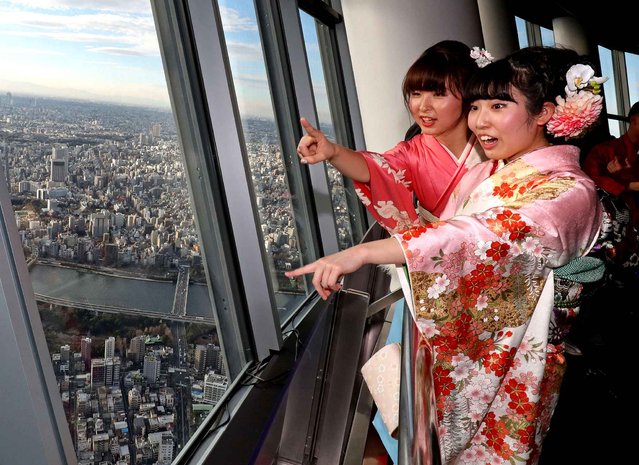
Kimono-clad women enjoy the view from Tokyo Sky Tree’s 350-meter-high observation deck in Sumida Ward, Tokyo, on the Coming of Age Day, January 9, 2017. Sumida Ward invited about 430 local 20-year-old to the deck to celebrate them. Many city governments invite local 20-years-old to there’s symbolic places and celebrate for their Coming of Age Day. (Photo by The Yomiuri Shimbun via AP Images)

Kimono-clad women enjoy the view from Tokyo Sky Tree’s 350-meter-high observation deck in Sumida Ward, Tokyo, on the Coming of Age Day, January 9, 2017. Sumida Ward invited about 430 local 20-year-old to the deck to celebrate them. Many city governments invite local 20-years-old to there’s symbolic places and celebrate for their Coming of Age Day. (Photo by The Yomiuri Shimbun via AP Images)
Details
10 Jan 2017 13:41:00
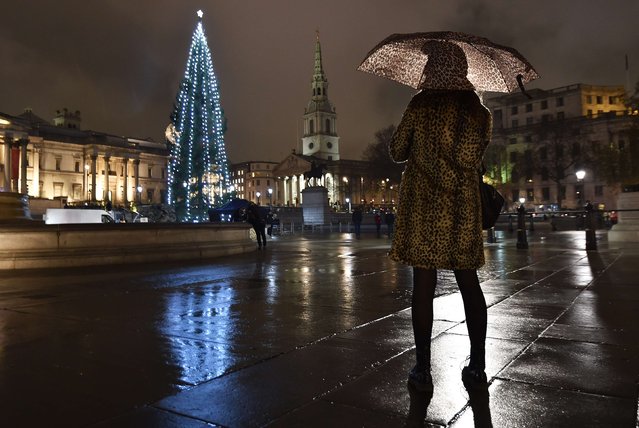
A woman photographs a Norwegian spruce Christmas tree from Oslo after it was lit at Trafalgar Square in central London, December 4, 2014. (Photo by Toby Melville/Reuters)

A woman photographs a Norwegian spruce Christmas tree from Oslo after it was lit at Trafalgar Square in central London, December 4, 2014. (Photo by Toby Melville/Reuters)
Details
16 Dec 2014 12:34:00
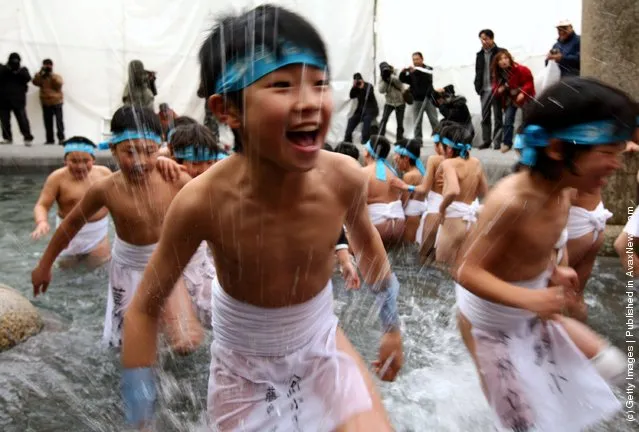
Japanese children wear loincloths as they splash about in freezing cold water during Saidaiji Naked Festival, at Saidaiji Temple

“A Hadaka Matsuri (“Naked Festival”) is a type of Japanese festival, or matsuri, in which participants wear a minimum amount of clothing; usually just a Japanese loincloth (called fundoshi), sometimes with a short happi coat, and rarely completely naked. Whatever the clothing, it is considered to be above vulgar, or everyday, undergarments, and on the level of holy Japanese shrine attire. Naked festivals are held in dozens of places throughout Japan every year, usually in the summer or winter. The most famous festival is held in Okayama, where the festival originated. Every year, over 9,000 men participate in this festival”. – Wikipedia

Photo: Japanese men wear loincloths as they splash about in freezing cold water during Saidaiji Naked Festival, at Saidaiji Temple on February 18, 2012 in Okayama, Japan. (Photo by Buddhika Weerasinghe/Getty Images)
Details
19 Feb 2012 12:18:00
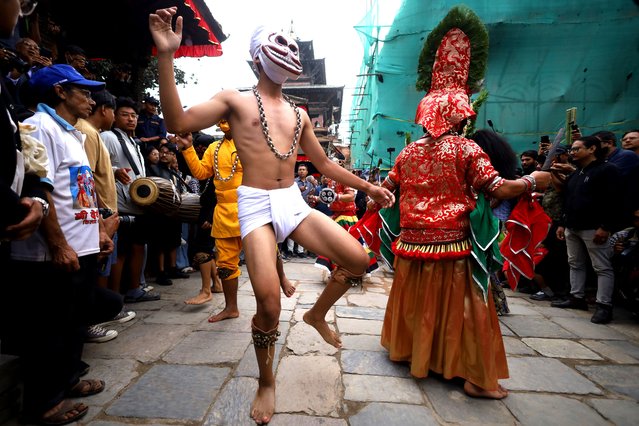
Masked dancers perform a ritualistic dance at Kathmandu Durbar Square during the procession of erecting a sacred pole locally called “Ya: Shi”, marking the formal start of Indra Jatra dedicated to rain god Indra in Kathmandu, Nepal, on September 15, 2024. The festival lasts for eight days with singing, mask dancing, and other rituals. Indra Jatra festival falls on the fourth day of the waxing moon in the month of Bhadra as per the lunar calendar. Legends say that the Indra Jatra festival observes the victory of the gods over the demons to release Jayanta, the son of Lord Indra. Indra, the god of rain, is worshiped in this festival primarily celebrated by the Newar communities following both Hinduism and Buddhism. (Photo by Subaas Shrestha/NurPhoto/Rex Features/Shutterstock)

Masked dancers perform a ritualistic dance at Kathmandu Durbar Square during the procession of erecting a sacred pole locally called “Ya: Shi”, marking the formal start of Indra Jatra dedicated to rain god Indra in Kathmandu, Nepal, on September 15, 2024. (Photo by Subaas Shrestha/NurPhoto/Rex Features/Shutterstock)
Details
24 Sep 2024 03:27:00
On February 16, 2025, Finna Indriani, a 27-year-old female jockey, showcased her skills in a specialized “sport-action” performance during the “Roda Gila” entertainment event at a traditional night market in Deli Serdang, North Sumatra Province, Indonesia. Including female jockeys in the “roda-gila” attraction exemplifies a significant advancement in challenging gender stereotypes and demonstrates women's competencies in action sports. Action sports are inherently inclusive and accessible to individuals of all genders. Society can foster greater inclusivity and equality by actively promoting and supporting women's involvement in action sports. (Photo by Sutanta Aditya/Rex Features/Shutterstock)

On February 16, 2025, Finna Indriani, a 27-year-old female jockey, showcased her skills in a specialized “sport-action” performance during the “Roda Gila” entertainment event at a traditional night market in Deli Serdang, North Sumatra Province, Indonesia. (Photo by Sutanta Aditya/Rex Features/Shutterstock)
Details
27 Feb 2025 05:09:00
A woman laughs as she takes part in the “Domingo Fareleiro” (Floury Sunday in Galician) festival in the village of Xinzo de Limia, northwestern Spain, on January 21, 2018. (Photo by Miguel Riopa/AFP Photo)

A woman laughs as she takes part in the “Domingo Fareleiro” (Floury Sunday in Galician) festival in the village of Xinzo de Limia, northwestern Spain, on January 21, 2018. Domingo Fareleiro (Floury Sunday) takes place annually in Xinzo de Limia, Spain, in a unique celebration that gives the starting signal for a long festive period known as Entroido, or Carnival. (Photo by Miguel Riopa/AFP Photo)
Details
24 Jan 2018 06:11:00