Loading...
Done


“Kumbh Mela is a mass Hindu pilgrimage in which Hindus gather at the Ganges river. The normal Kumbh Mela is celebrated every 3 years, the Ardh (half) Kumbh Mela is celebrated every six years at Haridwar and Prayag, the Purna (complete) Kumbh takes place every twelve years, at four places (Prayag (Allahabad), Haridwar, Ujjain, and Nashik). The Maha (great) Kumbh Mela which comes after 12 “Purna Kumbh Melas”, or 144 years, is held at Allahabad.

The last Ardh Kumbh Mela was held over a period of 45 days beginning in January 2007, more than 70 million Hindu pilgrims took part in the Ardh Kumbh Mela at Prayag, and on January 15, the most auspicious day of the festival of Makar Sankranti, more than 5 million participated. The previous Maha Kumbh Mela, held in 2001, was attended by around 60 million people, making it at the time the largest gathering anywhere in the world in recorded history”. – Wikipedia

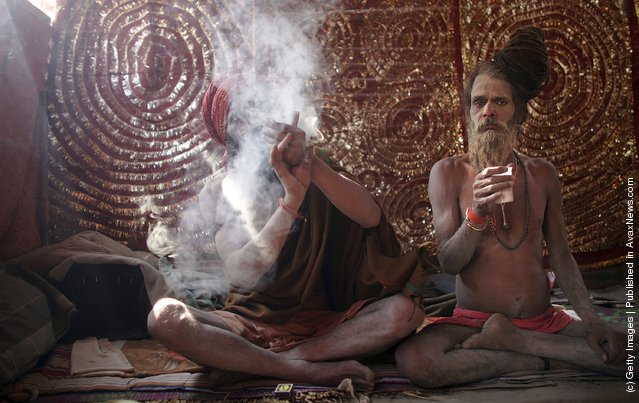
Photo: Sadhus (holy men) smoke at their camp near the ritual site at Sangam, the confluence of the Ganges, Yamuna and mythical Saraswati rivers during the Ardh Kumbh Mela festival (Half Pitcher festival) January 18, 2007 in Allahabad, India. Millions of Hindu pilgrims have flocked to the largest religious gathering in the world which lasts for 45 days in northern India. The festival commemorates the mythical conflict between gods and demons over a pitcher filled with the “nectar of immortality”. Devotees believe that taking a holy dip in the Ganges at this time washes away their sins and paves the path to salvation. (Photo by Mario Tama/Getty Images)
Details
30 Jun 2011 10:27:00
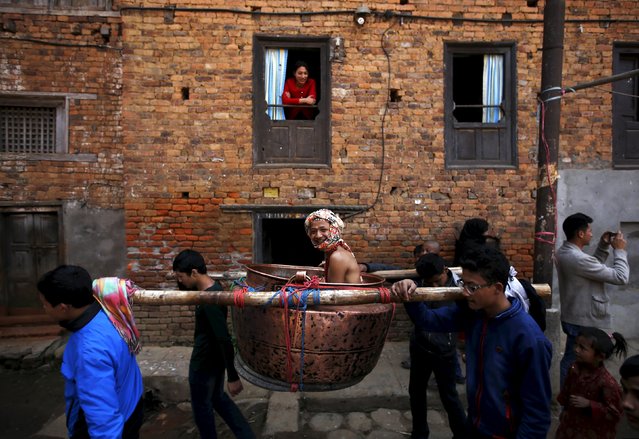
A devotee is carried around town in a vessel as part of rituals during the Swasthani Bratakatha festival at Thecho in Lalitpur, Nepal, February 19, 2016. During the month long festival, devotees recite one chapter of a Hindu tale daily from the 31-chapter sacred Swasthani Brata Katha book that is dedicated to God Madhavnarayan and Goddess Swasthani, alongside various other gods and goddess and the miraculous feats performed by them. (Photo by Navesh Chitrakar/Reuters)

A devotee is carried around town in a vessel as part of rituals during the Swasthani Bratakatha festival at Thecho in Lalitpur, Nepal, February 19, 2016. During the month long festival, devotees recite one chapter of a Hindu tale daily from the 31-chapter sacred Swasthani Brata Katha book that is dedicated to God Madhavnarayan and Goddess Swasthani, alongside various other gods and goddess and the miraculous feats performed by them. (Photo by Navesh Chitrakar/Reuters)
Details
21 Feb 2016 11:32:00
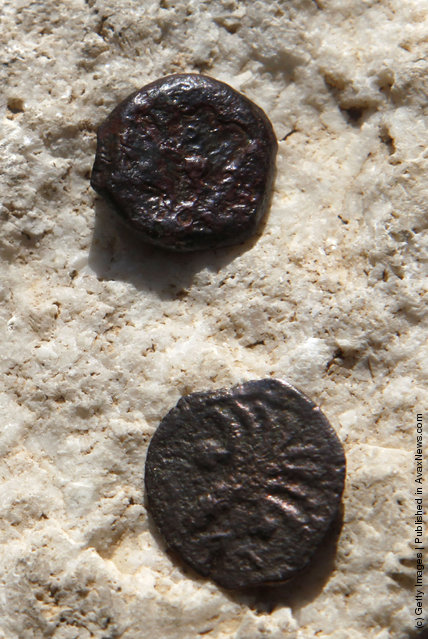
Two ancient bronze coins, which according to Israel Antiquities Authority archaeologists were struck by the Roman procurator of Judea, Valerius Gratus, in the year 17/18 CE and recently were revealed in excavations beneath the Western Wall in Jerusalem's Old City

Two ancient bronze coins, which according to Israel Antiquities Authority archaeologists were struck by the Roman procurator of Judea, Valerius Gratus, in the year 17/18 CE and recently were revealed in excavations beneath the Western Wall in Jerusalem's Old City are exposed to the media' on November 23, 2011 in Israel. (Photo by Lior Mizrahi/Getty Images)
Details
24 Nov 2011 15:13:00
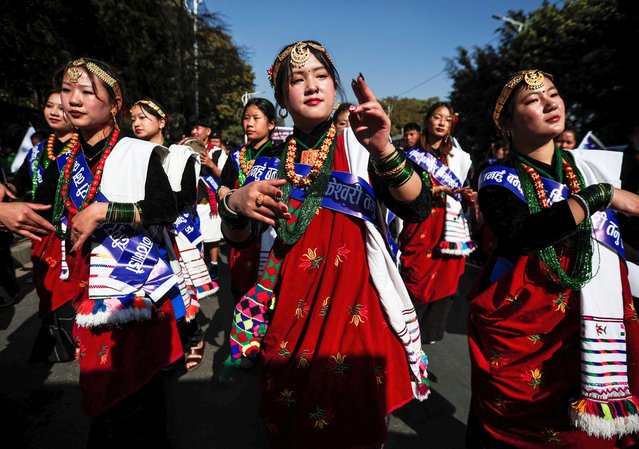
Participants take part in a parade in traditional attire to celebrate Tamu Lhosar, a New Year festival of the Gurung community in Kathmandu, Nepal on December 30, 2024. (Photo by Navesh Chitrakar/Reuters)

Participants take part in a parade in traditional attire to celebrate Tamu Lhosar, a New Year festival of the Gurung community in Kathmandu, Nepal on December 30, 2024. (Photo by Navesh Chitrakar/Reuters)
Details
11 Jan 2025 03:42:00
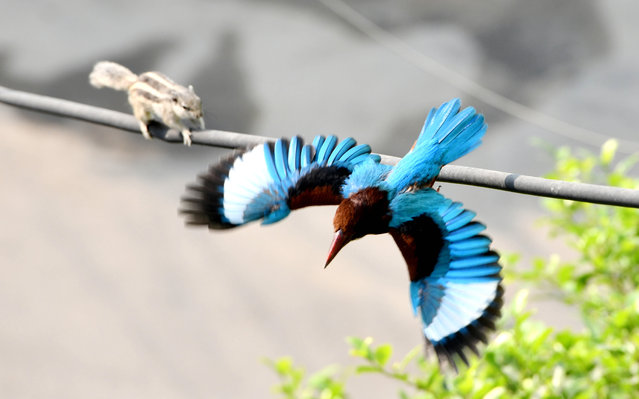
A squirrel crawls along an electrical cable as a kingfisher takes off from it in New Delhi, India, October 24, 2020. (Photo by Chine Nouvelle/SIPA Press/Rex Features/Shutterstock)

A squirrel crawls along an electrical cable as a kingfisher takes off from it in New Delhi, India, October 24, 2020. (Photo by Chine Nouvelle/SIPA Press/Rex Features/Shutterstock)
Details
03 Nov 2020 00:01:00
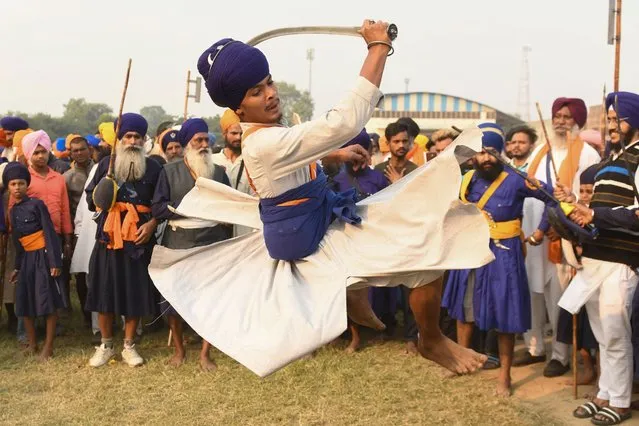
A Nihang' or Sikh warrior performs “Gatka”, an ancient form of Sikh martial arts, during a Fateh Divas celebration a day after the Hindu festival Diwali, in Amritsar on November 5, 2021. (Photo by Narinder Nanu/AFP Photo)

A Nihang' or Sikh warrior performs “Gatka”, an ancient form of Sikh martial arts, during a Fateh Divas celebration a day after the Hindu festival Diwali, in Amritsar on November 5, 2021. (Photo by Narinder Nanu/AFP Photo)
Details
13 Nov 2021 08:09:00
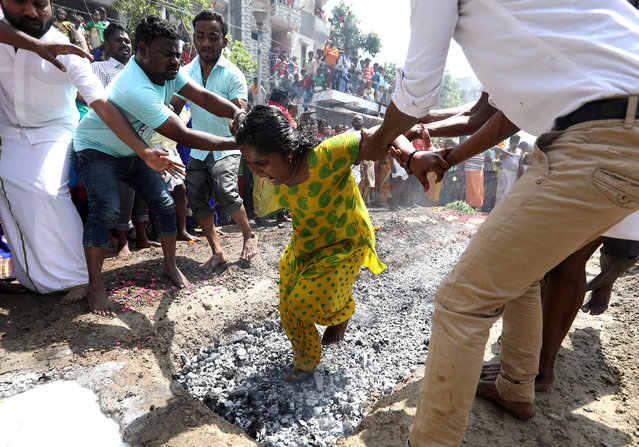
A Hindu devotee is helped by other people as she walks on burning coals during a religious procession Vel Festival of the Hindu goddess Maha Mariamman (Sheetla Mata), in New Delhi, India, 06 April 2017. People get their bodies pierced with different kinds of metal needles and rods and participate in a religious procession as thanks giving gesture to the goddess in return of their fulfilled wishes during the annual procession. (Photo by Rajat Gupta/EPA)

A Hindu devotee is helped by other people as she walks on burning coals during a religious procession Vel Festival of the Hindu goddess Maha Mariamman (Sheetla Mata), in New Delhi, India, 06 April 2017. People get their bodies pierced with different kinds of metal needles and rods and participate in a religious procession as thanks giving gesture to the goddess in return of their fulfilled wishes during the annual procession. (Photo by Rajat Gupta/EPA)
Details
10 Apr 2017 08:59:00
A cow covered with foam scavenges in the waste left on the banks of the polluted Yamuna river in New Delhi on October 10, 2020. (Photo by Sajjad Hussain/AFP Photo)

A cow covered with foam scavenges in the waste left on the banks of the polluted Yamuna river in New Delhi on October 10, 2020. (Photo by Sajjad Hussain/AFP Photo)
Details
21 Oct 2020 00:03:00