Two novice Buddhist monks walk alongside a basket seller to collect alms following a clerics rule of no footwear nor use of umbrellas in Mandalay, Myanmar, Friday, October 9, 2015. (Photo by Hkun Lat/AP Photo)
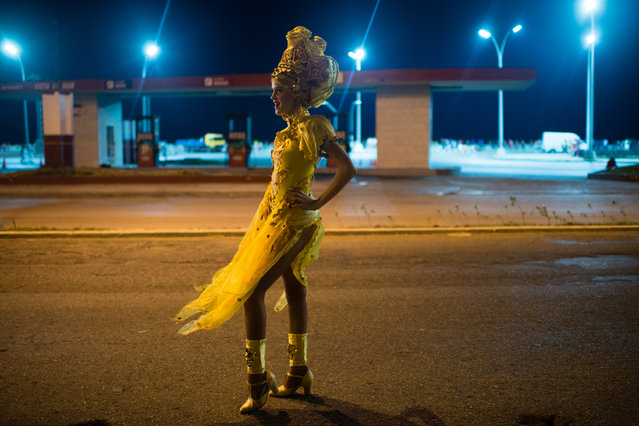
Yakelin Hernandez, 18, poses for a photograph near The Malecon where The Carnival was held, on August 14, 2015. Colorful costumes, dancing, parades and street parties on the Malecon in Havana, Cuba are all part of Havana Carnival 2015 which was held in August. (Photo by Sarah L. Voisin/The Washington Post)
Police officers detain a FEMEN naked activist during an action at the Poland embassy in Kiev on October 26, 2020 in support of Polish women in their right to abortion. (Photo by Sergei Supinsky/AFP Photo)
A devotee offers prayers to Sun God while standing inside an artificial pond near the banks of river Yamuna on the occasion of the Hindu festival of “Chhath Puja” in New Delhi on October 30, 2022. (Photo by Sajjad Hussain/AFP Photo)
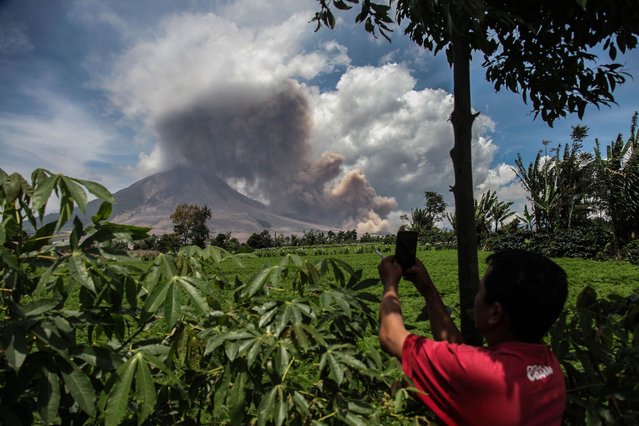
Mount Sinabung continues to spew thick smoke into the air in Karo, North Sumatra on October 30, 2020. (Photo by Albert Ivan Damanik/Anadolu Agency via Getty Images)
Undated handout photo issued by Take a View of the winner of the Adobe Prize of the Landscape Photographer of the Year Awards, The Daymark, Brixham, Devon, England by Will Milner (lives Oxfordshire). Issue date: Monday October 15, 2018. (Photo by Will Milner/PA Wire Press Association)
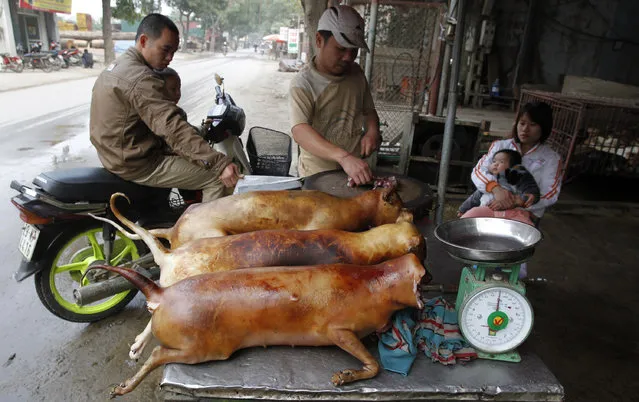
A vendor (C) cuts slaughtered dogs for sale at his roadside stall in Duong Noi village, outside Hanoi December 16, 2011. While animal rights activists have condemned eating dog meat as cruel treatment of the animals, it is still an accepted popular delicacy for some Vietnamese, as well in some other Asian countries. Duong Noi is well-known as a dog-meat village, where hundreds of dogs are killed each day for sale as popular traditional food. Dog-eating as a custom is rooted in Vietnam and was developed as a result of poverty. One kilogram of dog meat costs about 130,000 dongs ($6.2). (Photo by Reuters/Kham)