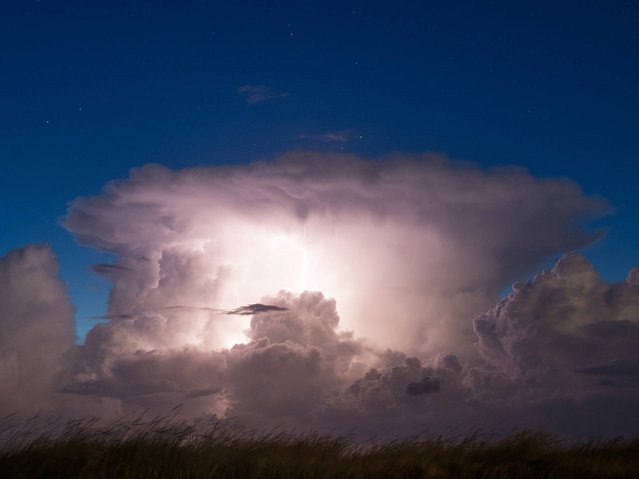
Lightning illuminates a thundercloud as a storm front hits the North Sea region near Westerhever, northern Germany, on August 11, 2014. (Photo by Daniel Reinhardt/AFP Photo/DPA)
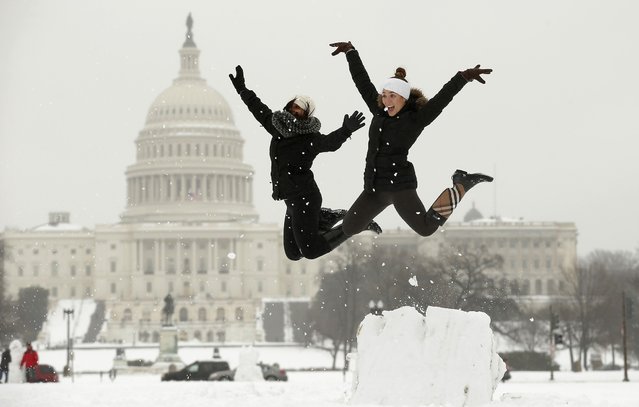
Adrienne Sipe (L) and Brooke Gilliam of Washington D.C. leap off a snow podium they made near the U.S. Capitol in Washington February 13, 2014. A deadly and intensifying winter storm packing heavy snow, sleet and rain pelted a huge swath of the U.S. East Coast on Thursday, grounding flights and shuttering schools and government offices. (Photo by Kevin Lamarque/Reuters)
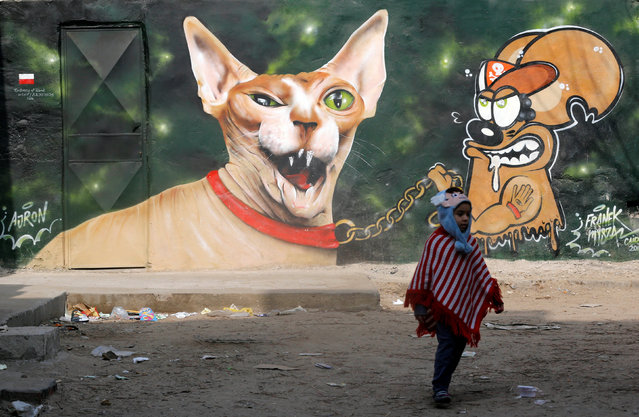
A girl walks in front of a graffiti painted on the wall of a house located inside the 15th-century complex built by Mameluk Sultan al-Ashraf Qaitbey, in Cairo's City of the Dead, Egypt February 13, 2017. (Photo by Amr Abdallah Dalsh/Reuters)
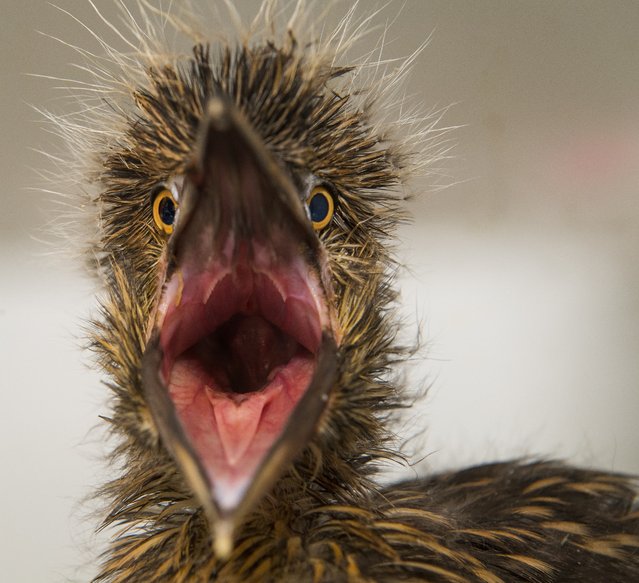
A baby Black-crowned Night Heron squawks in its incubator while being cared for at City Wildlife rescue and rehabilitation center in Washington, DC on May 31, 2017. The heron is one of several that have been brought to CW by the staff at The National Zoo over the past few years. (Photo Linda Davidson/The Washington Post)
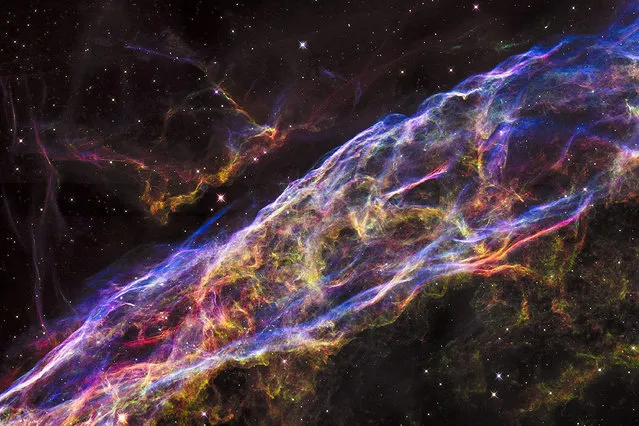
A small section of the expanding remains of the Veil Nebula, a massive star that exploded about 8,000 years ago. The entire nebula is 110 light-years across, covering six full moons on the sky as seen from Earth, and resides about 2,100 light-years away in the constellation Cygnus, the Swan. (Photo by Reuters/NASA/ESA/Hubble)
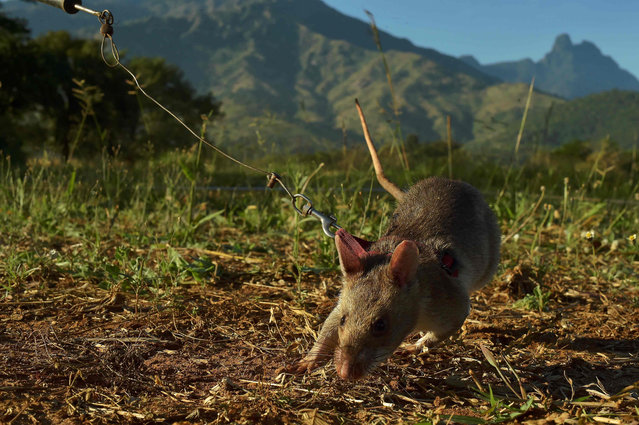
An African giant pouched rat sniffs for traces of landmine explosives at APOPO's training facility in Morogoro on June 17, 2016. APOPO trains the rats to detect both tuberculosis and landmines at its facility. Every year landmines kill or maim thousands of people worldwide. The trained rats sniff for explosive and so are able to detect the presence of landmines far faster than conventional methods which involve metal detection. (Photo by Carl De Souza/AFP Photo)