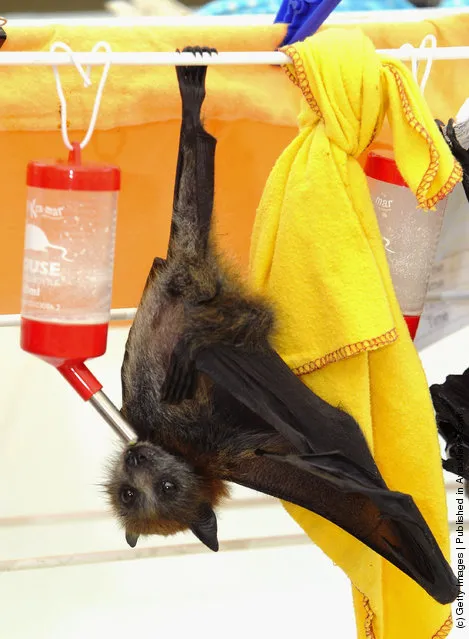
A Baby Flying Fox (Pteropus) hangs from a clothes line at a temporary bat rehabilitation centre on December 3, 2008 on the Gold Coast, Australia. (Photo by David Hardenberg/Getty Images)
The last of the summer roses are dusted with a coating of frost as the first freezing temperatures descend on Britain on November 7, 2011 in Knutsford, England. The roses are the last blooms to survive the Summer at Curbishleys specialist rose nursery in Cheshire. (Photo by Christopher Furlong/Getty Images)
Walker the polar bear on his third birthday at the Highland Wildlife Park on December 7, 2011 in Kingussie, Scotland. (Photo by Jeff J. Mitchell/Getty Images)
Female panda Tian Tian makes her first appearance in front of the media since arriving from China on December 12, 2011 in Edinburgh, Scotland. (Photo by Jeff J. Mitchell/Getty Images)
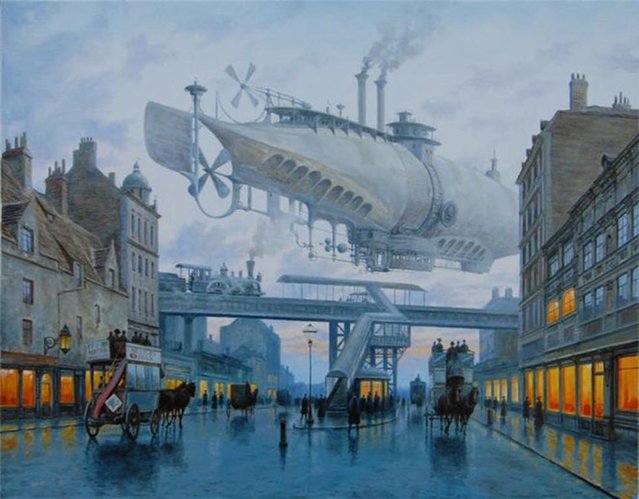
Vadim Voitekhovitch was born in a small town of Mozyr, Belarus. He spent most of his life Belarus and he graduated from Bobruisk Art College. From 2004 he lives and works in Germany. His style is quite diverse, but he dedicates most of his time to watercolor and oil. Voitekhovitch likes to draw pictures on history subjects and especially subjects coming from XVIII-XIX centuries.
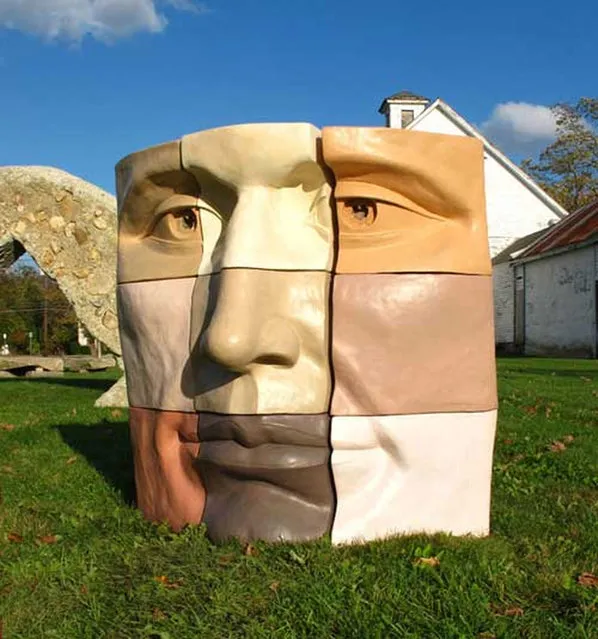
American sculptor Michael Alfano has been sculpting for over fifteen years. A native of New York, he now lives and works in Hopkinton, Massachusetts. His major influences are Salvador Dali, Jo Davidson, and Jean-Antoine Houdon, as well as Buddhist, Taoist, Sufi and other eastern philosophy and literature. He first studied at the Art Students League of New York, with an emphasis on life-size sculpture from the model. His formal education continued at Boston University and was augmented by internships with several prominent sculptors.
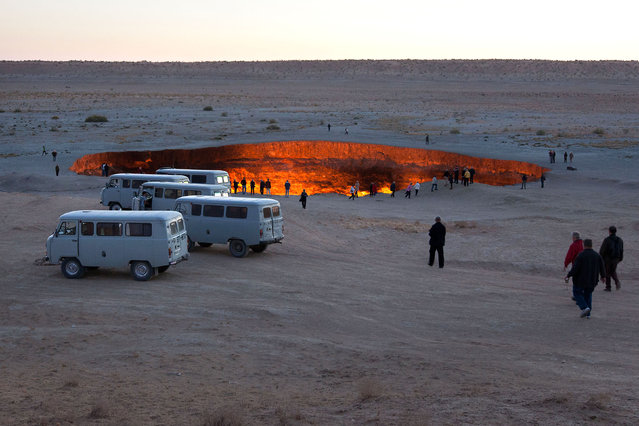
“These are the astonishing images of the very aptly named door to hell, a fiery crater thats baffled scientist and has been flaming away for more than 40 years. The crater is 230-feet wide and situated near Derweze village in Turkmenistan”. – Caters News. (Photo by William Keeping/Caters News)
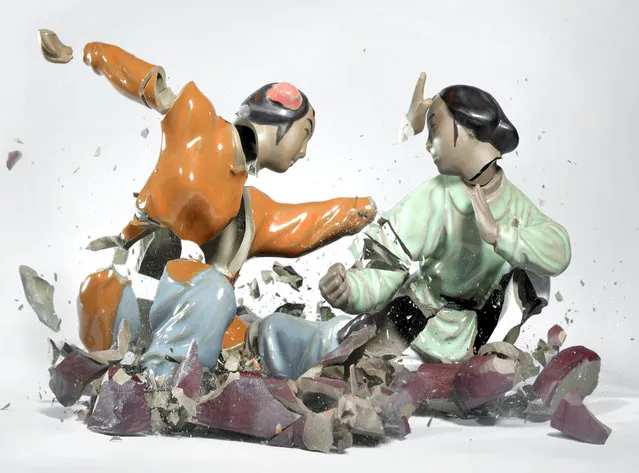
From a height of three meters, porcelain figurines are dropped on the ground, and the sound they make when they hit trips the shutter release. The result: razor-sharp images of disturbing beauty—temporary sculptures made visible to the human eye by high-speed photography technology. The porcelain statuette bursting into pieces isn't what really captures the attention; the fascination lies in the genesis of a dynamic figure that replaces the static pose. In contrast to the inertness of the intact kitsch figurines Klimas started out with, the photographs of their destruction possess a powerfully narrative character.