Loading...
Done
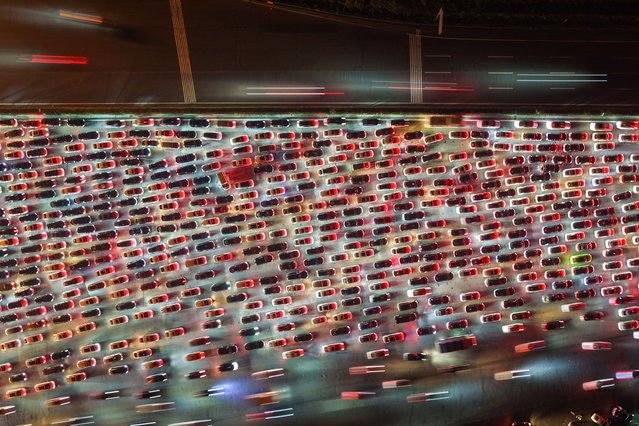
Drivers merge onto expressway lanes after passing through the Wuzhuang toll station at Chuzhou, in China's eastern Anhui province, as they make their way back home on the second-to-last day of an eight-day National Day holiday on October 7, 2025. The Wuzhuang toll station, located on the border between Anhui and Jiangsu provinces, is China's largest expressway toll station, with a total of 36 lanes. (Photo by AFP Photo/China Stringer Network)

Drivers merge onto expressway lanes after passing through the Wuzhuang toll station at Chuzhou, in China's eastern Anhui province, as they make their way back home on the second-to-last day of an eight-day National Day holiday on October 7, 2025. The Wuzhuang toll station, located on the border between Anhui and Jiangsu provinces, is China's largest expressway toll station, with a total of 36 lanes. (Photo by AFP Photo/China Stringer Network)
Details
30 Oct 2025 07:07:00
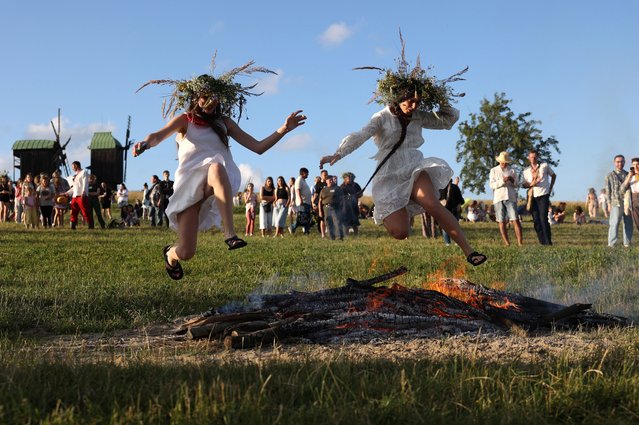
Participants jump over a bonfire as they celebrate the Pagan holiday of Ivan Kupala, a traditional holiday that has been observed in Ukraine since pre-Christian times, in Kyiv, on June 23, 2024, amid the Russian invasion in Ukraine. (Photo by Anatolii Stepanov/AFP Photo)

Participants jump over a bonfire as they celebrate the Pagan holiday of Ivan Kupala, a traditional holiday that has been observed in Ukraine since pre-Christian times, in Kyiv, on June 23, 2024, amid the Russian invasion in Ukraine. (Photo by Anatolii Stepanov/AFP Photo)
Details
07 Nov 2025 02:56:00
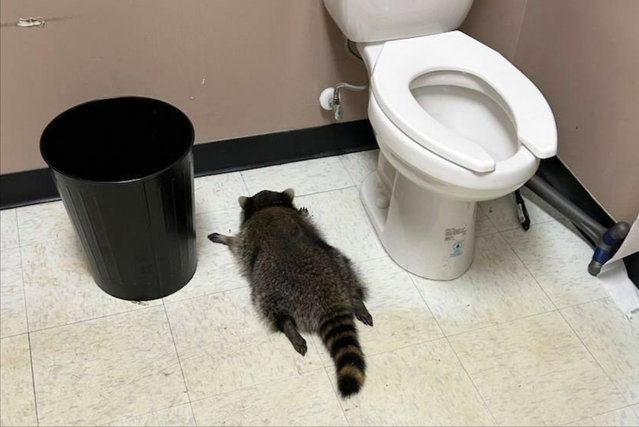
In more “raccoons are getting more like us” news, a drunk raccoon was found in a liquor store in Virginia, US in the first decade of December 2025. The animal had got into the shop via some loose ceiling tiles, knocked bottles of spirits off the shelves, lapped up the contents and passed out in the toilets. Once it had sobered up, it was released back into the wild – no doubt with a crashing hangover. (Photo by AP Photo)

In more “raccoons are getting more like us” news, a drunk raccoon was found in a liquor store in Virginia, US in the first decade of December 2025. The animal had got into the shop via some loose ceiling tiles, knocked bottles of spirits off the shelves, lapped up the contents and passed out in the toilets. Once it had sobered up, it was released back into the wild – no doubt with a crashing hangover. (Photo by AP Photo)
Details
11 Dec 2025 06:38:00
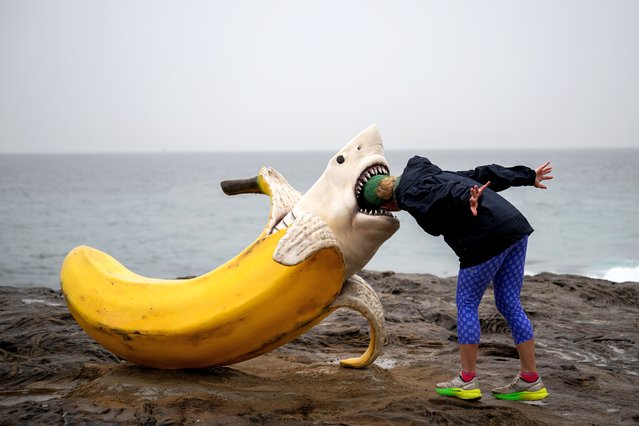
A member of the public places her head in Drew McDonald's sculpture Sharnana, during the Sculpture by the Sea media launch event along the Bondi to Tamarama Coastal walk in Sydney, Australia, 18 October 2024. (Photo by Bianca de Marchi/EPA/EFE)

A member of the public places her head in Drew McDonald's sculpture Sharnana, during the Sculpture by the Sea media launch event along the Bondi to Tamarama Coastal walk in Sydney, Australia, 18 October 2024. (Photo by Bianca de Marchi/EPA/EFE)
Details
30 Jan 2026 08:01:00
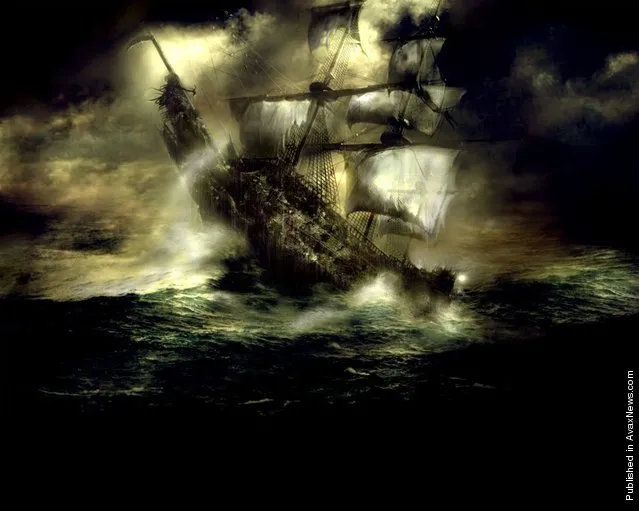
Ocean voyage

Do you think that history is a science? Well, not exactly. First, and foremost, history is the state's “legend of wars”, it’s official regalia. Of course, public historians are not interested in scientific truth – quite the opposite. In this respect, any attempt to present a state’s history as altruistic and benevolent as possible is welcomed and encouraged – as opposed to any revisionism attempts that may be more accurate. In this matter, Chinese have surpassed us all – they revised in highly creative manner (but rather shamelessly) the technology already invented by Europeans, a process that resulted in oldest state on the planet. Here is an interesting paradox: ask any sinologist about the Middle Kingdom during second century B.C., and he will describe it to you in such a vivid manner as if he has been living there all his life – but as soon as you will ask him to describe Chinese history in the 19-20th centuries… let's say, his eagerness will be greatly diminished. However, we will discuss China in a different article, and in the meantime we will try to understand how exactly historic “legend of wars” is formed and functions – based on a specific and well-known example. A great example is Ferdinand Magellan's first voyage around the world.

Details
14 Nov 2011 09:11:00
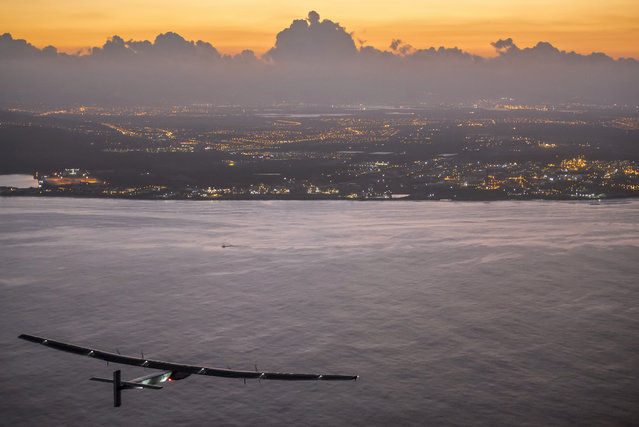
In this photo provided by Jean Revillard, Solar Impulse 2, a plane powered by the sun's rays and piloted by Andre Borschberg, approaches Kalaeloa Airport near Honolulu, Friday, July 3, 2015. (Photo by Jean Revillard/Global Newsroom via AP Photo)

In this photo provided by Jean Revillard, Solar Impulse 2, a plane powered by the sun's rays and piloted by Andre Borschberg, approaches Kalaeloa Airport near Honolulu, Friday, July 3, 2015. His 120-hour voyage from Nagoya, Japan broke the record for the world's longest nonstop solo flight, his team said. (Photo by Jean Revillard/Global Newsroom via AP Photo)
Details
04 Jul 2015 11:37:00
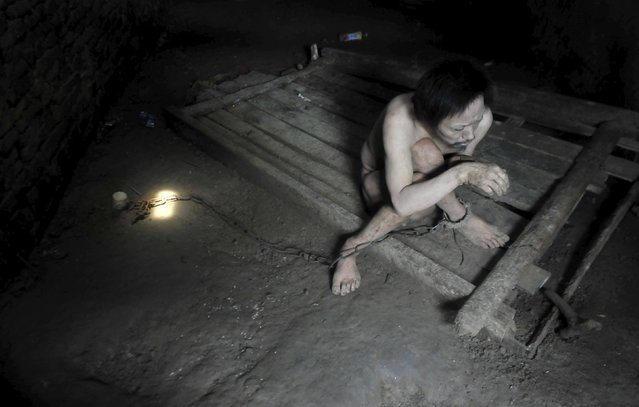
Tong Jieping, 44-year-old mentally disabled patient, is chained by his foot inside his room, in Qunxing village of Wangjiang county, Anhui province, China, July 14, 2015. Tong was diagnosed mentally ill when he was in his 20s. His parents, both in their 70s, could not afford the medical treatments so they had to lock him up in chains to prevent him from running away, according to Tong's family. (Photo by Reuters/Stringer)

Tong Jieping, 44-year-old mentally disabled patient, is chained by his foot inside his room, in Qunxing village of Wangjiang county, Anhui province, China, July 14, 2015. Tong was diagnosed mentally ill when he was in his 20s. His parents, both in their 70s, could not afford the medical treatments so they had to lock him up in chains to prevent him from running away, according to Tong's family. (Photo by Reuters/Stringer)
Details
15 Jul 2015 11:33:00
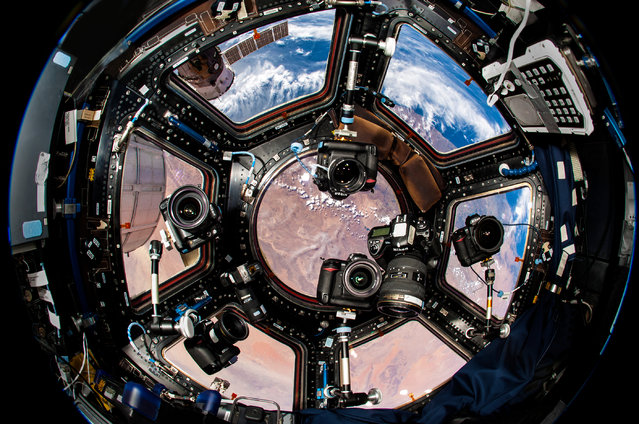
Astronaut Donald R. Pettit would often rig an array of as many as six cameras in the cupola windows and set them all to fire continuously for events such as sunsets, which only last around seven seconds on the ISS. (Photo by Donald R. Pettit)

Astronaut Donald R. Pettit would often rig an array of as many as six cameras in the cupola windows and set them all to fire continuously for events such as sunsets, which only last around seven seconds on the ISS. (Photo by Donald R. Pettit)
Details
05 Sep 2016 11:34:00