Loading...
Done
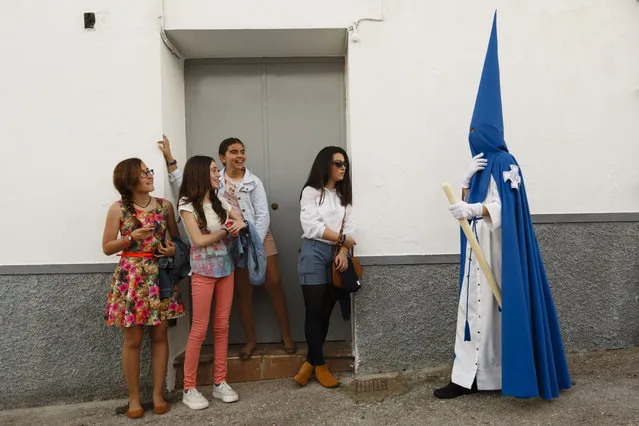
Girls look at a penitent taking part in “Nuestro Senor Atado a la Columna, Maria Santisima de la Paz y San Juan Evangelista” Holy Week procession in Arcos de la Frontera, Spain, Tuesday, March 31, 2015. Hundreds of processions take place throughout Spain during the Easter Holy Week. (Photo by Daniel Ochoa de Olza/AP Photo)

Girls look at a penitent taking part in “Nuestro Senor Atado a la Columna, Maria Santisima de la Paz y San Juan Evangelista” Holy Week procession in Arcos de la Frontera, Spain, Tuesday, March 31, 2015. Hundreds of processions take place throughout Spain during the Easter Holy Week. (Photo by Daniel Ochoa de Olza/AP Photo)
Details
02 Apr 2015 12:55:00
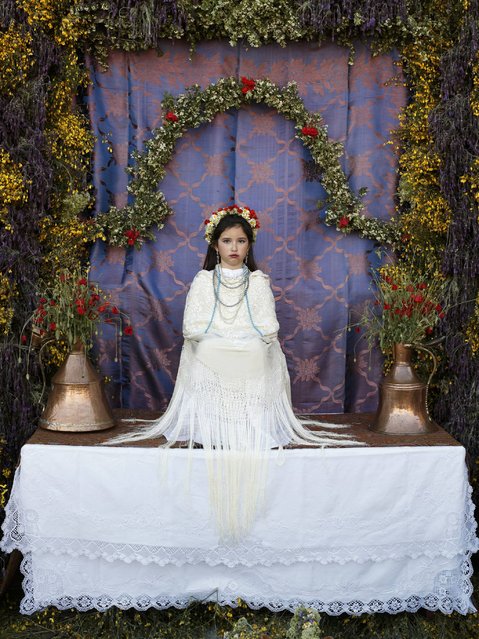
A “Maya” girl sits in an altar during the traditional celebration of “Las Mayas” on the streets in Colmenar Viejo, near Madrid, Spain, Friday, May 2, 2014. (Photo by Daniel Ochoa de Olza/AP Photo)

A “Maya” girl sits in an altar during the traditional celebration of “Las Mayas” on the streets in Colmenar Viejo, near Madrid, Spain, Friday, May 2, 2014. The festivity of the Maya comes from pagan rites and dates from the medieval age, appearing in ancient documents, it takes place every year in the beginning of May and celebrates the beginning off the spring. A girl between 7 and 11years is chosen as “Maya” and should sit still, serious, and quiet for a couple of hours in an altar on the street decorated with flowers and plants, afterwards they walk to the church with their family where they attend a ceremony. (Photo by Daniel Ochoa de Olza/AP Photo)
Details
13 May 2014 10:17:00
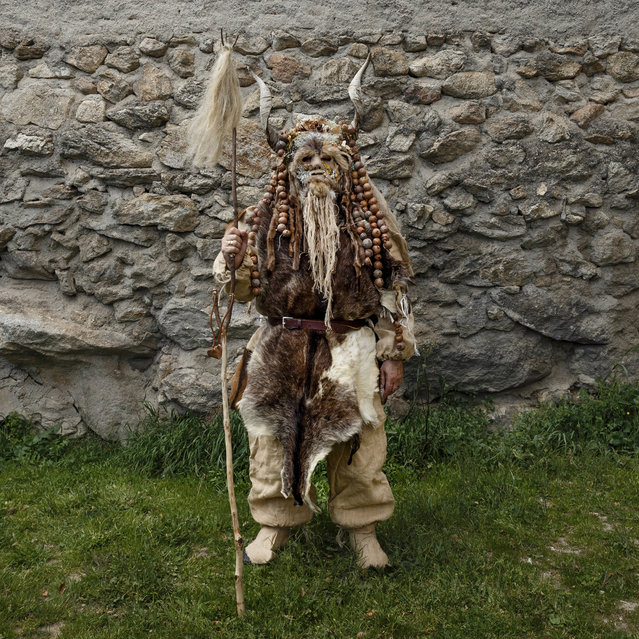
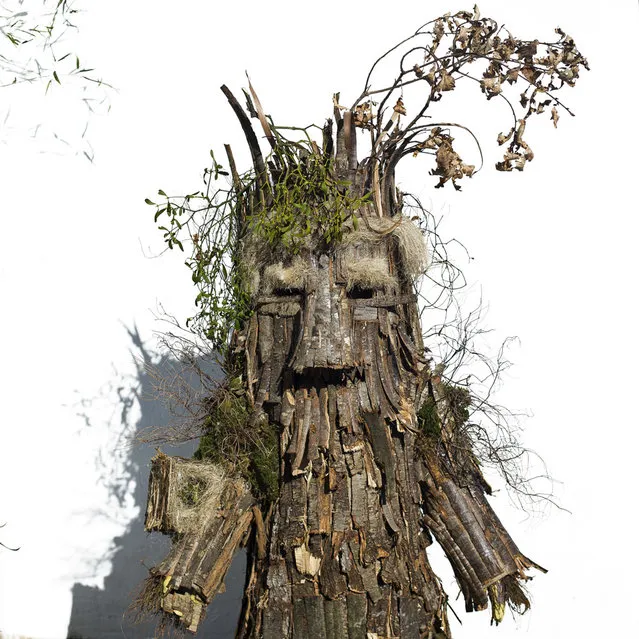
In this April 1, 2017 picture a man dressed as a “Harramacho” a traditional character from the Navalacruz carnival poses for a picture before a traditional Spanish mask gathering in the small village of Casavieja, Spain. (Photo by Daniel Ochoa de Olza/AP Photo)

In this April 1, 2017 picture a man dressed as a “Harramacho” a traditional character from the Navalacruz carnival poses for a picture before a traditional Spanish mask gathering in the small village of Casavieja, Spain. Every spring they come from towns across central and northwestern Spain, clad in elaborate costumes – some as trees, others as bears, still others as monsters who could have emerged from some sort of fever dream. (Photo by Daniel Ochoa de Olza/AP Photo)
Details
10 Apr 2017 08:50:00
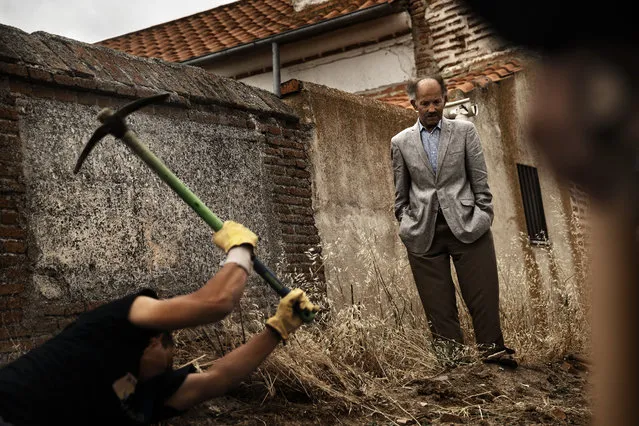
In this photo taken on July 19, 2014, a man looks at an excavation as an A.R.M.H., Association for the Recovery of Historical Memory, volunteer digs on the search for the body of Perfecto de Dios, in a hidden grave in Chaherrero, Spain. Across Spain, volunteer teams of archeologists, anthropologists and forensic scientists head out every year on expeditions to dig for suspected mass graves – a legacy of Spain's fascist past during the time of General Francisco Franco. (Photo by Daniel Ochoa de Olza/AP Photo)

In this photo taken on July 19, 2014, a man looks at an excavation as an A.R.M.H., Association for the Recovery of Historical Memory, volunteer digs on the search for the body of Perfecto de Dios, in a hidden grave in Chaherrero, Spain. Across Spain, volunteer teams of archeologists, anthropologists and forensic scientists head out every year on expeditions to dig for suspected mass graves – a legacy of Spain's fascist past during the time of General Francisco Franco. (Photo by Daniel Ochoa de Olza/AP Photo)
Details
26 Dec 2014 14:54:00
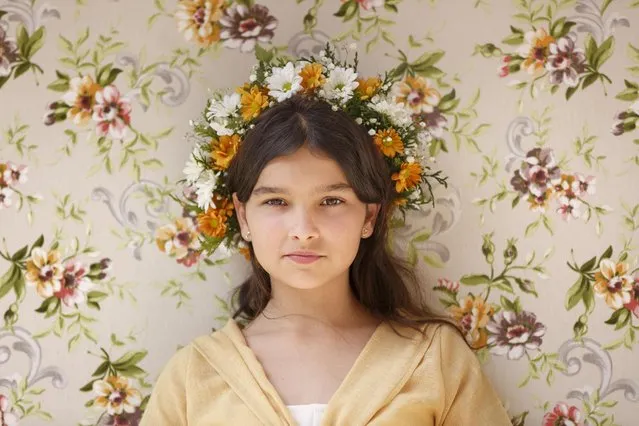
A “Maya” girl sits in an altar during the traditional celebration of “Las Mayas” on the streets in Madrid, Spain Sunday, May 10, 2015. The festivity of the Maya comes from pagan rites and dates from the medieval age, appearing in ancient documents. It takes place every year in the beginning of May and celebrates the beginning of the spring. (Photo by Daniel Ochoa de Olza/AP Photo)

A “Maya” girl sits in an altar during the traditional celebration of “Las Mayas” on the streets in Madrid, Spain Sunday, May 10, 2015. The festivity of the Maya comes from pagan rites and dates from the medieval age, appearing in ancient documents. It takes place every year in the beginning of May and celebrates the beginning of the spring. Girls between 7 and 11 years old are chosen as “Maya” and should sit still, serious and quiet for a couple of hours in altars on the street decorated with flowers and plants and afterwards they walk to the church with their family where they attend a ceremony. (Photo by Daniel Ochoa de Olza/AP Photo)
Details
14 May 2015 11:12:00
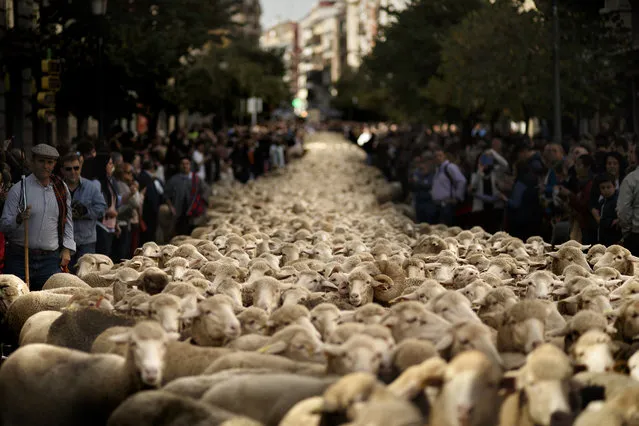
Shepherds lead their sheep through the centre of Madrid, Spain, Sunday, October 25, 2015. Shepherds have guided a flock of 2,000 sheep through Madrid streets in defense of ancient grazing, droving and migration rights increasingly threatened by urban sprawl and modern agricultural practices. Photo by Daniel Ochoa de Olza/AP Photo)

Shepherds lead their sheep through the centre of Madrid, Spain, Sunday, October 25, 2015. Shepherds have guided a flock of 2,000 sheep through Madrid streets in defense of ancient grazing, droving and migration rights increasingly threatened by urban sprawl and modern agricultural practices. Tourists and city-dwellers were surprised to see the capital's traffic cut to permit the ovine parade to bleat bells clanking its way past the city's most emblematic locations. (Photo by Daniel Ochoa de Olza/AP Photo)
Details
28 Oct 2015 08:02:00
A man dressed as a  “Trapajon”, representing entities of nature, poses for a picture after taking part in the Vijanera Festival in Silio, northern Spain, Sunday, Jan. 6, 2013. The Vijanera masquerade, of pre-Roman origin, is the first carnival of the year in Europe symbolizing the triumph of good over evil and involving the participation of crowds of residents wearing different masks, animal skins and brightly colored clothing with its own complex function and symbolism and becoming the living example of the survival of archaic cults to nature. (Photo by Daniel Ochoa de Olza/AP Photo)

A man dressed as a “Trapajon”, representing entities of nature, poses for a picture after taking part in the Vijanera Festival in Silio, northern Spain, Sunday, Jan. 6, 2013. The Vijanera masquerade, of pre-Roman origin, is the first carnival of the year in Europe symbolizing the triumph of good over evil and involving the participation of crowds of residents wearing different masks, animal skins and brightly colored clothing with its own complex function and symbolism and becoming the living example of the survival of archaic cults to nature. (Photo by Daniel Ochoa de Olza/AP Photo)
Details
19 Jan 2013 13:01:00
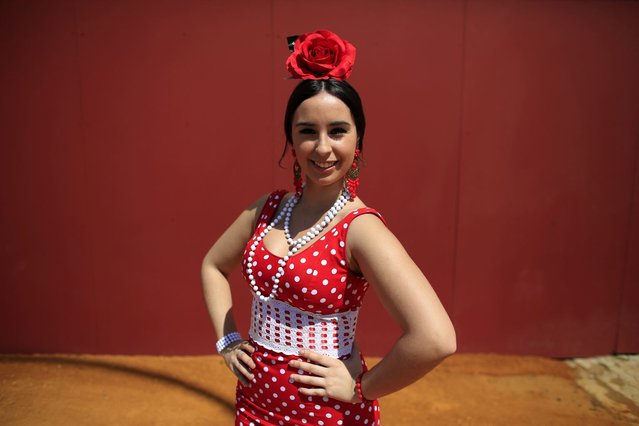
Maria, 18, wearing a traditional Sevillana outfit, poses for a portrait during the traditional Feria de Abril (April fair) in the Andalusian capital of Seville April 16, 2013. (Photo by Marcelo del Pozo/Reuters)

Maria, 18, wearing a traditional Sevillana outfit, poses for a portrait during the traditional Feria de Abril (April fair) in the Andalusian capital of Seville April 16, 2013. (Photo by Marcelo del Pozo/Reuters)
Details
22 Apr 2013 06:34:00