Loading...
Done
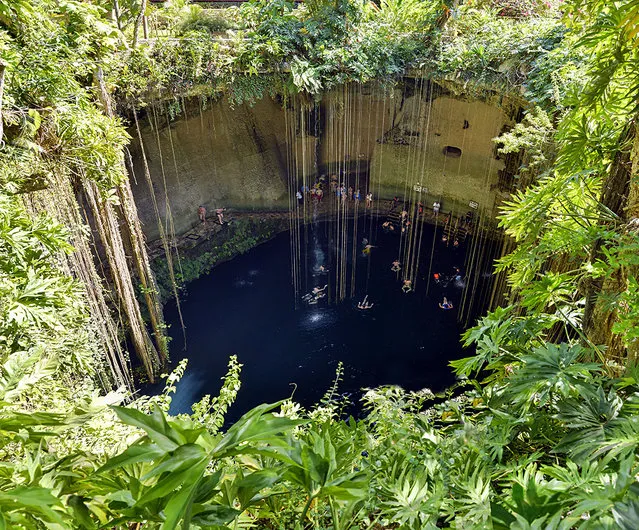
Cenote In Mexico

A cenote is a natural phenomenon, a sinkhole in the Earth’s surface. The Yucatan Peninsula in Mexico has an estimated 7,000 cenotes because it is primarily made up of porous limestone. For millions of years, rainfall slowly ate away at the limestone and a huge system of underground caves and caverns was formed. Many filled with water from rain or from the underground water table. When the roof of a water filled cave collapses, a cenote is born. The water found in a cenote may be fresh water, salt water, or both. Structurally it may be completely open, like a lake, almost completely closed with just a small opening at the top, or somewhere in between.
Details
06 Oct 2013 09:45:00
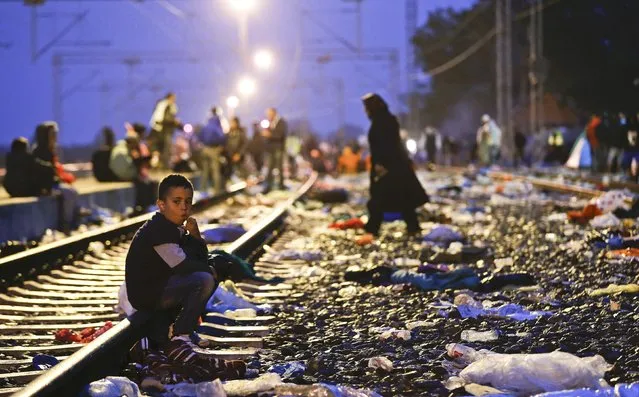
A migrant boy sits on railway tracks at a train station in Tovarnik, Croatia, September 20, 2015. (Photo by Antonio Bronic/Reuters)

A migrant boy sits on railway tracks at a train station in Tovarnik, Croatia, September 20, 2015. (Photo by Antonio Bronic/Reuters)
Details
23 Sep 2015 08:06:00
An activist kicks the shields of the military police officers during a demonstration in the military zone of the 27th infantry battalion in Iguala, Guerrero, January 12, 2015. Activists and relatives of the 43 missing trainee teachers from Ayotzinapa's teacher training college broke into the military zone. (Photo by Jorge Dan Lopez/Reuters)

An activist kicks the shields of the military police officers during a demonstration in the military zone of the 27th infantry battalion in Iguala, Guerrero, January 12, 2015. Activists and relatives of the 43 missing trainee teachers from Ayotzinapa's teacher training college broke into the military zone, located less than a mile from where the students went missing, in an attempt to look for the missing students.The remains of only one of the 43 students has been identified so far. (Photo by Jorge Dan Lopez/Reuters)
Details
14 Jan 2015 12:17:00
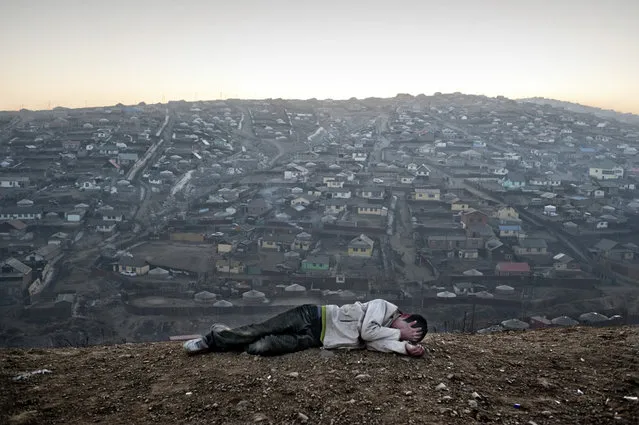
Asia, Mongolia, March 27, 2011. A view of Ulaan Baator over the shoulder of a slumbering drunk. Alcoholism is a huge problem in the city, home to almost half of Mongolia's people. The capital's population has doubled in the past two years, expanding outward in a haphazard sprawl, and many inhabitants live in slums known as the “Gher District”. (Photo by Alessandro Grassani)

“Environmental Migrants: The Last Illusion” by photographer Alessandro Grassani, documents the life of people in Kenya, Mongolia and Bangladesh who migrate to escape environmental stresses to the city of their own countries in hopes for a better life. Here: Asia, Mongolia, March 27, 2011. A view of Ulaan Baator over the shoulder of a slumbering drunk. Alcoholism is a huge problem in the city, home to almost half of Mongolia's people. The capital's population has doubled in the past two years. High levels of unemployment and poverty await herders who abandon rural areas and arrive in the city, illiterate and untrained in any skills necessary for urban jobs. (Photo by Alessandro Grassani)
Details
21 Jul 2015 10:10:00
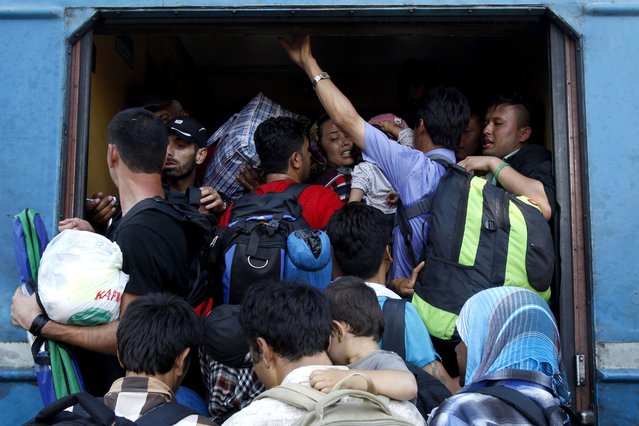
In this photo taken on Thursday, July 23, 2015 migrants  enter a train to Serbia at the railway station in the southern Macedonian town of Gevgelija. (Photo by Boris Grdanoski/AP Photo)

In this photo taken on Thursday, July 23, 2015 migrants enter a train to Serbia at the railway station in the southern Macedonian town of Gevgelija. The country has become a major transit route for thousands of Middle Eastern and African refugees and migrants who cross over from Greece and then continue into Serbia. (Photo by Boris Grdanoski/AP Photo)
Details
25 Jul 2015 12:29:00
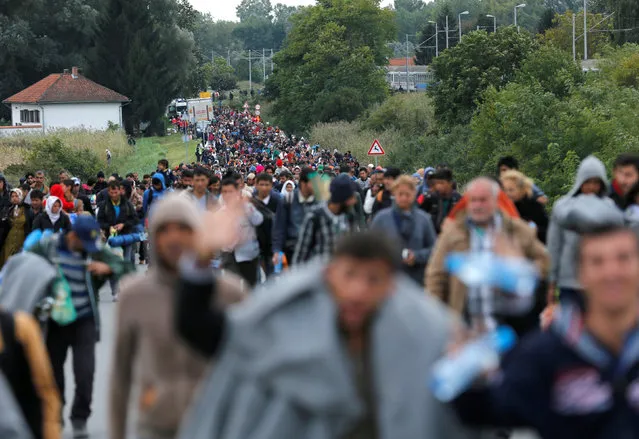
A year after hundreds of thousands of migrants and refugees snaked their way across southeastern Europe and onto television screens worldwide, the roads through the Balkans are now clear, depriving an arguably worsening tragedy of its poignant visibility. Europe's migrant crisis is at the very least numerically worse than it was last year. More people are arriving and more are dying. (Photo by Antonio Bronic/Reuters)

A year after hundreds of thousands of migrants and refugees snaked their way across southeastern Europe and onto television screens worldwide, the roads through the Balkans are now clear, depriving an arguably worsening tragedy of its poignant visibility. Reuters photographer, Antonio Bronic revisiting the people-packed locations where he and his colleagues captured last year's diaspora, found empty roads, unencumbered railway tracks and bucolic countryside. (Photo by Antonio Bronic/Reuters)


Details
12 Aug 2016 12:10:00
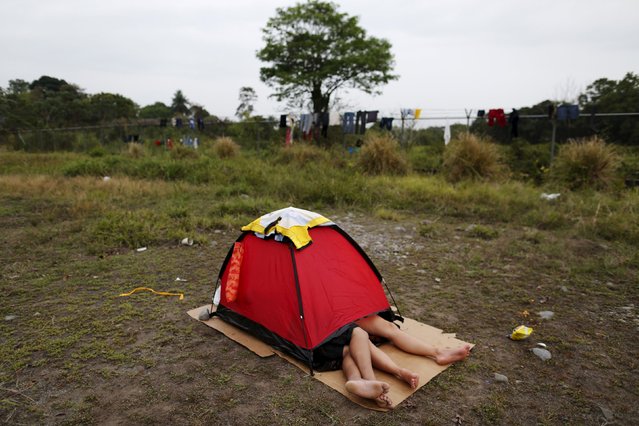
A Cuban migrant couple rests inside a tent at a provisional shelter in Paso Conoa, at the border with Costa Rica March 20, 2016. (Photo by Carlos Jasso/Reuters)

A Cuban migrant couple rests inside a tent at a provisional shelter in Paso Conoa, at the border with Costa Rica March 20, 2016. More than 1,500 Cuban immigrants are waiting at Costa Rica's southern border with Panama as they seek overland passage towards the United States, according to local officials. (Photo by Carlos Jasso/Reuters)
Details
24 Mar 2016 11:56:00
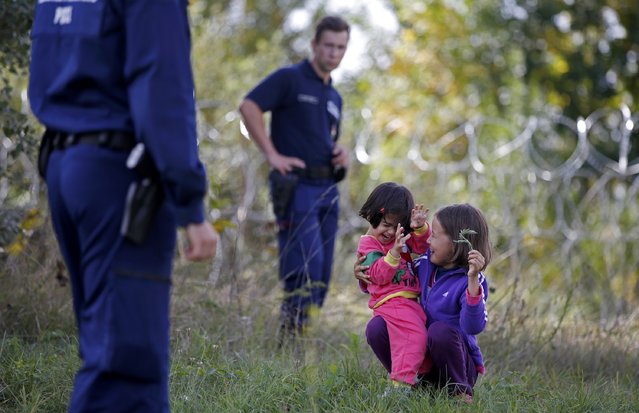
Children guarded by Hungarian police play on the ground after being detained along with other migrants who illegally crossed from Serbia to Hungary near the village of Asotthalom, Hungary, September 16, 2015. (Photo by Dado Ruvic/Reuters)

Children guarded by Hungarian police play on the ground after being detained along with other migrants who illegally crossed from Serbia to Hungary near the village of Asotthalom, Hungary, September 16, 2015. (Photo by Dado Ruvic/Reuters)
Details
17 Sep 2015 11:01:00