Loading...
Done
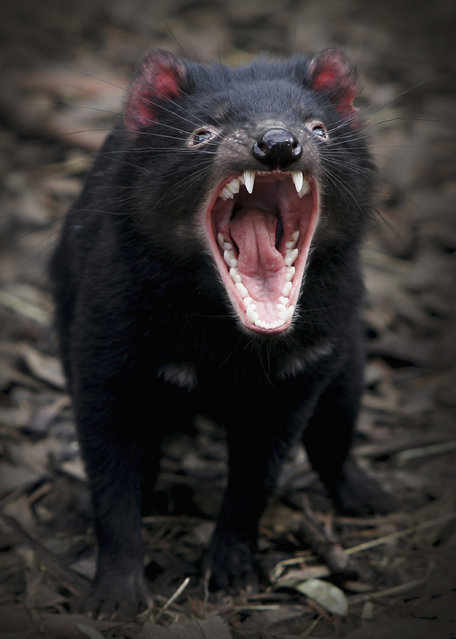
A Tasmanian Devil bears it's teeth at a quarantine facility August 31, 2005 in Hobart, Australia. The Devil, a native marsupial unique to Tasmania, is under threat from Devil Facial Tumor Disease (DFTD) which is decimating numbers throughout Tasmania. (Photo by Ian Waldie/Getty Images)

“The Tasmanian devil (Sarcophilus harrisii) is a carnivorous marsupial of the family Dasyuridae now found in the wild only in the Australian island state of Tasmania. The size of a small dog, it became the largest carnivorous marsupial in the world following the extinction of the thylacine in 1936. It is characterised by its stocky and muscular build, black fur, pungent odour, extremely loud and disturbing screech, keen sense of smell, and ferocity when feeding”. – Wikipedia. Photo: A Tasmanian Devil bears it's teeth at a quarantine facility August 31, 2005 in Hobart, Australia. (Photo by Ian Waldie/Getty Images)
Details
27 Jan 2014 09:45:00
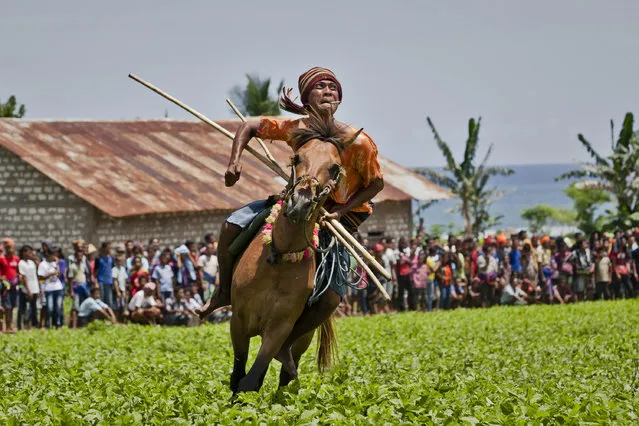
A Pasola rider reacts after throwing his spear during the Pasola war festival at Ratenggaro village on March 22, 2014 in Sumba Island, Indonesia. The Pasola Festival is an important annual event to welcome the new harvest season, which coincides with the arrival of  “Nyale” sea worms during February or March each year. Pasola, an ancient ritual fighting game, involves two teams of men on horseback charging towards each other while trying to hit their rivals with “pasol” javelins and avoid being hit themselves. (Photo by Ulet Ifansasti/Getty Images)

A Pasola rider reacts after throwing his spear during the Pasola war festival at Ratenggaro village on March 22, 2014 in Sumba Island, Indonesia. The Pasola Festival is an important annual event to welcome the new harvest season, which coincides with the arrival of “Nyale” sea worms during February or March each year. Pasola, an ancient ritual fighting game, involves two teams of men on horseback charging towards each other while trying to hit their rivals with “pasol” javelins and avoid being hit themselves. (Photo by Ulet Ifansasti/Getty Images)
Details
25 Mar 2014 07:54:00
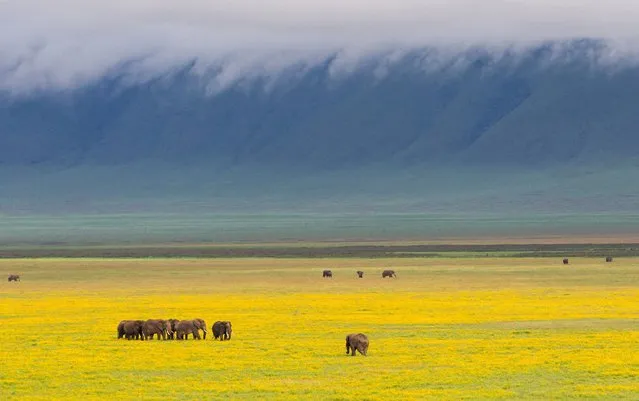
Ngorongoro Crater (Tanzania). At 610m deep and 260 sq km, this is the largest unflooded caldera in the world. A blue-green vision from above it's a haven for engangered wildlife and Maasai livestock. The crater was formed three million years ago when a giant volcano, which could have been as high as Kilimanjaro, exploded and collapsed. The caldera formed the concentric fractures in the crust cracked down to a magma reservoir deep underground. (Photo by John Bryant/Getty Images)

Ngorongoro Crater (Tanzania). At 610m deep and 260 sq km, this is the largest unflooded caldera in the world. A blue-green vision from above it's a haven for engangered wildlife and Maasai livestock. The crater was formed three million years ago when a giant volcano, which could have been as high as Kilimanjaro, exploded and collapsed. The caldera formed the concentric fractures in the crust cracked down to a magma reservoir deep underground. (Photo by John Bryant/Getty Images)
Details
28 Mar 2014 08:08:00
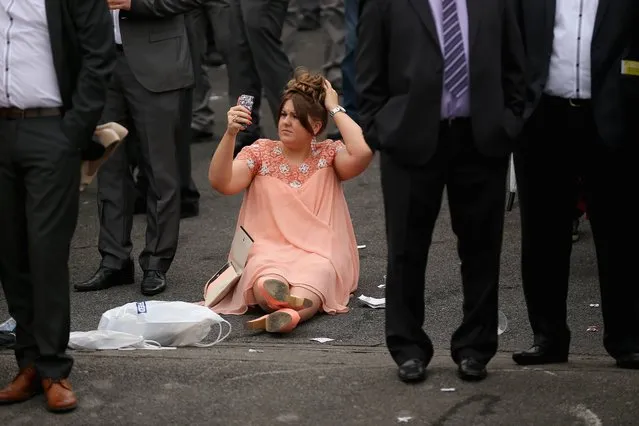
A racegoer uses the camera on her phone to check her hair on the opening day of the Grand National Festival at Aintree Racecourse on April 3, 2014 in Aintree, England. The three days of racing attracts thousands of racegoers and fans from across the world. The meeting culminates with millions of pounds being wagered on the runners taking part in Europe's richest jump race, the Grand National. (Photo by Christopher Furlong/Getty Images)

A racegoer uses the camera on her phone to check her hair on the opening day of the Grand National Festival at Aintree Racecourse on April 3, 2014 in Aintree, England. The three days of racing attracts thousands of racegoers and fans from across the world. The meeting culminates with millions of pounds being wagered on the runners taking part in Europe's richest jump race, the Grand National. (Photo by Christopher Furlong/Getty Images)
Details
05 Apr 2014 13:30:00
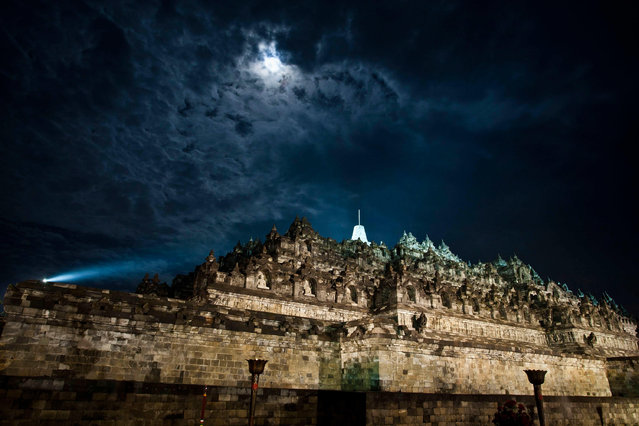
The Borobudur temple seen illuminated during Vesak Day, commonly known as “Buddha's birthday”, at the Borobudur Mahayana Buddhist monument on May 6, 2012 in Magelang, Indonesia. (Photo by Ulet Ifansasti/Getty Images)

The Borobudur temple seen illuminated during Vesak Day, commonly known as “Buddha's birthday”, at the Borobudur Mahayana Buddhist monument on May 6, 2012 in Magelang, Indonesia. Buddhists in Indonesia celebrate Vesak at the Borobudur temple annually, which makes it the most visited tourist attraction in Indonesia. Vesak is observed during the full moon in May or June and the ceremony centers around three Buddhist temples, whereby pilgrims walk from Mendut to Pawon, ending at Borobudur. The stages of life of Buddhism's founder, Gautama Buddha, which are celebrated at Vesak are his birth, enlightenment to Nirvana, and his passing. (Photo by Ulet Ifansasti/Getty Images)
Details
15 May 2014 08:37:00
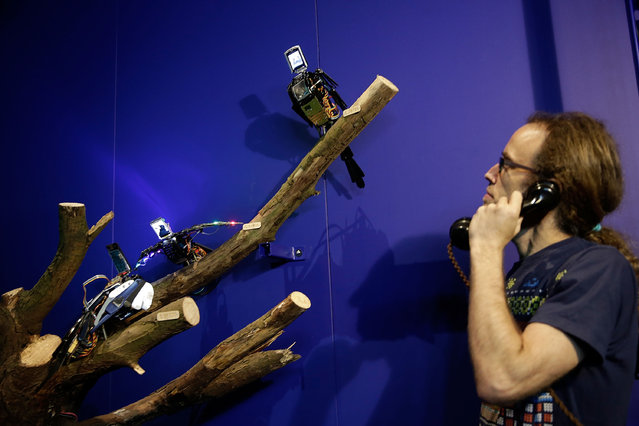
Unwanted phones recreated as interactive birds, part of "Escape III" by Anthony Goh and Neil Mendoza seen on display at the Barbican's Digital Revolution exhibition on July 2, 2014 in London, England. The exhibition brings together artists, designers, film makers, musicians and architects who push the boundaries of creativity that digitial technology can offer, and runs from July 3 until September 14, 2014.  (Photo by Matthew Lloyd/Getty Images for Barbican Art Gallery)

Unwanted phones recreated as interactive birds, part of “Escape III” by Anthony Goh and Neil Mendoza seen on display at the Barbican's Digital Revolution exhibition on July 2, 2014 in London, England. The exhibition brings together artists, designers, film makers, musicians and architects who push the boundaries of creativity that digitial technology can offer, and runs from July 3 until September 14, 2014. (Photo by Matthew Lloyd/Getty Images for Barbican Art Gallery)
Details
04 Jul 2014 10:18:00
Revellers continue to party and dance through the night and day during the second day of the San Fermin Running Of The Bulls festival, on July 7, 2014 in Pamplona, Spain. The annual Fiesta de San Fermin, made famous by the 1926 novel of US writer Ernest Hemmingway “The Sun Also Rises”, involves the running of the bulls through the historic heart of Pamplona. (Photo by Christopher Furlong/Getty Images)

Revellers continue to party and dance through the night and day during the second day of the San Fermin Running Of The Bulls festival, on July 7, 2014 in Pamplona, Spain. The annual Fiesta de San Fermin, made famous by the 1926 novel of US writer Ernest Hemmingway “The Sun Also Rises”, involves the running of the bulls through the historic heart of Pamplona. (Photo by Christopher Furlong/Getty Images)
Details
08 Jul 2014 13:44:00
In this handout image supplied by Qatar 2022  The Al-Rayyan stadium  is pictured in this artists impression as Qatar 2022 World Cup bid unveils it's stadiums on September 16, 2010 in Doha, Qatar. It has been designed to include a “media facade” that includes a membrane that acts as a screen for projections; news, commercials, sports updates and current tournament information and matches. (Photo by Qatar 2022 via Getty Images)

In this handout image supplied by Qatar 2022 The Al-Rayyan stadium is pictured in this artists impression as Qatar 2022 World Cup bid unveils it's stadiums on September 16, 2010 in Doha, Qatar. It has been designed to include a “media facade” that includes a membrane that acts as a screen for projections; news, commercials, sports updates and current tournament information and matches. (Photo by Qatar 2022 via Getty Images)
Details
13 Jul 2014 10:29:00