Loading...
Done
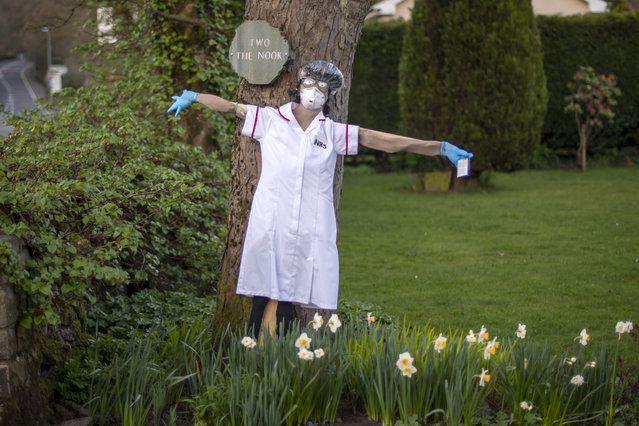
Residents display scarecrows with an NHS theme outside their homes in Greenfield for the annual scarecrow parade on April 09, 2020 in Manchester, United Kingdom. There have been around 60,000 reported cases of the COVID-19 coronavirus in the United Kingdom and 7,000 deaths. The country is in its third week of lockdown measures aimed at slowing the spread of the virus. (Photo by Anthony Devlin/Getty Images)

Residents display scarecrows with an NHS theme outside their homes in Greenfield for the annual scarecrow parade on April 09, 2020 in Manchester, United Kingdom. There have been around 60,000 reported cases of the COVID-19 coronavirus in the United Kingdom and 7,000 deaths. The country is in its third week of lockdown measures aimed at slowing the spread of the virus. (Photo by Anthony Devlin/Getty Images)
Details
07 Jan 2021 00:01:00
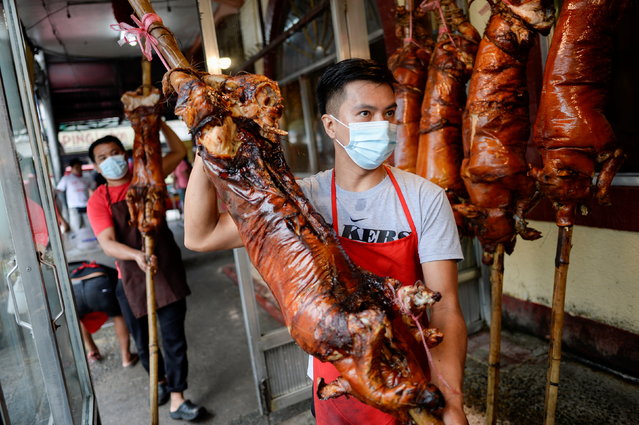
Workers wearing face masks as a protection against the coronavirus disease (COVID-19) carry roasted pigs, locally known as “lechon”, at a restaurant, in Quezon City, Metro Manila, Philippines, December 21, 2020. (Photo by Lisa Marie David/Reuters)

Workers wearing face masks as a protection against the coronavirus disease (COVID-19) carry roasted pigs, locally known as “lechon”, at a restaurant, in Quezon City, Metro Manila, Philippines, December 21, 2020. (Photo by Lisa Marie David/Reuters)
Details
17 Feb 2021 09:41:00
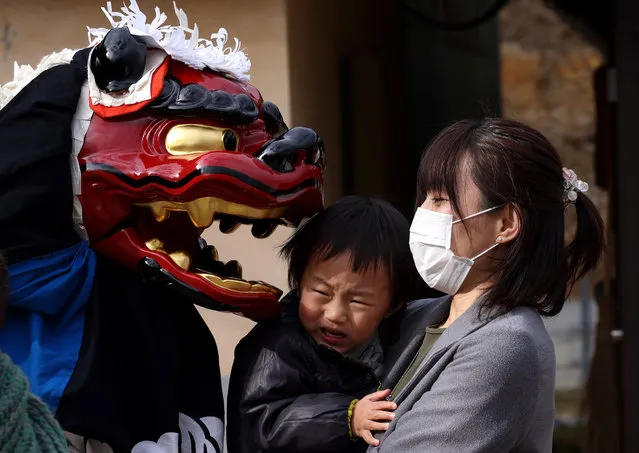
A performer wearing a lion mask performs the Ise Daikagura lion dance at the remote village of Yamanawa on February 08, 2021 in Ryuo, Japan. Ise Daikagura is a group of traditional Lion Dance performers who pray in front of farmers houses and businesses for good grain harvests and disease-free lives. Performers play sacred music using drums and flutes with two lion mask dancers. A lion mask is considered a symbol of God, who enters the house and performs in front of the Shinto God, a statue placed inside the house, mostly in the kitchen. These prayers are called “Kamodo Barai”. After the prayers, they are gifted with money, rice, sake and Japanese sweets from the householders. A group can travel for more than one hundred days to thousands of households and businesses throughout rural-villages in western Japan, and pray to those who are unable to visit the country’s most sacred shrine, the Grand Ise Shrine in Mie Prefecture. The group started its performance in the Edo era between 1603 to 1868 according to Japanese history. The Japanese government designated it as an important folk cultural national property in 1981. (Photo by Buddhika Weerasinghe/Getty Images)

A performer wearing a lion mask performs the Ise Daikagura lion dance at the remote village of Yamanawa on February 08, 2021 in Ryuo, Japan. Ise Daikagura is a group of traditional Lion Dance performers who pray in front of farmers houses and businesses for good grain harvests and disease-free lives. (Photo by Buddhika Weerasinghe/Getty Images)
Details
18 Feb 2021 09:27:00
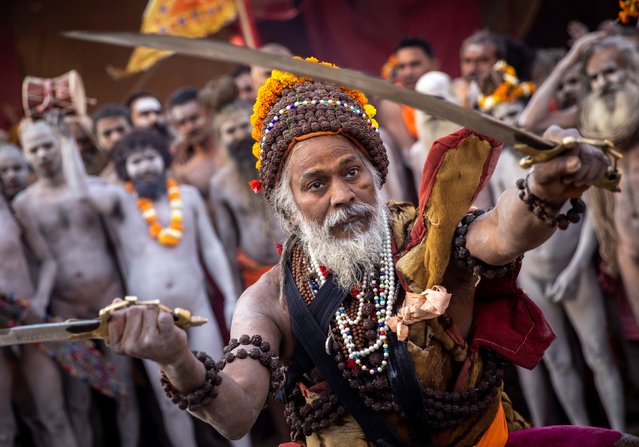
Naga Sadhus, or Hindu holy men, participate in the procession for taking a dip in the Ganges river during Shahi Snan at “Kumbh Mela”, or the Pitcher Festival, amidst the spread of the coronavirus disease (COVID-19), in Haridwar, India, April 12, 2021. (Photo by Danish Siddiqui/Reuters)

Naga Sadhus, or Hindu holy men, participate in the procession for taking a dip in the Ganges river during Shahi Snan at “Kumbh Mela”, or the Pitcher Festival, amidst the spread of the coronavirus disease (COVID-19), in Haridwar, India, April 12, 2021. (Photo by Danish Siddiqui/Reuters)
Details
14 Apr 2021 10:58:00
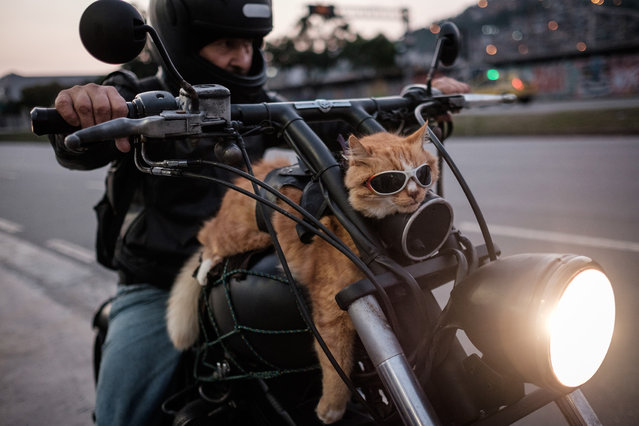
A biker shows his 12-year-old cat “Chiquinho” – which always rides with him on his motorbike – in Rio de Janeiro, Brazil, on June 19, 2016. (Photo by Yasuyoshi Chiba/AFP Photo)

A biker shows his 12-year-old cat “Chiquinho” – which always rides with him on his motorbike – in Rio de Janeiro, Brazil, on June 19, 2016. (Photo by Yasuyoshi Chiba/AFP Photo)
Details
21 Jun 2016 07:35:00
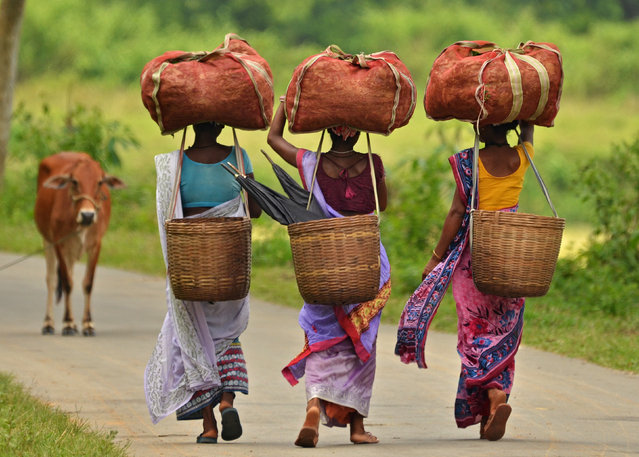
Workers carry sacks of tea leaves at a tea estate in Nagaon district in the northeastern state of Assam, India, August 22, 2016. (Photo by Reuters/Stringer)

Workers carry sacks of tea leaves at a tea estate in Nagaon district in the northeastern state of Assam, India, August 22, 2016. (Photo by Reuters/Stringer)
Details
23 Aug 2016 10:02:00
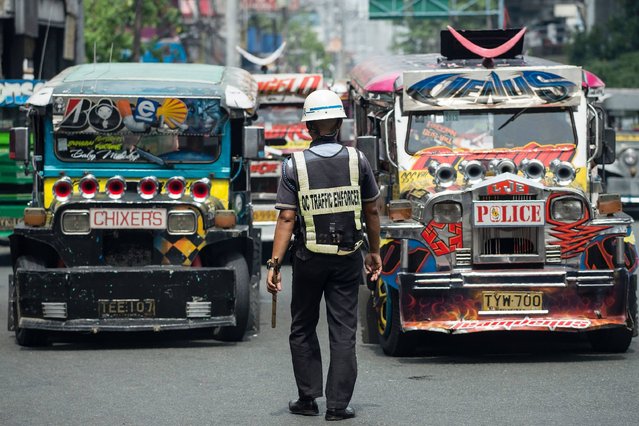
Jeepneys are seen as an enforcer manages traffic at a busy street in Manila on May 30, 2017. Jeepneys, once hailed as the “King of the Road” and a cultural symbol in the Phillipines to rival New York's yellow taxis, may soon disappear from Manila's gridlocked streets, as authorities move to phase out the Philippines' iconic World War II-era minibuses, citing pollution and safety concerns. (Photo by Noel Celis/AFP Photo)

Jeepneys are seen as an enforcer manages traffic at a busy street in Manila on May 30, 2017. Jeepneys, once hailed as the “King of the Road” and a cultural symbol in the Phillipines to rival New York's yellow taxis, may soon disappear from Manila's gridlocked streets, as authorities move to phase out the Philippines' iconic World War II-era minibuses, citing pollution and safety concerns. (Photo by Noel Celis/AFP Photo)
Details
31 May 2017 07:14:00
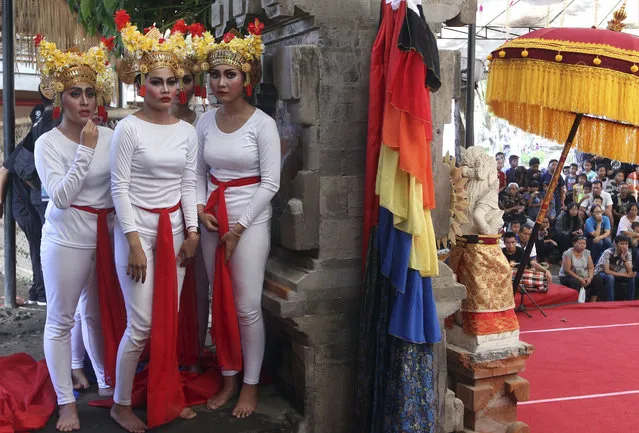
Dancers wait at backstage as they prepare for a dance performance during the Bali Arts Festival in Bali, Indonesia, Wednesday, June 21, 2017. The resort island of Bali is holding a month-long annual Bali Arts Festival from June 10 to July 8. (Photo by Firdia Lisnawati/AP Photo)

Dancers wait at backstage as they prepare for a dance performance during the Bali Arts Festival in Bali, Indonesia, Wednesday, June 21, 2017. The resort island of Bali is holding a month-long annual Bali Arts Festival from June 10 to July 8. (Photo by Firdia Lisnawati/AP Photo)
Details
22 Jun 2017 08:51:00