Loading...
Done
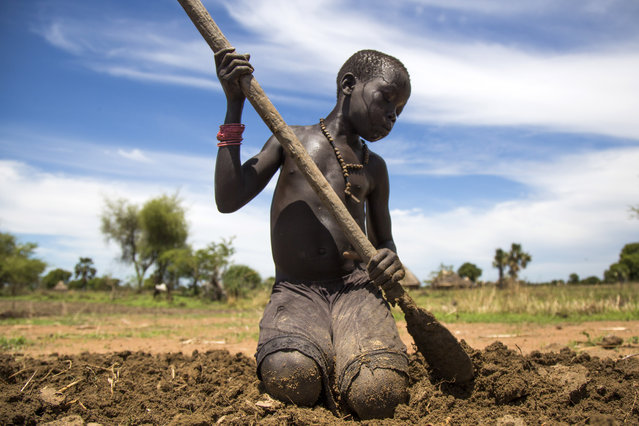
Nyibol Lual, 13 years old, helps her family to prepare the land for cultivation on May 31, 2017, in Panthau, Northern Bahr al Ghazal, South Sudan. The family has a small land where they cultivate sorghum. An estimated 63 per cent of the population in Northern Bahr al Ghazal is experiencing severe food insecurity, according to the latest Integrated Food Security Phase Classification (IPC) report. The situation is particularly bad in Aweil West and Aweil South counties, where the exhaustion of household food stocks and growing dependence on financially inaccessible markets have left the population facing Emergency levels of food insecurity. (Photo by Albert Gonzalez Farran/AFP Photo)

Nyibol Lual, 13 years old, helps her family to prepare the land for cultivation on May 31, 2017, in Panthau, Northern Bahr al Ghazal, South Sudan. The family has a small land where they cultivate sorghum. An estimated 63 per cent of the population in Northern Bahr al Ghazal is experiencing severe food insecurity, according to the latest Integrated Food Security Phase Classification (IPC) report. The situation is particularly bad in Aweil West and Aweil South counties, where the exhaustion of household food stocks and growing dependence on financially inaccessible markets have left the population facing Emergency levels of food insecurity. (Photo by Albert Gonzalez Farran/AFP Photo)
Details
01 Jun 2017 10:10:00
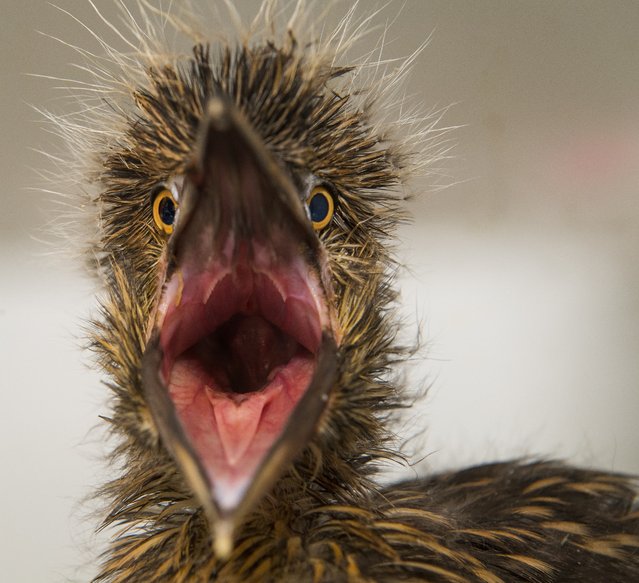
A baby Black-crowned Night Heron squawks in its incubator while being cared for at City Wildlife rescue and rehabilitation center in Washington, DC on May 31, 2017. The heron is one of several that have been brought to CW by the staff at The National Zoo over the past few years. The heron is a native bird and has made an established rookery inside the zoo grounds over a hundred years ago.  Every year at this time, some of the chicks get pushed or fall out of the nest and require human care.  Because the birds are native and not part of the Smithsonian collection, they partnered with CW to rehabilitate the herons for re-release back to the flock inside Zoo. They're reintroduced back to their flock so that they can migrate together in the Fall. The Black-crowned heron usually migrates from the DC area down to southeast North Carolina, some going as far as Jacksonville, FL in winter. The Black-crowned heron is the species of greatest conservation need in the District of Columbia because their numbers are in such rapid decline due to habitat loss. (Photo Linda Davidson/The Washington Post)

A baby Black-crowned Night Heron squawks in its incubator while being cared for at City Wildlife rescue and rehabilitation center in Washington, DC on May 31, 2017. The heron is one of several that have been brought to CW by the staff at The National Zoo over the past few years. (Photo Linda Davidson/The Washington Post)
Details
04 Jun 2017 08:04:00
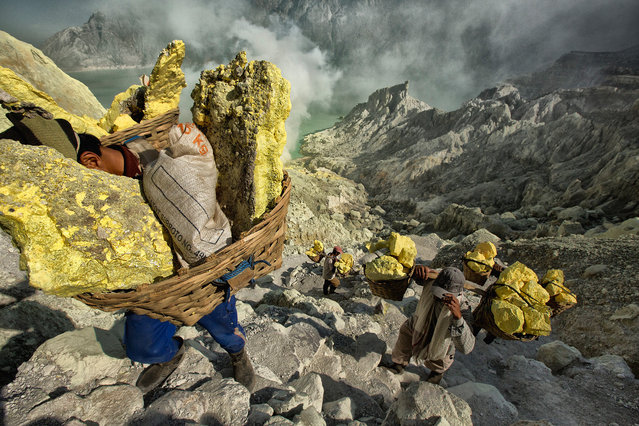
Sulphur miners haul sulphur up an arduous path out of Indonesia’s Ijen volcano. The average carry out of the volcano is 70 kilograms per load per miner.  The all-time record carry was 120 kilograms in one load.  Extraordinary numbers given most of the miners only weigh around 55 kilograms.  Ijen volcano, Indonesia, 2012. (Photo by Hugh Brown/South West News Service)

Sulphur miners haul sulphur up an arduous path out of Indonesia’s Ijen volcano. The average carry out of the volcano is 70 kilograms per load per miner. The all-time record carry was 120 kilograms in one load. Extraordinary numbers given most of the miners only weigh around 55 kilograms. Ijen volcano, Indonesia, 2012. (Photo by Hugh Brown/South West News Service)
Details
30 Jul 2018 00:05:00
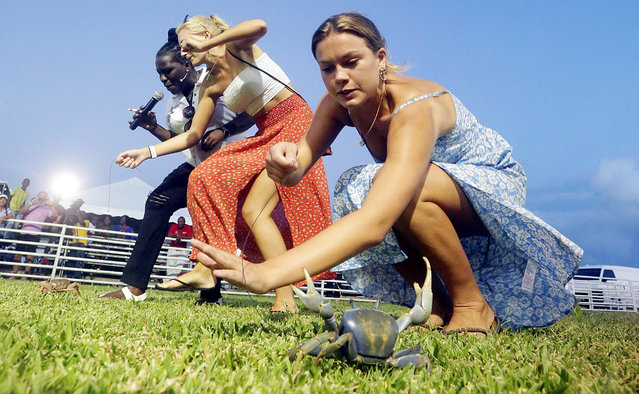
British tourist participates in a crab race at the annual Tobago Heritage Festival, at Buccoo Integrated Facility, in Tobago island, Trinidad and Tobago on July 29, 2018. (Photo by Andrea De Silva/EPA/EFE)

British tourist participates in a crab race at the annual Tobago Heritage Festival, at Buccoo Integrated Facility, in Tobago island, Trinidad and Tobago on July 29, 2018. (Photo by Andrea De Silva/EPA/EFE)
Details
31 Jul 2018 07:39:00
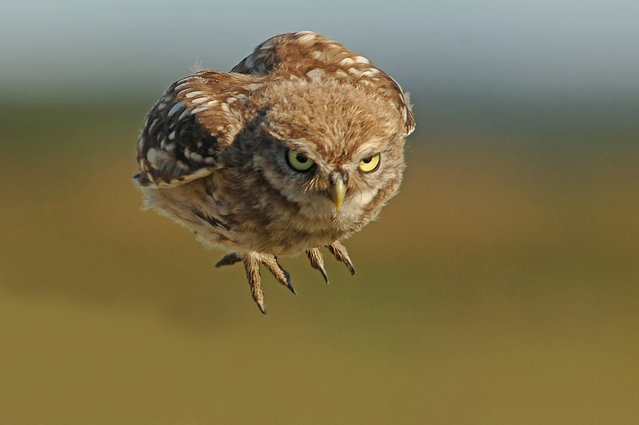
Little owl chicks in Northumberland, UK on August 19, 2018. Strutting up and down and barrelling through the air, these Little Owl chicks will soon be fending for themselves. The intense little birds were snapped by wildlife photographer Bill Doherty in his native Northumberland. The chicks have about seven or eight weeks to learn their survival skills before their parents drive them away to fend for themselves. (Photo by Bill Doherty/South West News Service)

Little owl chicks in Northumberland, UK on August 19, 2018. Strutting up and down and barrelling through the air, these Little Owl chicks will soon be fending for themselves. The intense little birds were snapped by wildlife photographer Bill Doherty in his native Northumberland. The chicks have about seven or eight weeks to learn their survival skills before their parents drive them away to fend for themselves. (Photo by Bill Doherty/South West News Service)
Details
26 Aug 2018 00:03:00
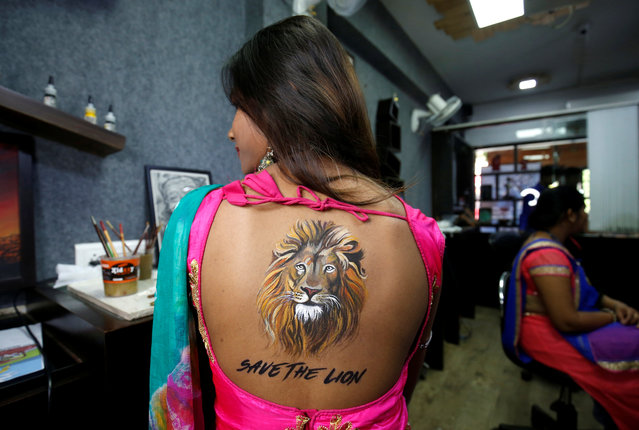
A woman poses after she got an image of a lion tattooed on her back as part of awareness campaign to save Asiatic lions and in preparations for the upcoming Navratri festival in Ahmedabad, India, October 5, 2018. (Photo by Amit Dave/Reuters)

A woman poses after she got an image of a lion tattooed on her back as part of awareness campaign to save Asiatic lions and in preparations for the upcoming Navratri festival in Ahmedabad, India, October 5, 2018. (Photo by Amit Dave/Reuters)
Details
15 Oct 2018 00:05:00
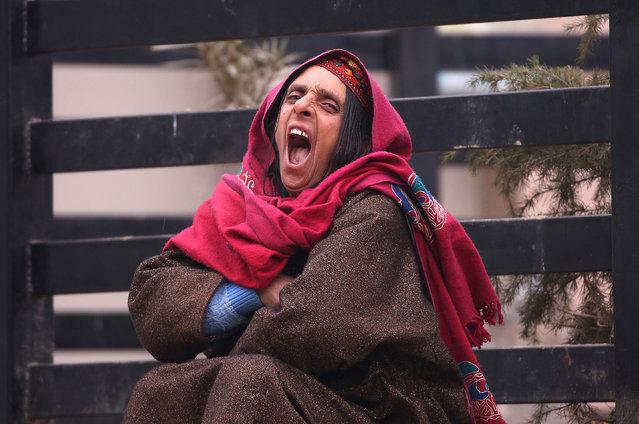
A woman yawns as she sits outside a hospital on a cold winter morning in Srinagar January 3, 2019. (Photo by Danish Ismail/Reuters)

A woman yawns as she sits outside a hospital on a cold winter morning in Srinagar January 3, 2019. (Photo by Danish Ismail/Reuters)
Details
18 Jan 2019 00:03:00
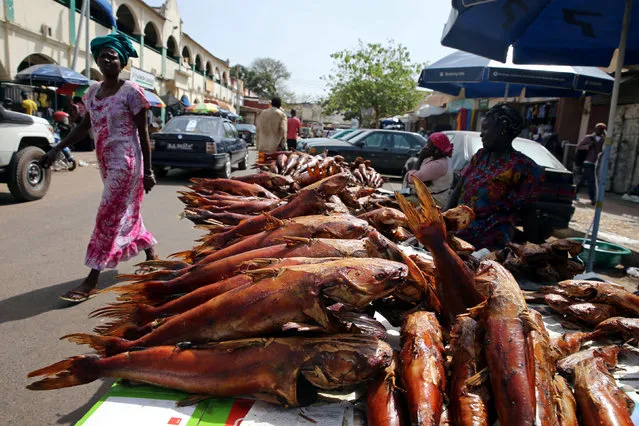
A woman walks past a stall at a market in Banjul, Gambia December 15, 2016. (Photo by Afolabi Sotunde/Reuters)

A woman walks past a stall at a market in Banjul, Gambia December 15, 2016. (Photo by Afolabi Sotunde/Reuters)
Details
03 Jan 2017 11:14:00