Loading...
Done
Dancers perform during the annual Tartan Day Parade along Sixth Avenue on April 15, 2023 in New York City. Celebrating its 25th Anniversary, the New York City Tartan Day Parade featured many Scottish clans, Pipers, Dancers and Scottish dogs. (Photo by Andrew Schwartz/SIPA Images/Rex Features/Shutterstock)

Dancers perform during the annual Tartan Day Parade along Sixth Avenue on April 15, 2023 in New York City. Celebrating its 25th Anniversary, the New York City Tartan Day Parade featured many Scottish clans, Pipers, Dancers and Scottish dogs. (Photo by Andrew Schwartz/SIPA Images/Rex Features/Shutterstock)
Details
01 Aug 2024 05:21:00
A man wearing a face mask as a precaution against the coronavirus, walks past in front of an advertisement of an opera performance outside of a theater in Seoul, South Korea, Wednesday, March 3, 2021. (Photo by Lee Jin-man/AP Photo)

A man wearing a face mask as a precaution against the coronavirus, walks past in front of an advertisement of an opera performance outside of a theater in Seoul, South Korea, Wednesday, March 3, 2021. (Photo by Lee Jin-man/AP Photo)
Details
18 Mar 2021 09:23:00
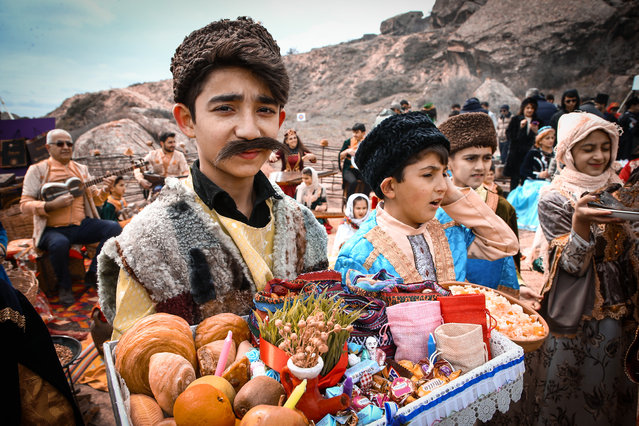
People celebrate Nowruz, considered as the harbinger of spring, awakening of nature and brotherhood, with traditional costumes and at Gobustan National Park in Baku, Azerbaijan on March 21, 2022. People from different regions of Azerbaijan attended celebration with colorful dresses and various music groups performed. (Photo by Resul Rehimov/Anadolu Agency via Getty Images)

People celebrate Nowruz, considered as the harbinger of spring, awakening of nature and brotherhood, with traditional costumes and at Gobustan National Park in Baku, Azerbaijan on March 21, 2022. People from different regions of Azerbaijan attended celebration with colorful dresses and various music groups performed. (Photo by Resul Rehimov/Anadolu Agency via Getty Images)
Details
24 May 2023 04:25:00
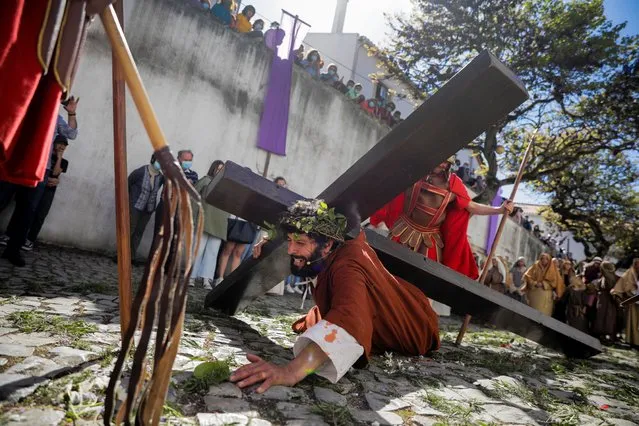
Actors and figurants participate in the staging of the Live Stations of the Cross and Procession of the Dead Lord during the celebration of the easter in the Medieval Village of Ourem, Portugal, 15 April 2022. The Live Stations of the Cross is dramatized by about 100 actors and extras from the local community, besides the requalification of the Castle and Palace of the Counts of Ourem that will provide a new setting, a new protagonist will embody Jesus Christ along the 14 stations of the Stations of the Cross. (Photo by Paulo Cunha/EPA/EFE)

Actors and figurants participate in the staging of the Live Stations of the Cross and Procession of the Dead Lord during the celebration of the easter in the Medieval Village of Ourem, Portugal, 15 April 2022. The Live Stations of the Cross is dramatized by about 100 actors and extras from the local community, besides the requalification of the Castle and Palace of the Counts of Ourem that will provide a new setting, a new protagonist will embody Jesus Christ along the 14 stations of the Stations of the Cross. (Photo by Paulo Cunha/EPA/EFE)
Details
27 Jun 2023 03:36:00
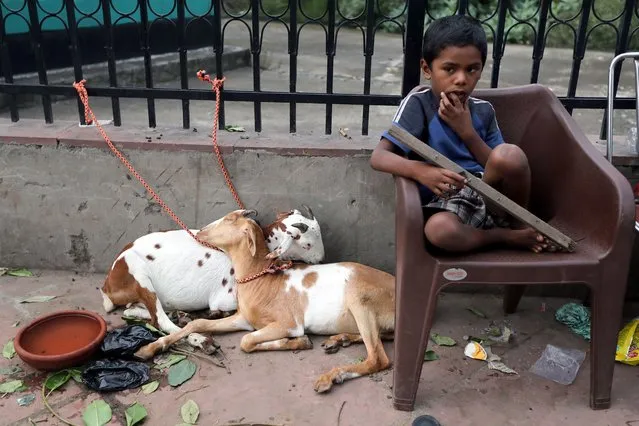
A boy sits next to sacrificial goats resting during Eid al-Adha in New Delhi, India, 29 June 2023. Muslims around the world celebrate Eid al-Adha or feast of sacrifice, by slaughtering sheep, goats and cows to commemorate Prophet Abraham's willingness to sacrifice his son Ismail at God's command. (Photo by Harish Tyagi/EPA)

A boy sits next to sacrificial goats resting during Eid al-Adha in New Delhi, India, 29 June 2023. Muslims around the world celebrate Eid al-Adha or feast of sacrifice, by slaughtering sheep, goats and cows to commemorate Prophet Abraham's willingness to sacrifice his son Ismail at God's command. (Photo by Harish Tyagi/EPA)
Details
07 Jul 2023 02:48:00
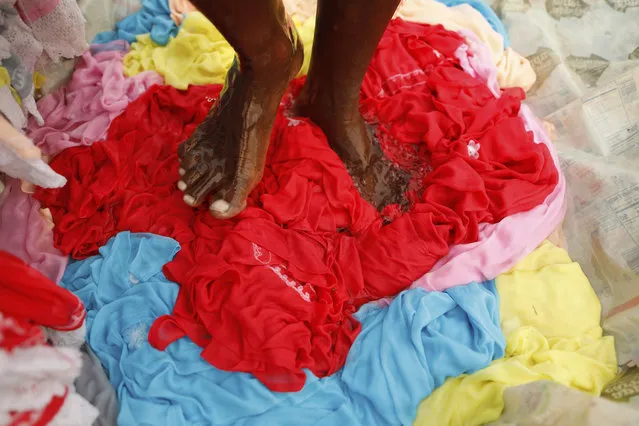
A dhobi, or a washerman washes cloths on the banks of the River Gomti in Lucknow, India, Saturday, September 12, 2020. Dhobis are traditional laundry workers who wash clothes by hand and dry them in the sun, an occupation which has been in existence for generations. Most cities in India have a Dhobi Ghat, or washermen's area, where the city's pile of clothes is laundered. This practice is still popular in India, despite of modern technology. Around 1,000 families work in Lucknow's Dhobi Ghat. However, in light of the novel coronavirus, their wages have decreased drastically. With each family earning around US$100-200 per month. (Photo by Rajesh Kumar Singh/AP Photo)

A dhobi, or a washerman washes cloths on the banks of the River Gomti in Lucknow, India, Saturday, September 12, 2020. Dhobis are traditional laundry workers who wash clothes by hand and dry them in the sun, an occupation which has been in existence for generations. Most cities in India have a Dhobi Ghat, or washermen's area, where the city's pile of clothes is laundered. This practice is still popular in India, despite of modern technology. Around 1,000 families work in Lucknow's Dhobi Ghat. However, in light of the novel coronavirus, their wages have decreased drastically. With each family earning around US$100-200 per month. (Photo by Rajesh Kumar Singh/AP Photo)
Details
25 Sep 2020 00:03:00
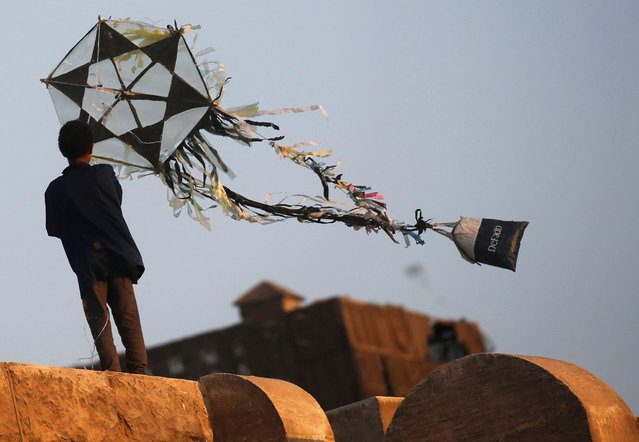
A boy flies a handmade kite from a roof, following the outbreak of the coronavirus disease (COVID-19). in Old Cairo, Egypt on July 26, 2020. (Photo by Amr Abdallah Dalsh/Reuters)

A boy flies a handmade kite from a roof, following the outbreak of the coronavirus disease (COVID-19). in Old Cairo, Egypt on July 26, 2020. (Photo by Amr Abdallah Dalsh/Reuters)
Details
21 Oct 2020 00:01:00
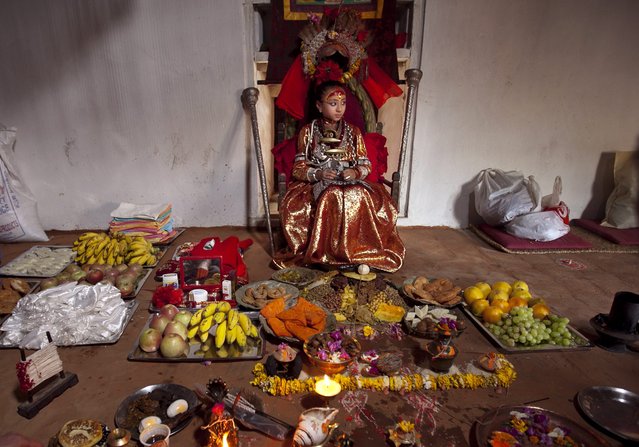
Kumari Samita Bajracharya sits in front of devotees offers during a special puja at Kumari Ghar in Patan, Nepal, 09 April 2011. It is believed that worshipping Kumari and receiving tika from her reduces illness and avoid problems. Kumari, or Kumari Devi, is a “living goddess”. The word literally means virgin in Nepali. The Living Goddesses are young pre-pubescent girls that are considered to be incarnations of the Hindu Goddess of Power, Kali. The Kumari retires when she reaches puberty. (Photo by Narendra Shrestha/EPA)

Kumari Samita Bajracharya sits in front of devotees offers during a special puja at Kumari Ghar in Patan, Nepal, 09 April 2011. It is believed that worshipping Kumari and receiving tika from her reduces illness and avoid problems. Kumari, or Kumari Devi, is a “living goddess”. The word literally means virgin in Nepali. The Living Goddesses are young pre-pubescent girls that are considered to be incarnations of the Hindu Goddess of Power, Kali. The Kumari retires when she reaches puberty. (Photo by Narendra Shrestha/EPA)
Details
18 Jun 2014 12:31:00