Newlyweds pose on a zebra crossing for wedding photographers during the 2018 soccer World Cup in Samara, Russia, Sunday, July 8, 2018. (Photo by Frank Augstein/AP Photo)
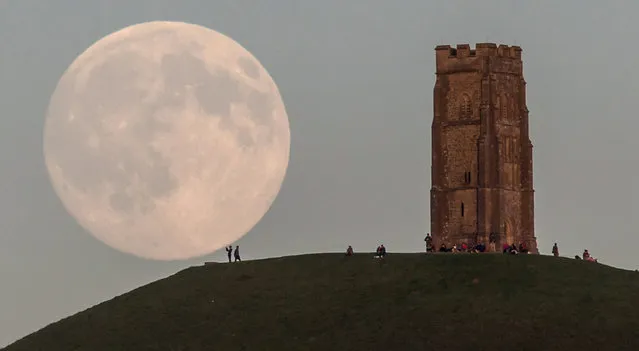
The moon rises over people gathered on Glastonbury Tor ahead of tomorrow's Blue Moon on July 30, 2015 in Somerset, England. The full moon appearing on July 31 will be what's called a Blue Moon, which refers to the second of two full moons appearing in the same calendar month. The last time this happened was in 2012 and there isn't due another until 2018. (Photo by Matt Cardy/Getty Images)
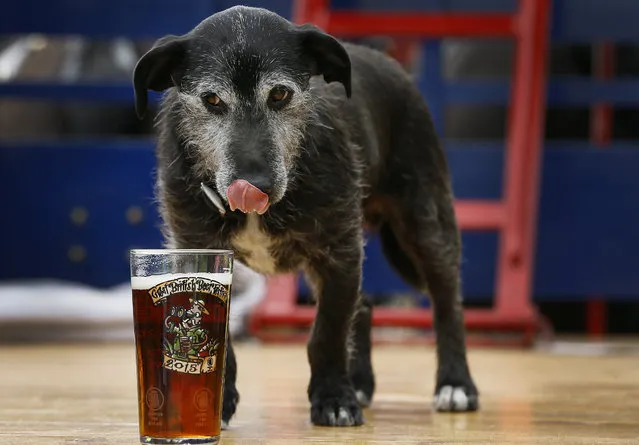
Barny, the Harveys Brewery dog has a sniff of a pint of beer at the Great British Beer Festival, at Olympia in London, Tuesday, August 11, 2015. The five day event is organised by the Campaign for Real Ale (CAMRA), with over 900 real ales, ciders, perries and international beers on offer. (Photo by Kirsty Wigglesworth/AP Photo)
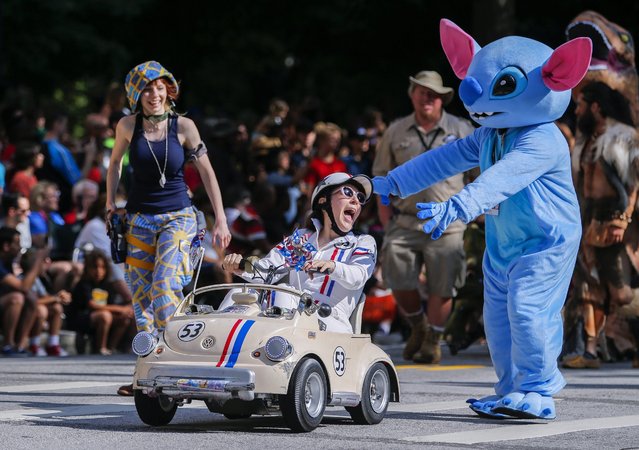
Costumed characters participate in the 30th annual Dragon Con Parade in Atlanta, Georgia, USA, 03 September 2016. Thousands of attendees crowd downtown Atlanta hotels and streets during the Labor Day weekend for the Dragon Con science fiction and fantasy convention, many dressed as their favorite characters. (Photo by Erik S. Lesser/EPA)
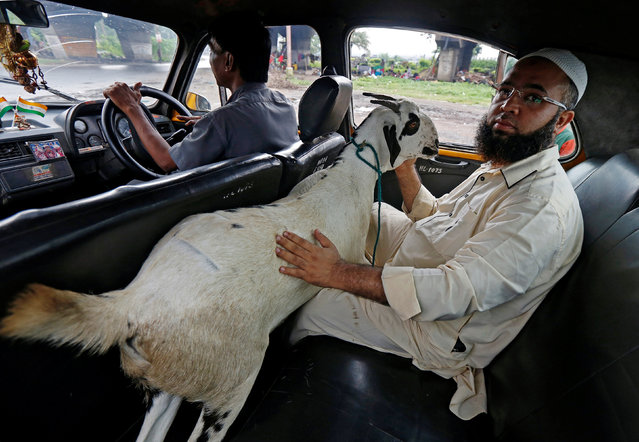
A man sits in the back of a taxi with a goat after purchasing it from a livestock market ahead of the Eid al-Adha festival in Kolkata, India, September 8, 2016. (Photo by Rupak De Chowdhuri/Reuters)
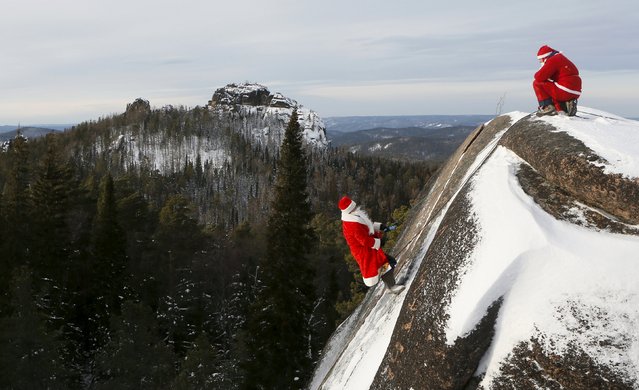
A member of the “Sibspas” Siberian search and rescue group dressed as Santa Claus (R), waits for his team mate, dressed as Father Frost, the Russian equivalent of Santa Claus, as he climbs the rock named “The Fourth Stolb” (the Fourth Pillar) at the Stolby national nature reserve during a training session of the Russian Emergencies Ministry, outside the Siberian city of Krasnoyarsk, Russia December 15, 2015. (Photo by Ilya Naymushin/Reuters)
This Thursday, January 22, 2015 photo made with a long exposure shows the glow from a Noctiluca scintillans algal bloom along the seashore in Hong Kong. The luminescence, also called Sea Sparkle, is triggered by farm pollution that can be devastating to marine life and local fisheries, according to University of Georgia oceanographer Samantha Joye. Noctiluca itself does not produce neurotoxins like other similar organisms do. But its role as both prey and predator tends can eventually magnify the accumulation of toxins in the food chain, according to R. Eugene Turner at Louisiana State University. (Photo by Kin Cheung/AP Photo)