A woman dressed in a traditional Ukrainian embroidered shirt holds her cat as she take part in an embroidered shirt parade in central Kiev, Ukraine, May 27, 2017. (Photo by Gleb Garanich/Reuters)
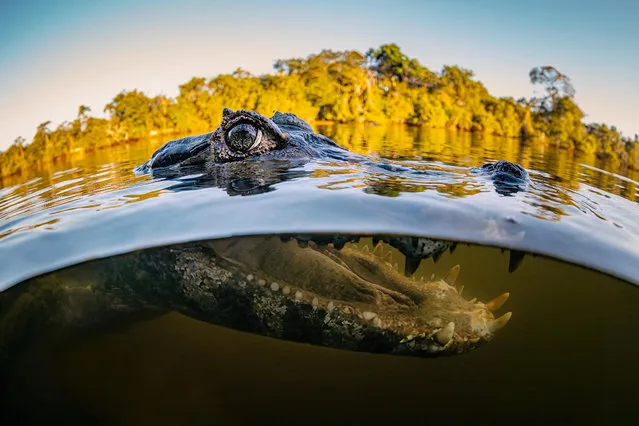
A caiman in the Pantanal region of Brazil in 2021. They are used to seeing humans, allowing the photographer, Leighton Lum, a close-up shot. (Photo by Leighton Lum/Caters News Agency)
In this photograph taken on August 20, 2022 a woman dances with a child alongside the Garonne river in Toulouse, southern France. (Photo by Charly Triballeau/AFP Photo)
A woman poses for a picture during Lunar New Year's Eve on Yaowarat Road in Bangkok's Chinatown, Thailand, February 9, 2024. (Photo by Jorge Silva/Reuters)
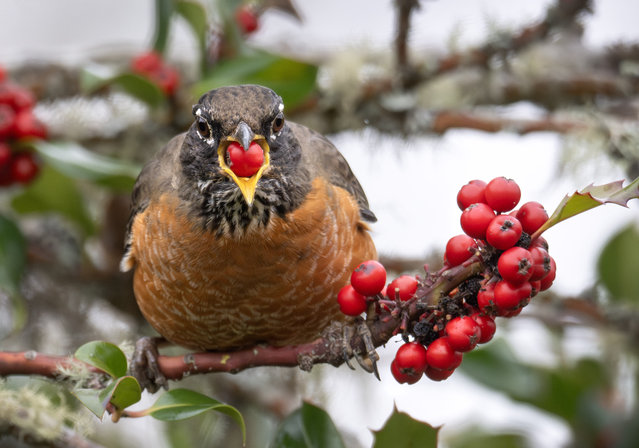
An American robin feeds on holly berries in a thicket near Elkton in southwestern Oregon on November 16, 2024. Many birds can safely consume holly berries, including blackbirds, redwings, and thrushes. There is an old wives tale that if you see a bird eating a berry, it is safe for humans to eat, but this is not true. Birds consume many plants that are poisonous to humans, holly berries included. (Photo by Robin Loznak/ZUMA Press Wire/Rex Features/Shutterstock)
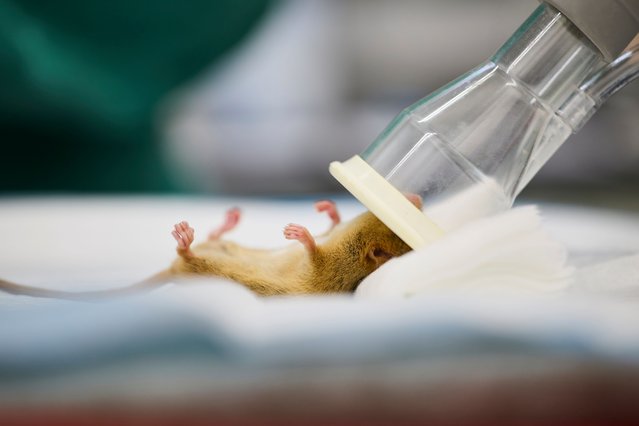
This hazel dormouse is being given a once-over by a disease risk team at ZSL London Zoo, UK in May 2025, as part of reintroduction programme. (Photo by David Levene/The Guardian)
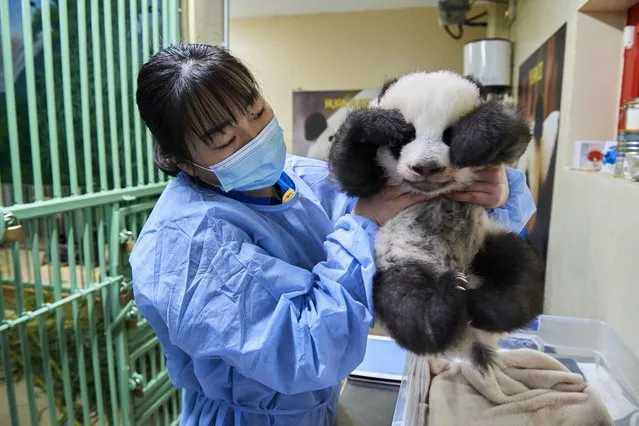
Yuandudu, a camera-shy panda cub, covers her eyes in Beauval ZooParc in France in November 2021. The three-month-old and her twin are fed once each by their mother every day, taking 150-200g of milk per feed. In between they have one bottle feed per day from the specially trained keepers who were sent from China to supervise their birth and early care. (Photo by Eric Baccega/Naturepl.com/LDY Agency)