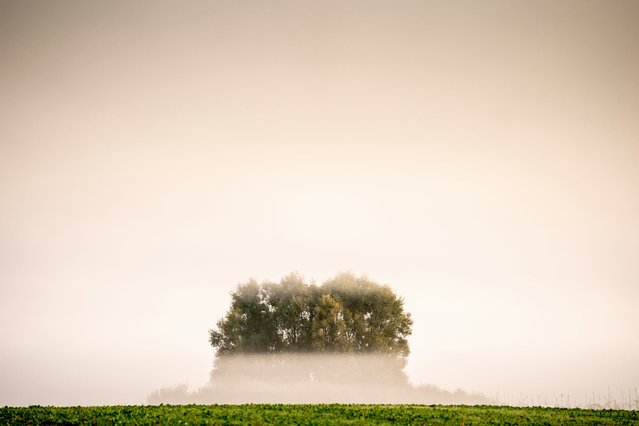
A view of trees shrouded in fog on a late summer morning between Tureby and Slimminge on Zealand, Denmark, 10 September 2021. (Photo by Mads Claus Rasmussen/EPA/EFE)
Revellers out and about in Newcastle, England on “Black Eye Friday” or “Mad Friday” on December 22, 2017 as people across the country celebrate the start of the Christmas break by hitting bars, pubs and clubs. This partygoer had so much fun she looks lost. (Photo by Craig Connor/North News and Pictures)
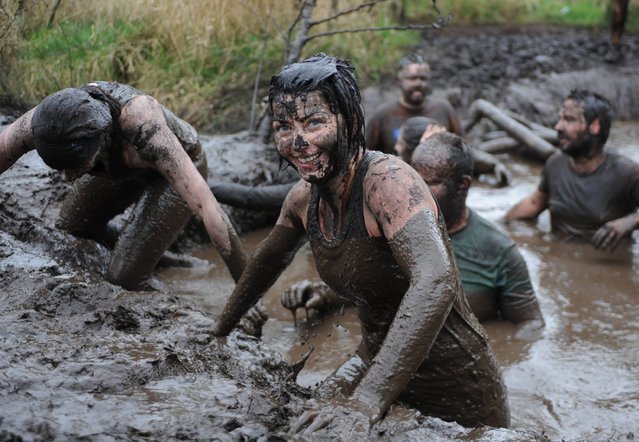
Mud Madness at the annual Jaffa Cakes charity three-mile run at Foymore Lodge near Portadown this afternoon, on April 13, 2014. A total of a thousand competitors and fun-runners took part in the two races held over the mudstrewn endurance course. (Photo by Alan Lewis/Photopress Belfast)
Model Bar Refaeli arrives at amfAR's Cinema Against AIDS 2007 at Le Moulin de Mougins on May 23, 2007 in Mougins, France. The amfAR Foundation raises funds for research, education and treatment of AIDS/HIV worldwide.
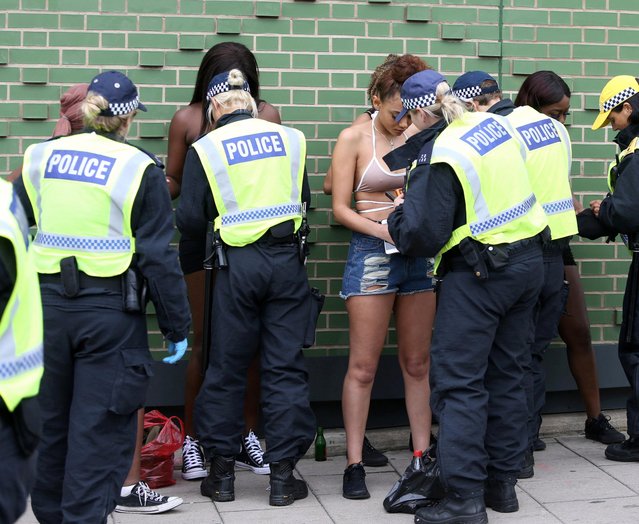
Police are highly visible at the Notting Hill carnival with several arrests, stop and search and a “knife detection gate” in operation, August 27, 2018 in west London, England. 133 arrests were made at the carnival yesterday with 20 knives seized. (Photo by South West News Service/Action Press/Picturedesk)
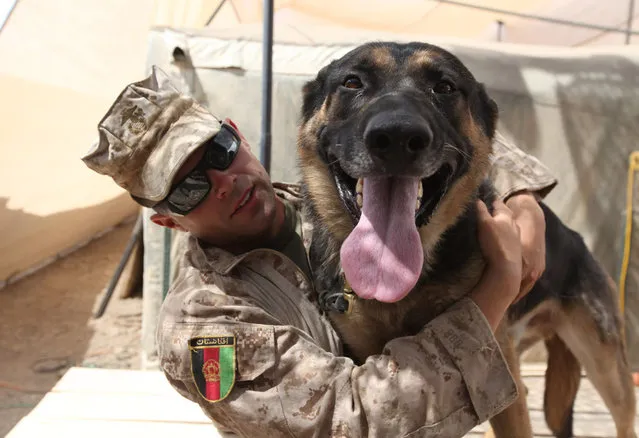
Throughout the course of the long war in Afghanistan, Coalition troops have relied on thousands of military working dogs to help keep them safe, and make their jobs easier. The dogs are trained to detect explosives, to find illegal drugs, to search for missing comrades, or target enemy combatants. Not only are they active on the front lines, but behind the lines they serve as therapy dogs, service dogs, and loyal companions. They also share the same risks as the ground troops, suffering injuries and sometimes death on the battlefields. Gathered here are images of these dogs and their handlers in Afghanistan and back home, from over the past several years, part of the ongoing series here on Afghanistan.
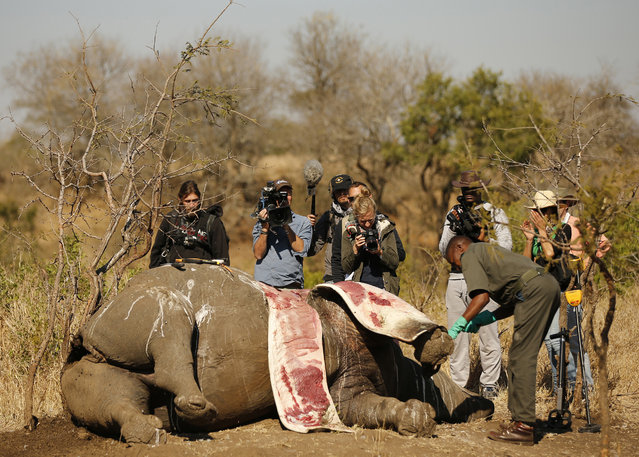
Members of the media film as a ranger performs a post mortem on the carcass of a rhino after it was killed for its horn by poachers at the Kruger national park in Mpumalanga province August 27, 2014. Rhino poachers in South Africa now risk giving themselves away when they shoot thanks to a high-tech, gunfire-detection system being piloted in the country's flagship Kruger National Park. The stakes are high, for rhinos are being slain in escalating numbers for their prized horns, alarming both conservationists and the government since wildlife in South Africa is an important tourist draw. (Photo by Siphiwe Sibeko/Reuters)