Loading...
Done
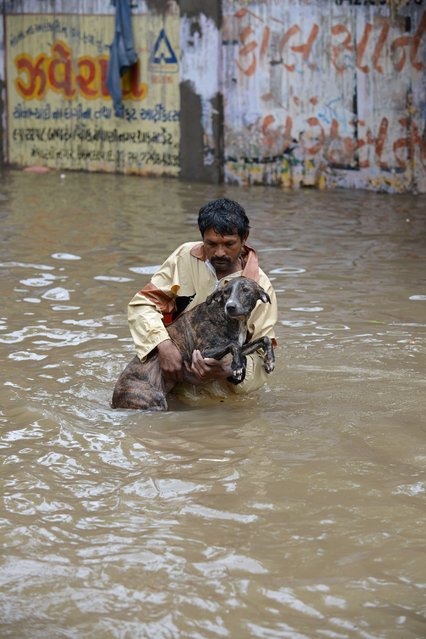
An Indian resident assists a dog as he wades through floodwaters in Ahmedabad on July 30, 2014. Rains lashed Ahmedabad and many regions of India's western Gujarat state, wth the Indian Metrological Department warning of heavy rains for the next 48 hours. (Photo by Sam Panthaky/AFP Photo)

An Indian resident assists a dog as he wades through floodwaters in Ahmedabad on July 30, 2014. Rains lashed Ahmedabad and many regions of India's western Gujarat state, wth the Indian Metrological Department warning of heavy rains for the next 48 hours. (Photo by Sam Panthaky/AFP Photo)
Details
31 Jul 2014 09:58:00
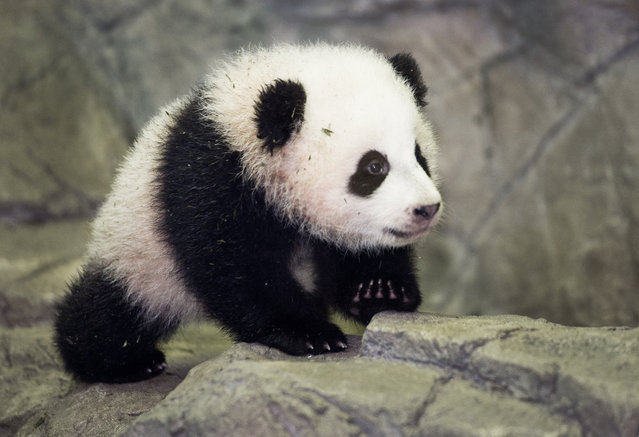
Bao Bao, the Giant Panda cub is seen by the media for the first time January 6, 2014 inside his glass enclosure at the Smithsonian's National Zoo in Washington, DC, a few days before going on display to the general public. Bao Bao was born at the Smithsonian's National Zoo August 2, 2013. (Photo by Paul J. Richards/AFP Photo)

Bao Bao, the Giant Panda cub is seen by the media for the first time January 6, 2014 inside his glass enclosure at the Smithsonian's National Zoo in Washington, DC, a few days before going on display to the general public. Bao Bao was born at the Smithsonian's National Zoo August 2, 2013. (Photo by Paul J. Richards/AFP Photo)
Details
07 Jan 2014 08:58:00


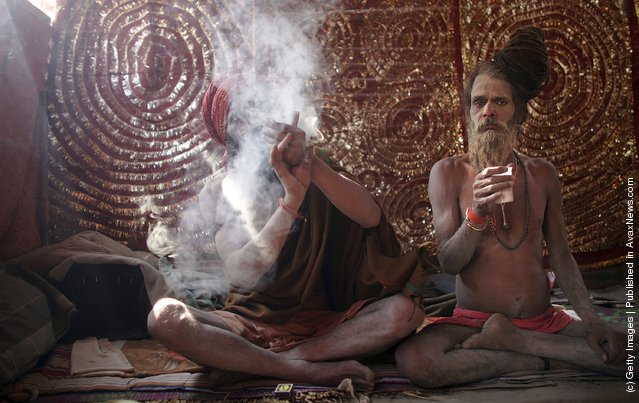
“Kumbh Mela is a mass Hindu pilgrimage in which Hindus gather at the Ganges river. The normal Kumbh Mela is celebrated every 3 years, the Ardh (half) Kumbh Mela is celebrated every six years at Haridwar and Prayag, the Purna (complete) Kumbh takes place every twelve years, at four places (Prayag (Allahabad), Haridwar, Ujjain, and Nashik). The Maha (great) Kumbh Mela which comes after 12 “Purna Kumbh Melas”, or 144 years, is held at Allahabad.

The last Ardh Kumbh Mela was held over a period of 45 days beginning in January 2007, more than 70 million Hindu pilgrims took part in the Ardh Kumbh Mela at Prayag, and on January 15, the most auspicious day of the festival of Makar Sankranti, more than 5 million participated. The previous Maha Kumbh Mela, held in 2001, was attended by around 60 million people, making it at the time the largest gathering anywhere in the world in recorded history”. – Wikipedia

Photo: Sadhus (holy men) smoke at their camp near the ritual site at Sangam, the confluence of the Ganges, Yamuna and mythical Saraswati rivers during the Ardh Kumbh Mela festival (Half Pitcher festival) January 18, 2007 in Allahabad, India. Millions of Hindu pilgrims have flocked to the largest religious gathering in the world which lasts for 45 days in northern India. The festival commemorates the mythical conflict between gods and demons over a pitcher filled with the “nectar of immortality”. Devotees believe that taking a holy dip in the Ganges at this time washes away their sins and paves the path to salvation. (Photo by Mario Tama/Getty Images)

Details
30 Jun 2011 10:27:00
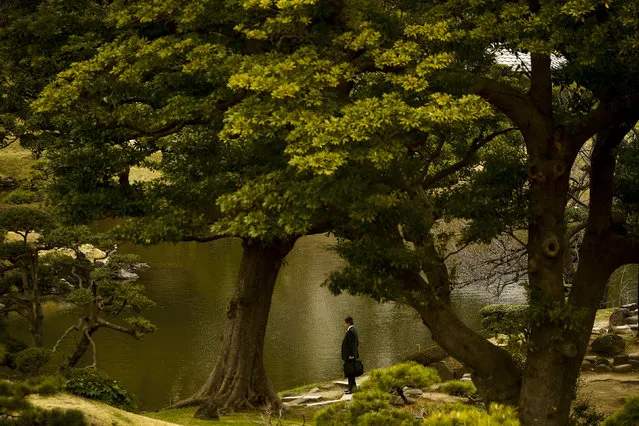
JAPAN: A businessman stands at a pond in the Kyu-Shiba-rikyu Garden on a warm and sunny day in Tokyo, Japan, March 18, 2016. (Photo by Thomas Peter/Reuters)

JAPAN: A businessman stands at a pond in the Kyu-Shiba-rikyu Garden on a warm and sunny day in Tokyo, Japan, March 18, 2016. (Photo by Thomas Peter/Reuters)
Details
26 Dec 2016 06:56:00
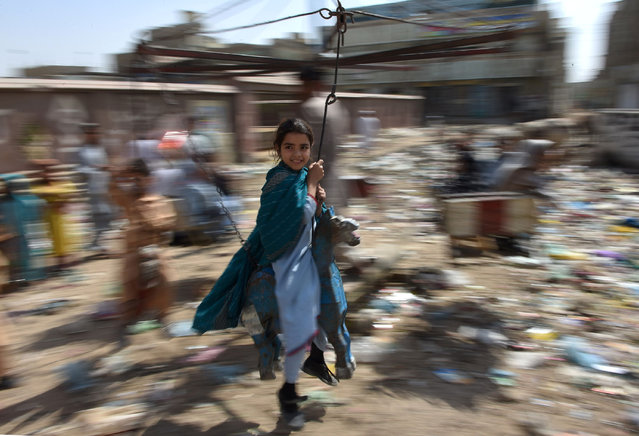
In this photograph taken on February 18, 2016, Pakistani children ride on swings in the predominantly Pashtun Korangi District of Karachi. In a rundown district of Karachi, Rabia balks at a neighbour's proposal to vaccinate her children, demonstrating one of the biggest hurdles to eradicating polio in Pakistan by the end of the year: confused and frightened parents. (Photo by Asif Hassan/AFP Photo)

In this photograph taken on February 18, 2016, Pakistani children ride on swings in the predominantly Pashtun Korangi District of Karachi. In a rundown district of Karachi, Rabia balks at a neighbour's proposal to vaccinate her children, demonstrating one of the biggest hurdles to eradicating polio in Pakistan by the end of the year: confused and frightened parents. (Photo by Asif Hassan/AFP Photo)
Details
04 Apr 2016 10:37:00
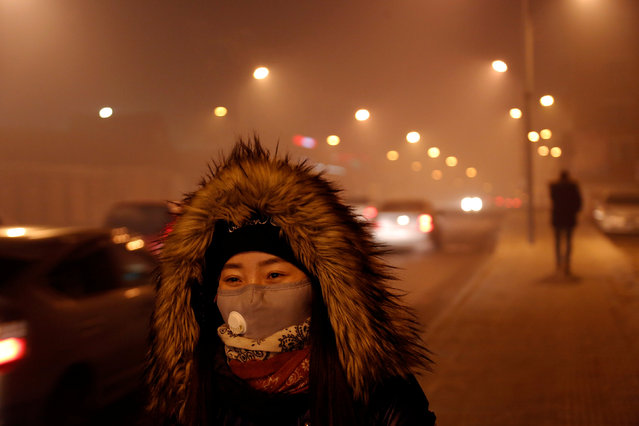
A woman wears a face mask in the part of the city near neighbourhoods known for burning coal for heating in Ulaanbaatar, Mongolia January 26, 2017. Not many people in Ulaanbaatar wear masks to protect themselves against pollution. (Photo by B. Rentsendorj/Reuters)

A woman wears a face mask in the part of the city near neighbourhoods known for burning coal for heating in Ulaanbaatar, Mongolia January 26, 2017. Not many people in Ulaanbaatar wear masks to protect themselves against pollution. (Photo by B. Rentsendorj/Reuters)
Details
09 Feb 2017 00:00:00
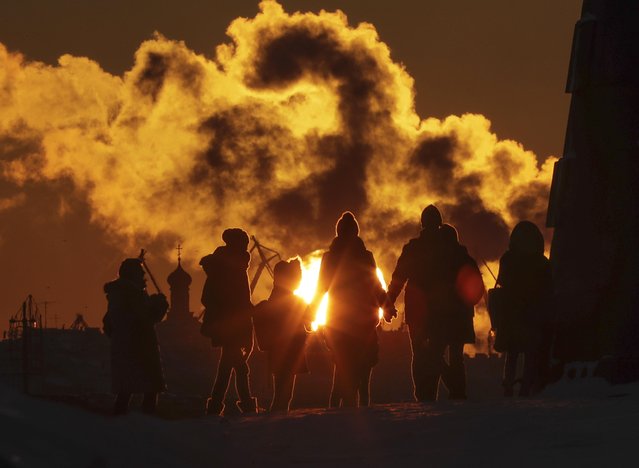
People walk along the Neva River at sunset in St.Petersburg, Russia, Tuesday, December 6, 2016. The temperature in St.Petersburg is -9C ( 15.8 °F). (Photo by Dmitri Lovetsky/AP Photo)

People walk along the Neva River at sunset in St.Petersburg, Russia, Tuesday, December 6, 2016. The temperature in St.Petersburg is –9C ( 15.8 °F). (Photo by Dmitri Lovetsky/AP Photo)
Details
10 Jun 2017 08:38:00
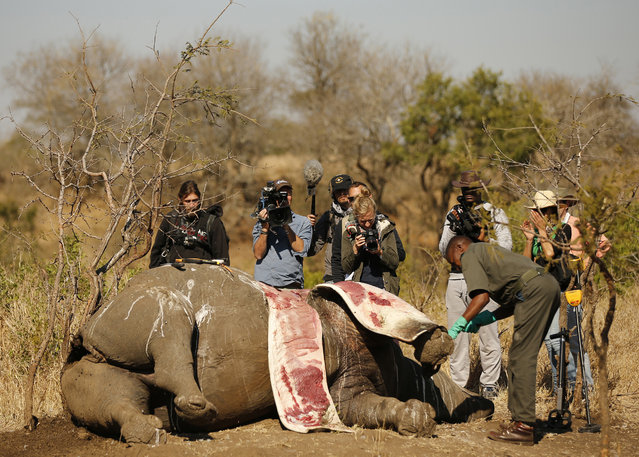
Members of the media film as a ranger performs a post mortem on the carcass of a rhino after it was killed for its horn by poachers at the Kruger national park in Mpumalanga province August 27, 2014. Rhino poachers in South Africa now risk giving themselves away when they shoot thanks to a high-tech, gunfire-detection system being piloted in the country's flagship Kruger National Park. (Photo by Siphiwe Sibeko/Reuters)

Members of the media film as a ranger performs a post mortem on the carcass of a rhino after it was killed for its horn by poachers at the Kruger national park in Mpumalanga province August 27, 2014. Rhino poachers in South Africa now risk giving themselves away when they shoot thanks to a high-tech, gunfire-detection system being piloted in the country's flagship Kruger National Park. The stakes are high, for rhinos are being slain in escalating numbers for their prized horns, alarming both conservationists and the government since wildlife in South Africa is an important tourist draw. (Photo by Siphiwe Sibeko/Reuters)
Details
07 Nov 2015 08:03:00