Loading...
Done
Afghanistan: Dogs of War Part 1

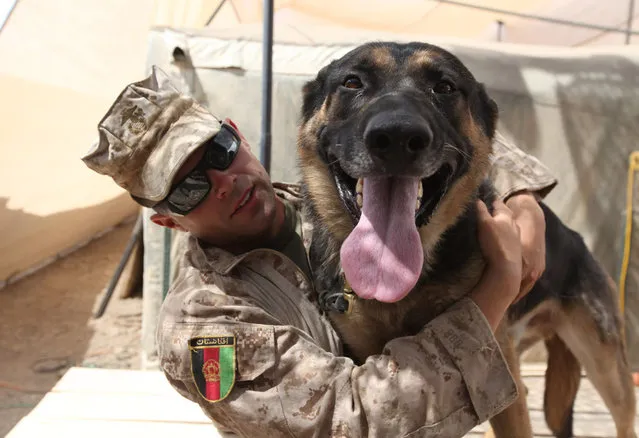
Throughout the course of the long war in Afghanistan, Coalition troops have relied on thousands of military working dogs to help keep them safe, and make their jobs easier. The dogs are trained to detect explosives, to find illegal drugs, to search for missing comrades, or target enemy combatants. Not only are they active on the front lines, but behind the lines they serve as therapy dogs, service dogs, and loyal companions. They also share the same risks as the ground troops, suffering injuries and sometimes death on the battlefields. Gathered here are images of these dogs and their handlers in Afghanistan and back home, from over the past several years, part of the ongoing series here on Afghanistan.
Details
03 Jun 2014 21:02:00
Hurricane Irene

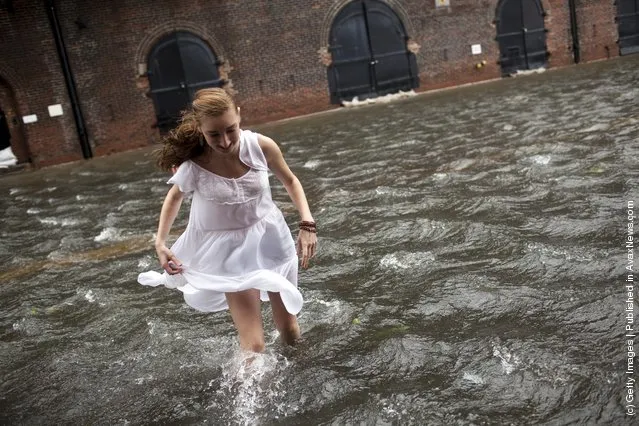
A local resident of Red Hook, Betty Walsh, crosses a flooded street in Red Hook August 28, 2011 in the Brooklyn borough of New York City. While Hurricane Irene has been downgraded to a tropical storm, it has knocked out power to more than 3 million people and is attributed to 15 deaths as it travels up the Eastern seaboard. (Photo by Robert Nickelsberg/Getty Images)
Details
30 Aug 2011 13:20:00
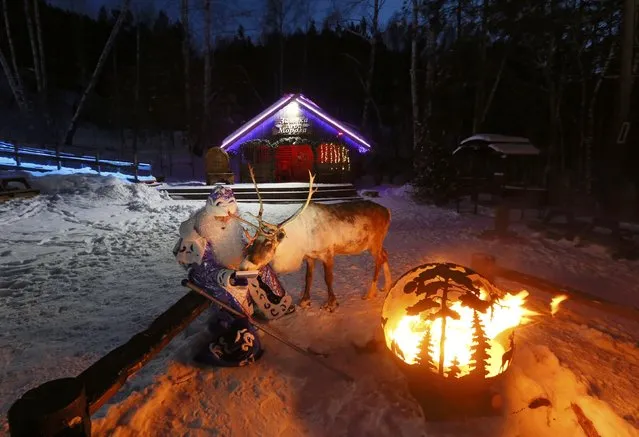
A man dressed as Father Frost, Russian equivalent of Santa Claus, sits by the fire with a reindeer Yakut, marking winter solstice at the Royev Ruchey Park of Flora and Fauna in the Siberian Taiga wood in the suburbs of Krasnoyarsk, Russia, December 21, 2016. (Photo by Ilya Naymushin/Reuters)

A man dressed as Father Frost, Russian equivalent of Santa Claus, sits by the fire with a reindeer Yakut, marking winter solstice at the Royev Ruchey Park of Flora and Fauna in the Siberian Taiga wood in the suburbs of Krasnoyarsk, Russia, December 21, 2016. (Photo by Ilya Naymushin/Reuters)
Details
23 Dec 2016 11:22:00
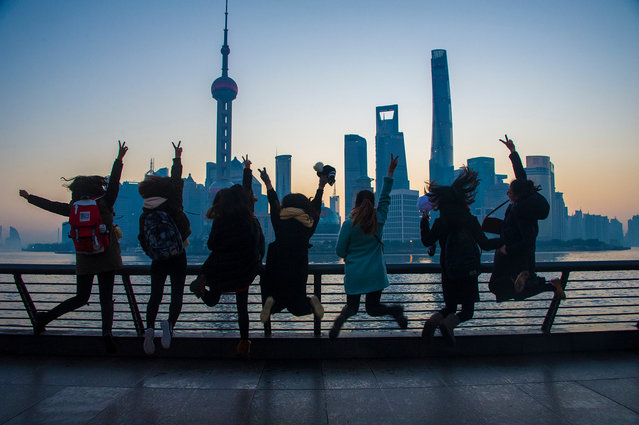
People view the sunrise scene at the Bund in Shanghai, east China, January 1, 2017. (Photo by Wang Hechun/Xinhua/Barcroft Images)

People view the sunrise scene at the Bund in Shanghai, east China, January 1, 2017. (Photo by Wang Hechun/Xinhua/Barcroft Images)
Details
02 Jan 2017 13:21:00
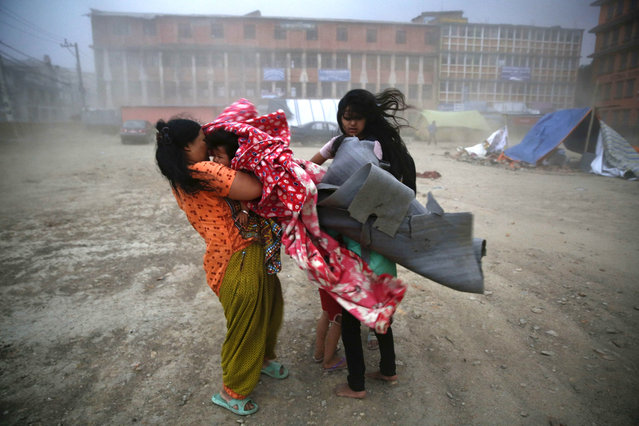
A storm whips through a tented area occupied by Nepalese earthquake survivors as a mother grabs her infant child and runs to find shelter in Kathmandu, Nepal 23 May 2015. Nepalese, who lost their homes in earthquake and fear aftershocks, have been living in temporary shelter in open ground which they had to flee because of the heavy rain and powerful wind. (Photo by Narendra Shrestha/EPA)

A storm whips through a tented area occupied by Nepalese earthquake survivors as a mother grabs her infant child and runs to find shelter in Kathmandu, Nepal 23 May 2015. Nepalese, who lost their homes in earthquake and fear aftershocks, have been living in temporary shelter in open ground which they had to flee because of the heavy rain and powerful wind. (Photo by Narendra Shrestha/EPA)
Details
25 May 2015 10:00:00
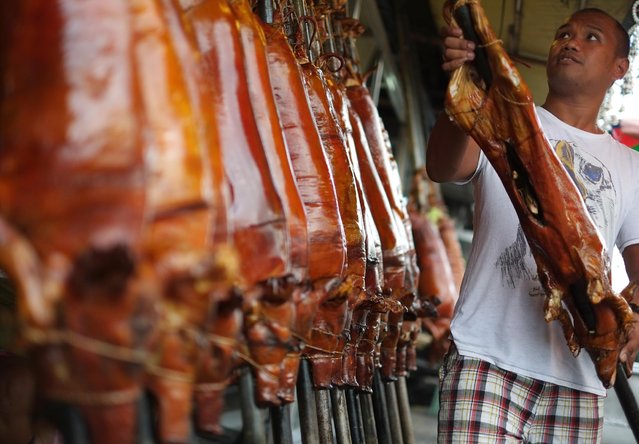
A Filipino worker arranges roasted pigs which they sell in suburban Quezon city, Philippines on Tuesday, December 23, 2014. Roasted pig is popular during Filipino celebrations and traditionally served during a Christmas eve dinner called “Noche Buena” in this predominantly Roman Catholic nation. (Photo by Aaron Favila/AP Photo)

A Filipino worker arranges roasted pigs which they sell in suburban Quezon city, Philippines on Tuesday, December 23, 2014. Roasted pig is popular during Filipino celebrations and traditionally served during a Christmas eve dinner called “Noche Buena” in this predominantly Roman Catholic nation. (Photo by Aaron Favila/AP Photo)
Details
27 Dec 2014 11:49:00
A man dressed in a condom costume walks at Caleta Portales beach, during a summer awareness campaign by the Chilean Corporation for the Prevention of AIDS in Valparaiso city, northwest of Santiago January  9, 2015. (Photo by Rodrigo Garrido/Reuters)

A man dressed in a condom costume walks at Caleta Portales beach, during a summer awareness campaign by the Chilean Corporation for the Prevention of AIDS in Valparaiso city, northwest of Santiago January 9, 2015. (Photo by Rodrigo Garrido/Reuters)
Details
10 Jan 2015 13:42:00
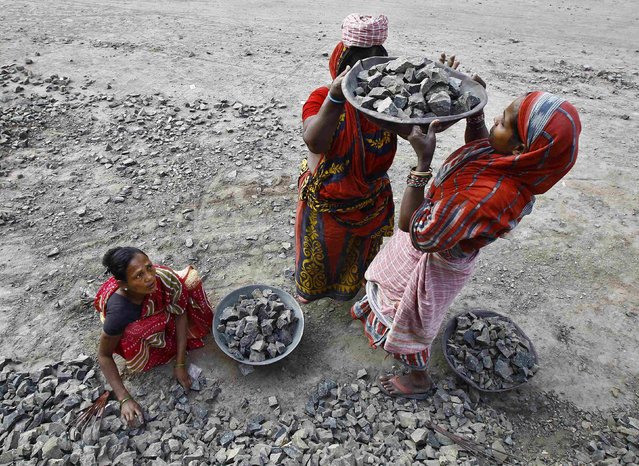
Women labourers work at the construction site of a road in Kolkata January 8, 2015. Across towns and cities in India, it is not uncommon to see women cleaning building sites, carrying bricks and or shoveling gravel - helping construct the infrastructure necessary for the country's economic and social development. (Photo by Rupak De Chowdhuri/Reuters)

Women labourers work at the construction site of a road in Kolkata January 8, 2015. Across towns and cities in India, it is not uncommon to see women cleaning building sites, carrying bricks and or shoveling gravel – helping construct the infrastructure necessary for the country's economic and social development. They help build roads, railway tracks, airports, and offices. They lay pipes for clean water supplies, cables for telecommunications, and dig the drains for sewage systems. But although women make up at least 20 percent of India's 40 million construction workers, they are less recognized than male workers with lower pay and often prone to safety hazards and sexual harassment. They are often unaware of their rights or scared to complain, say activists now trying to campaign for better treatment of women in the construction industry. (Photo by Rupak De Chowdhuri/Reuters)
Details
15 Jan 2015 13:47:00