Loading...
Done
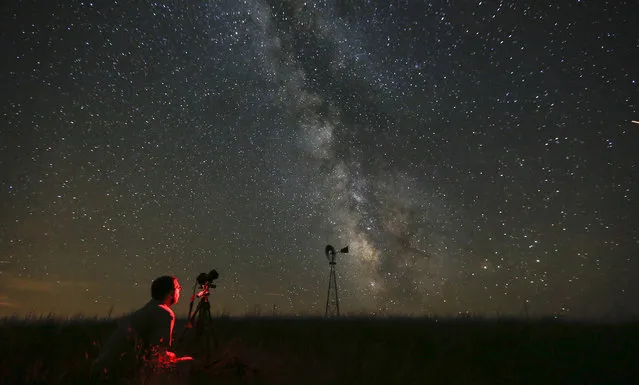
Two cocks are trained for a fight in a village in Nakhon Sawan province, Thailand January 10, 2017. (Photo by Chaiwat Subprasom/Reuters)

Two cocks are trained for a fight in a village in Nakhon Sawan province, Thailand January 10, 2017. (Photo by Chaiwat Subprasom/Reuters)
Details
11 Jan 2017 14:56:00
A participant in the Crazy Races extreme sports game competes in the cross-country obstacle race in Ufa, Russia on September 21, 2015. (Photo by TASS/Barcroft Media)

A participant in the Crazy Races extreme sports game competes in the cross-country obstacle race in Ufa, Russia on September 21, 2015. (Photo by TASS/Barcroft Media)
Details
23 Sep 2015 11:47:00
People carry their pets before the start of a pet blessing at Greenhills shopping mall in Manila October 3, 2015. (Photo by Romeo Ranoco/Reuters)

People carry their pets before the start of a pet blessing at Greenhills shopping mall in Manila October 3, 2015. Pets were blessed on Saturday in a celebration honouring the patron saint of animals Saint Francis of Assisi. (Photo by Romeo Ranoco/Reuters)
Details
05 Oct 2015 08:07:00
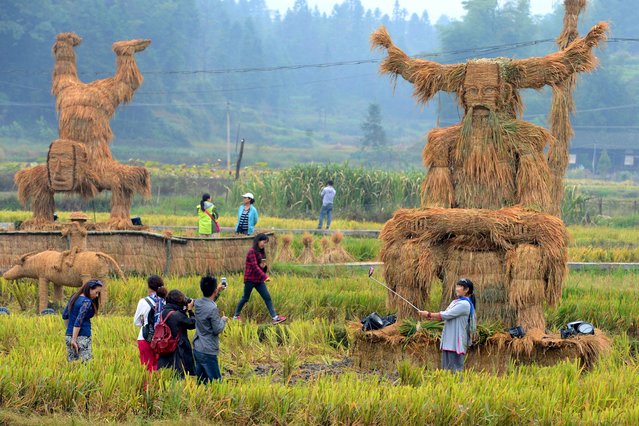
Tourists take pictures of straw figurines of traditional deities Shennong (R) and Zhang Wulang (L back) during China's National Day Holiday, in Xinhua county, Hunan province, October 4, 2015. (Photo by Reuters/China Daily)

Tourists take pictures of straw figurines of traditional deities Shennong (R) and Zhang Wulang (L back) during China's National Day Holiday, in Xinhua county, Hunan province, October 4, 2015. (Photo by Reuters/China Daily)
Details
07 Oct 2015 08:08:00
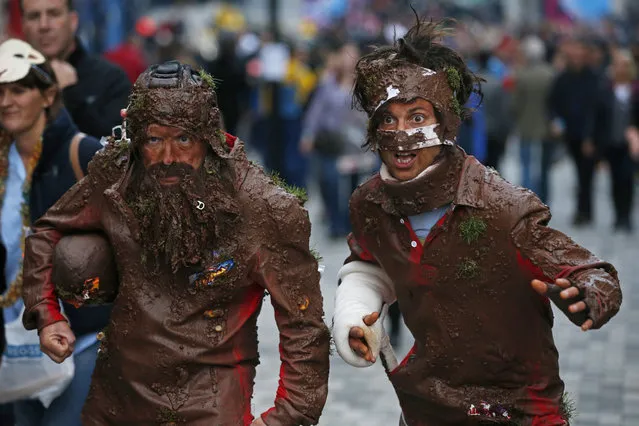
Rugby Union, New Zealand vs Tonga, IRB Rugby World Cup 2015 Pool C, St James' Park, Newcastle, Englandon October 9, 2015: Fans is fancy dress before the game. (Photo by Andrew Yates/Reuters)

Rugby Union, New Zealand vs Tonga, IRB Rugby World Cup 2015 Pool C, St James' Park, Newcastle, Englandon October 9, 2015: Fans is fancy dress before the game. (Photo by Andrew Yates/Reuters)
Details
11 Oct 2015 08:09:00
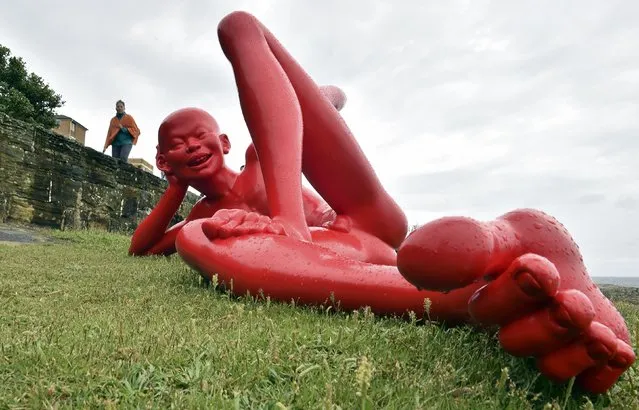
A visitor looks at a sculpture by a Chinese artist Chen Wenling at the "Sculpture by the Sea" exhibition which runs along the Bondi to Tamarama coastal walk in Sydney on October 22, 2015. The world's largest annual free-to-the-public outdoor sculpture exhibition runs from October 22 – November 8 this year and features over 107 sculptures by artists around the world. (Photo by Saeed Khan/AFP Photo)

A visitor looks at a sculpture by a Chinese artist Chen Wenling at the "Sculpture by the Sea" exhibition which runs along the Bondi to Tamarama coastal walk in Sydney on October 22, 2015. The world's largest annual free-to-the-public outdoor sculpture exhibition runs from October 22 – November 8 this year and features over 107 sculptures by artists around the world. (Photo by Saeed Khan/AFP Photo)
Details
24 Oct 2015 10:17:00
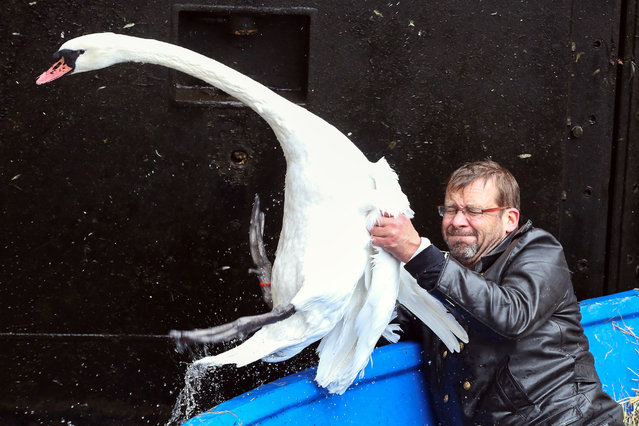
Olaf Niess catches swans on the river Alster near the town hall in Hamburg, Germany, 17 November 2015. The Alster swans are moving to their ice-free winter quarters on the Eppendorf Muehlenteich millpond until spring. (Photo by Bodo Marks/EPA)

Olaf Niess catches swans on the river Alster near the town hall in Hamburg, Germany, 17 November 2015. The Alster swans are moving to their ice-free winter quarters on the Eppendorf Muehlenteich millpond until spring. (Photo by Bodo Marks/EPA)
Details
18 Nov 2015 08:07:00
In this Wednesday, July 23, 2014 file photo, Omaha photographer Lane Hickenbottom photographs the night sky in a pasture near Callaway, Neb. With no moon in the sky, the Milky Way was visible to the naked eye. More than one-third of the world’s population can no longer see the Milky Way because of man-made lights, according to a scientific paper by Light Pollution Science and Technology Institute's Fabio Falchi and his team members, published on Friday, June 10, 2016. (Photo by Travis Heying/The Wichita Eagle via AP Photo)
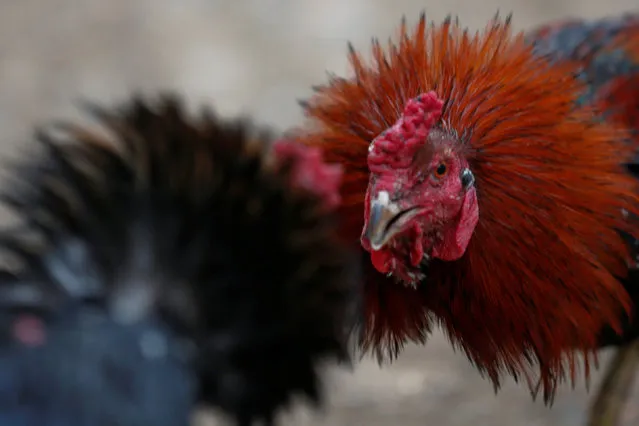

In this Wednesday, July 23, 2014 file photo, Omaha photographer Lane Hickenbottom photographs the night sky in a pasture near Callaway, Neb. With no moon in the sky, the Milky Way was visible to the naked eye. More than one-third of the world’s population can no longer see the Milky Way because of man-made lights, according to a scientific paper by Light Pollution Science and Technology Institute's Fabio Falchi and his team members, published on Friday, June 10, 2016. (Photo by Travis Heying/The Wichita Eagle via AP Photo)

Details
11 Jun 2016 12:37:00