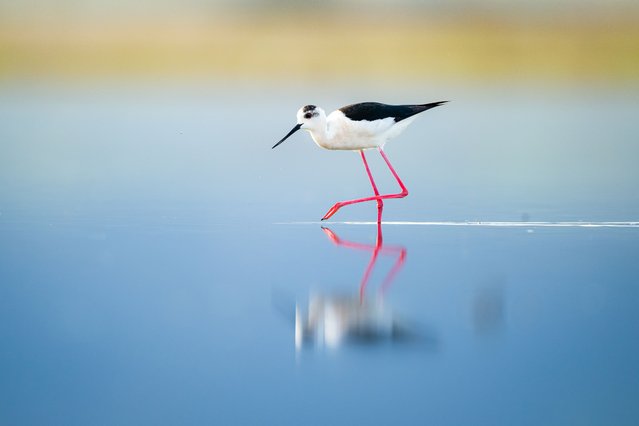
Black Winged Stilt is seen on Kavak Delta, a natural and ecologically important wetland for many migratory birds, in Canakkale, Turkiye on May 13, 2025. (Photo by Alper Tuydes/Anadolu via Getty Images)
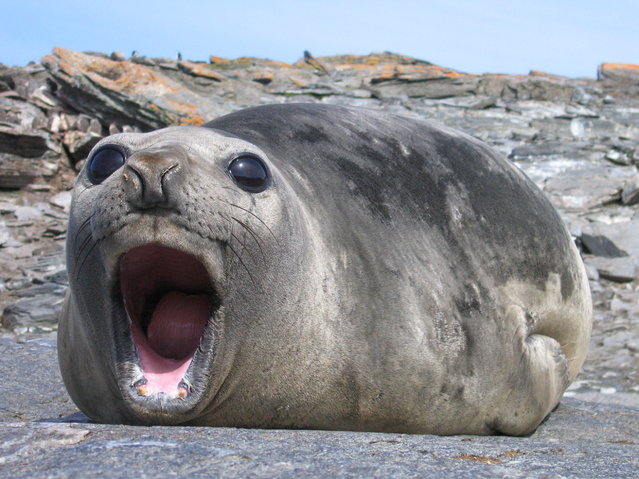
Weddell seal numbers in 2025 have declined sharply on Signy Island, part of the South Orkney Islands in the Southern Ocean, where British Antarctic Survey researchers have tracked seal populations for nearly 50 years to understand the impact of melting sea ice. (Photo by Michael Dunn/The Times)
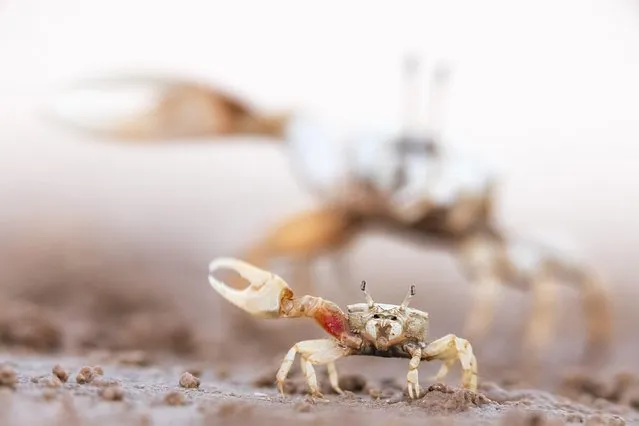
A young male fiddler crab is dwarfed by an older male of the same species, looming behind it at Morua estuary, in the Gulf of California, Mexico on January 4, 2022. Whereas female fiddler crabs have small claws of equal sizes, the males’ pincers can vary in size, with the small one used to pick up food and the larger to impress females. (Photo by Claudio Contreras/Solent News)
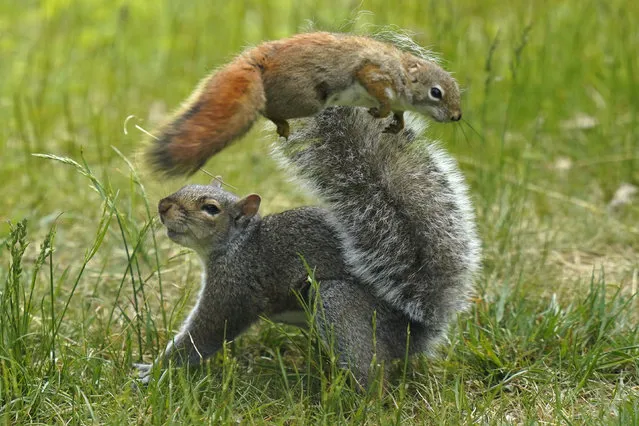
A red squirrel leaps over a gray squirrel after the larger squirrel became annoyed with its territory being encroached upon, Saturday, May 28, 2022, in Freeport, Maine. (Photo by Robert F. Bukaty/AP Photo)
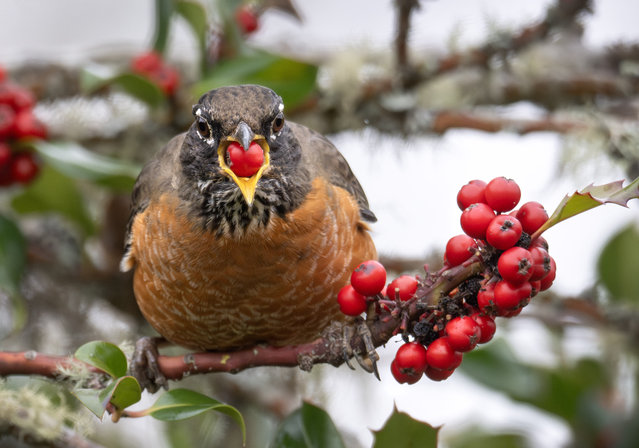
An American robin feeds on holly berries in a thicket near Elkton in southwestern Oregon on November 16, 2024. Many birds can safely consume holly berries, including blackbirds, redwings, and thrushes. There is an old wives tale that if you see a bird eating a berry, it is safe for humans to eat, but this is not true. Birds consume many plants that are poisonous to humans, holly berries included. (Photo by Robin Loznak/ZUMA Press Wire/Rex Features/Shutterstock)
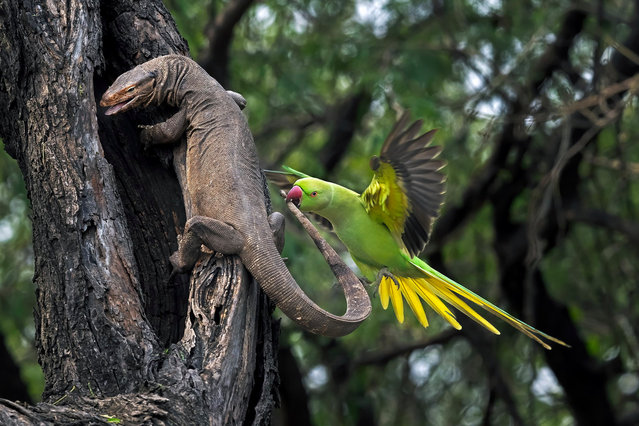
Hira Punjabi, from Maharashtra, India, took this stunning photo of a parakeet attacking a tree-climbing lizard, which has won the SINWP Bird Photographer of the Year 2024, in aid of RSPB. She had to wait by the same tree for four days to get the perfect action shot. (Photo by Hira Punjabi/SINWP via SWNS)
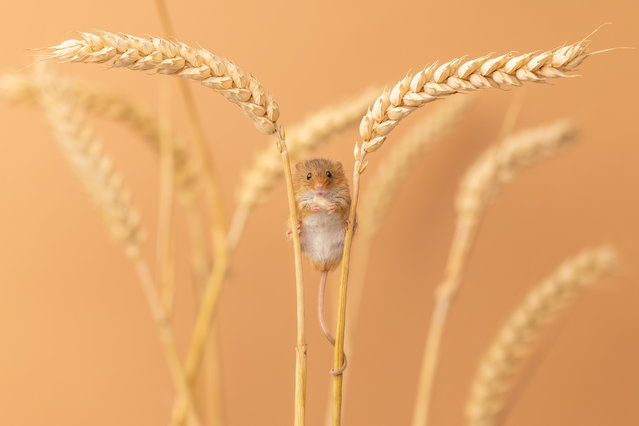
Stunning image capture the moment a tiny harvest mouse uses wheat stems as stilts as he munches on a kernel in UK in August 2025. The minute-mouse, who weighs as much as a 2p coin and is only two-inches-long, uses his prehensile tail to keep himself perfectly level. (Photo by Tony Nellis/South West News Service)