Loading...
Done
An alligator named Muja is seen in its enclosure in Belgrade's Zoo, Serbia, August 14, 2018. Muja is officially the oldest American alligator in the world living in captivity. He was brought to Belgrade from Germany in 1937, a year after the opening of the Zoo. Muja survived three bombings of Belgrade, the Second World War and all hardships the Zoo went through. (Photo by Marko Djurica/Reuters)

An alligator named Muja is seen in its enclosure in Belgrade's Zoo, Serbia, August 14, 2018. Muja is officially the oldest American alligator in the world living in captivity. He was brought to Belgrade from Germany in 1937, a year after the opening of the Zoo. Muja survived three bombings of Belgrade, the Second World War and all hardships the Zoo went through. (Photo by Marko Djurica/Reuters)
Details
19 Aug 2018 00:03:00
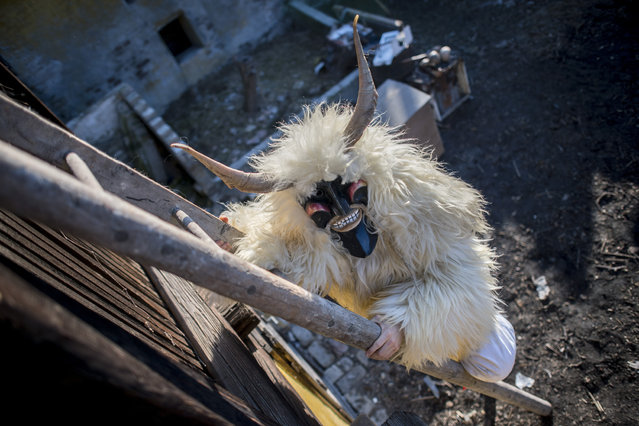
A man wears a busho mask and a costume made of sheep pelt while climbing up a ladder outside a barn in Mohacs, Hungary, 20 February 2020, on the first day of carnival. The traditional Busho carnival, which marks the end of winter, dates back to the 16th century. According to local legend, members of an ethnic South Slavic group living in Mohacs at the time dressed up in similar costumes and wore wooden masks to scare away Ottoman invaders, who mistook them for demons. (Photo by Tamas Soki/EPA/EFE)

A man wears a busho mask and a costume made of sheep pelt while climbing up a ladder outside a barn in Mohacs, Hungary, 20 February 2020, on the first day of carnival. The traditional Busho carnival, which marks the end of winter, dates back to the 16th century. According to local legend, members of an ethnic South Slavic group living in Mohacs at the time dressed up in similar costumes and wore wooden masks to scare away Ottoman invaders, who mistook them for demons. (Photo by Tamas Soki/EPA/EFE)
Details
23 Feb 2020 00:07:00
Passengers wear protective masks while riding a subway train on April 21, 2020 in Shanghai, China. Health authorities of China said the country has passed the peak of the COVID-19 epidemic on March 12. As of today, the Coronavirus (COVID-19) pandemic has spread to many countries across the world, claiming over 171,000 lives and infecting over 2.4 million people. (Photo by Yves Dean/Getty Images)

Passengers wear protective masks while riding a subway train on April 21, 2020 in Shanghai, China. Health authorities of China said the country has passed the peak of the COVID-19 epidemic on March 12. As of today, the Coronavirus (COVID-19) pandemic has spread to many countries across the world, claiming over 171,000 lives and infecting over 2.4 million people. (Photo by Yves Dean/Getty Images)
Details
23 Apr 2020 00:07:00
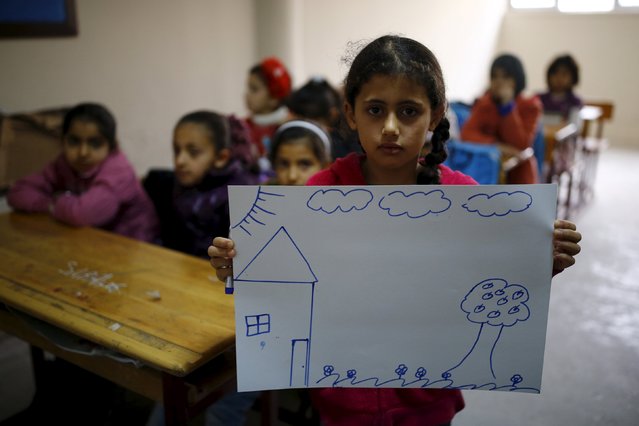
Syrian refugee girl Nur El-Huda, 9, shows a drawing of her home in Syria, in her classroom in Yayladagi refugee camp in Hatay province near the Turkish-Syrian border, Turkey, December 16, 2015. (Photo by Umit Bektas/Reuters)

Syrian refugee girl Nur El-Huda, 9, shows a drawing of her home in Syria, in her classroom in Yayladagi refugee camp in Hatay province near the Turkish-Syrian border, Turkey, December 16, 2015. Syria's conflict has left hundreds of thousands dead, pushed millions more into exile, and had a profound effect on children who lost their homes or got caught up in the bloodletting. The drawings of young refugees living in Turkey show their memories of home and hopes for its future. The pictures also point to the mental scars borne by 2.3 million Syrian refugees living in Turkey, more than half of them children. (Photo by Umit Bektas/Reuters)
Details
16 Jan 2016 08:05:00
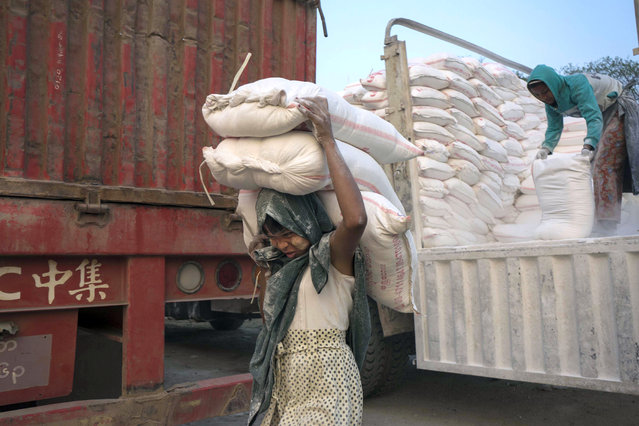
A 14 year-old Myanmar girl carries three bags of powdered-limestone to load in to a boat on the bank of Ayeyarwaddy River, on International Women's Day in Mandalay, Myanmar, Tuesday, March 8, 2016. Migrant workers living along Ayeyarwaddy riverbank earn bout 5000 Kyats (US Dollar 4) a day for loading and unloading goods. (Photro by Hkun Lat/AP Photo)

A 14 year-old Myanmar girl carries three bags of powdered-limestone to load in to a boat on the bank of Ayeyarwaddy River, on International Women's Day in Mandalay, Myanmar, Tuesday, March 8, 2016. Migrant workers living along Ayeyarwaddy riverbank earn bout 5000 Kyats (US Dollar 4) a day for loading and unloading goods. (Photro by Hkun Lat/AP Photo)
Details
09 Mar 2016 12:52:00
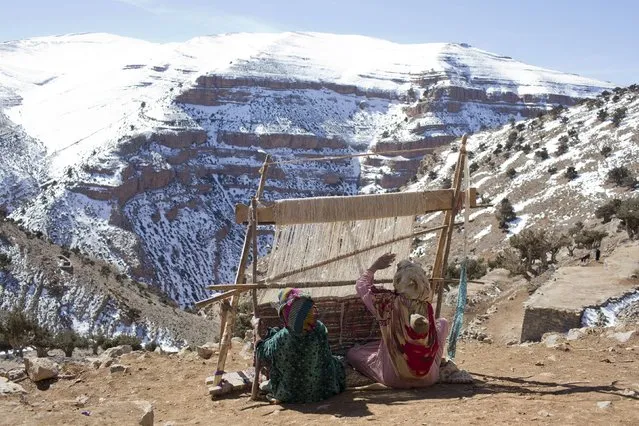
Berber women weave traditional carpets in the village of Ait Sghir in the High Atlas region of Morocco February 15, 2015. The snowy foothills of the High Atlas mountains in Morocco are home to several Berber villages where the inhabitants make their living by farming, baking bread in traditional ovens, herding cattle, and the making and selling of honey, olive oil and pottery. Extreme weather fluctuations and erosion that causes flooding and landslides have led to a drop in agricultural productivity, the United Nations said. (Photo by Youssef Boudlal/Reuters)

Berber women weave traditional carpets in the village of Ait Sghir in the High Atlas region of Morocco February 15, 2015. The snowy foothills of the High Atlas mountains in Morocco are home to several Berber villages where the inhabitants make their living by farming, baking bread in traditional ovens, herding cattle, and the making and selling of honey, olive oil and pottery. Extreme weather fluctuations and erosion that causes flooding and landslides have led to a drop in agricultural productivity, the United Nations said. (Photo by Youssef Boudlal/Reuters)
Details
26 Feb 2015 06:07:00
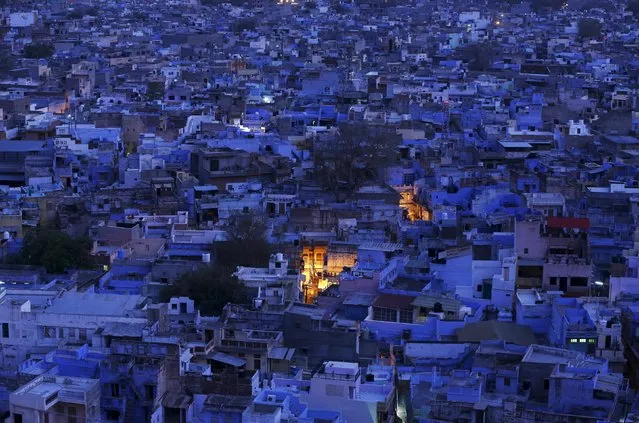
A general view of the residential area is pictured during dusk at Jodhpur in Rajasthan, April 5, 2015. Jodhpur, also known as the blue city in the desert Indian state of Rajasthan, which residents say originally, was used to show where the highest caste of priestly Hindus live, who wanted to set them apart from the rest of the population. Later the rest of the population followed suit. Another reason for the city to be blue is to keep the buildings cool during the summers, local residents said. (Photo by Adnan Abidi/Reuters)

A general view of the residential area is pictured during dusk at Jodhpur in Rajasthan, April 5, 2015. Jodhpur, also known as the blue city in the desert Indian state of Rajasthan, which residents say originally, was used to show where the highest caste of priestly Hindus live, who wanted to set them apart from the rest of the population. Later the rest of the population followed suit. Another reason for the city to be blue is to keep the buildings cool during the summers, local residents said. (Photo by Adnan Abidi/Reuters)
Details
12 Apr 2015 08:27:00
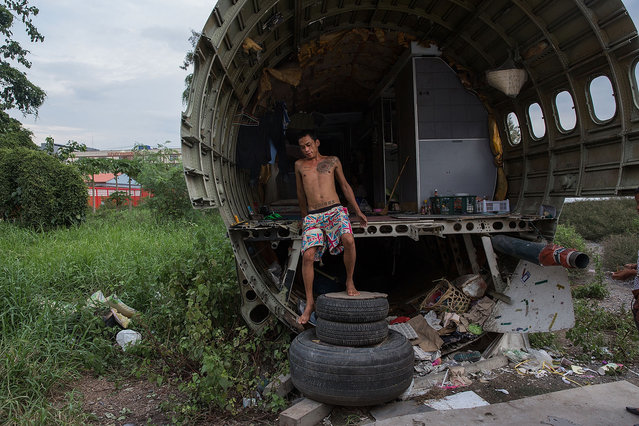
A Thai man climbs down from his home in a disused airplane on September 12, 2015 in Bangkok, Thailand. 3 impoverished Thai families have begun living in disused airplanes on a private field. The families, who collect and recycle garbage earning a few dollars a day, can't afford to rent and prefer to stay in the planes. (Photo by Taylor Weidman/Getty Images)

A Thai man climbs down from his home in a disused airplane on September 12, 2015 in Bangkok, Thailand. 3 impoverished Thai families have begun living in disused airplanes on a private field. The families, who collect and recycle garbage earning a few dollars a day, can't afford to rent and prefer to stay in the planes. (Photo by Taylor Weidman/Getty Images)
Details
05 Oct 2015 08:04:00