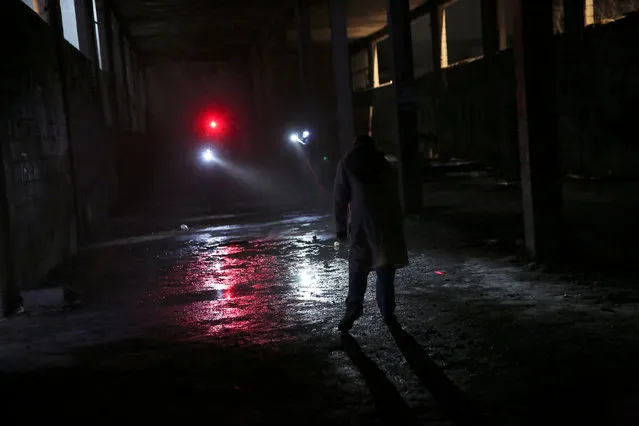
A woman dressed as a zombie participates in an event to promote the Spanish release of the movie “Resident Evil: The Final Chapter” in Madrid, Spain, January 28, 2017. (Photo by Susana Vera/Reuters)
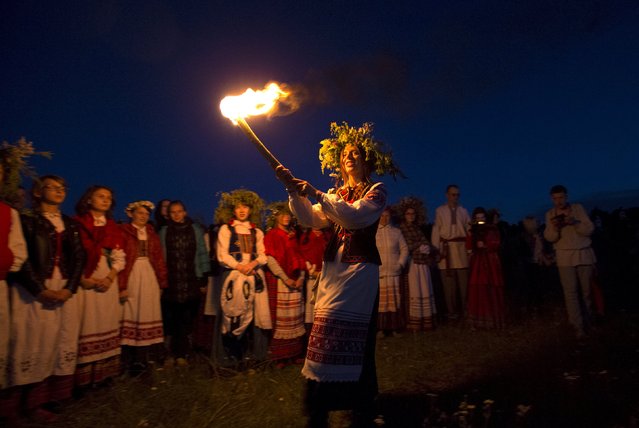
Belarusian people take part in the Ivan Kupala festival near the town of Rakov, west of Minsk June 27, 2015. The ancient tradition, originating from pagan times, is usually marked with grand overnight festivities. On Kupala night, people sing and dance around campfires, believing it will purge them of their sins and make them healthier. (Photo by Vasily Fedosenko/Reuters)
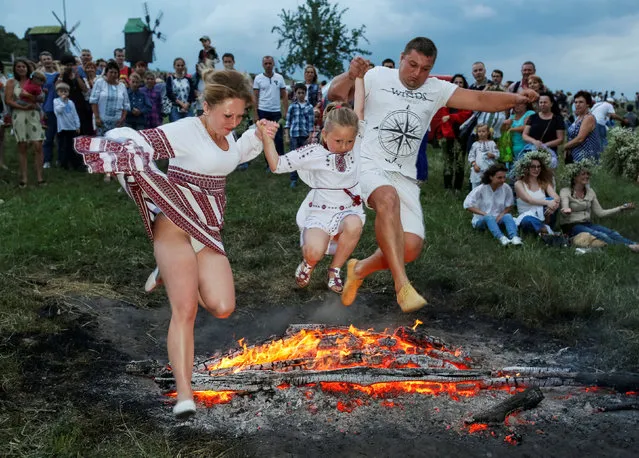
People jump over a campfire during a celebration on the traditional Ivana Kupala (Ivan the Bather) holiday, the ancient tradition, originating from pagan times, is usually marked with grand overnight festivities during which people sing and dance around campfires, believing it will purge them of their sins and make them healthier, in Kiev, Ukraine, July 6, 2016. (Photo by Gleb Garanich/Reuters)
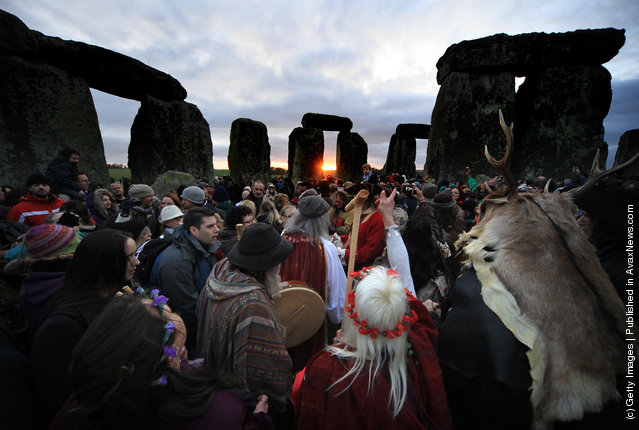
Druids, pagans and revellers cheer as the sun rises at Stonehenge on December 22, 2011 in Wiltshire, England. The unseasonable warm weather encouraged a larger than normal crowd to gather at the famous historic stone circle to celebrate the sunrise closest to the Winter Solstice, the shortest day of the year. (Photo by Matt Cardy/Getty Images)
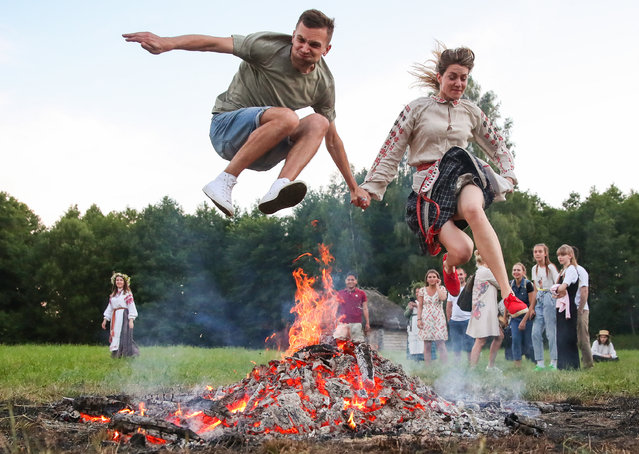
A man and a woman jump over a bonfire during Ivan Kupala Day celebrations held by the Belarusian State Museum of Folk Architecture and Rural Lifestyle in the village of Ozertso near Minsk, Belarus on July 4, 2020. Ivan Kupala Day, also known as Ivana-Kupala or Kupala Night, is a traditional pagan holiday celebrated in eastern Slavic cultures. Various rituals are traditionally performed on Kupala Night, including making flower wreaths, fortune-telling, jumping over bonfires, and burning a wheel-like effigy symbolizing the sun. (Photo by Natalia Fedosenko/TASS)
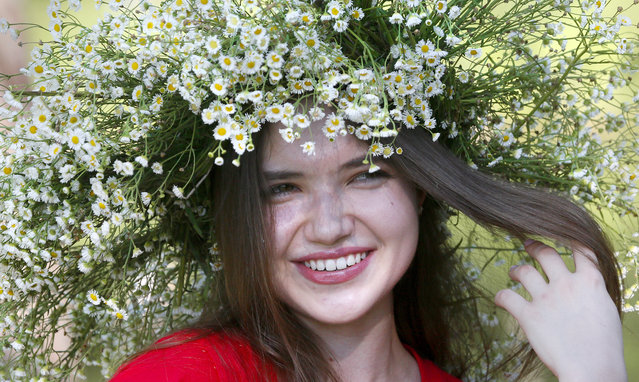
A girl with a ritual garland headdress smiles during a traditional Midsummer Night celebration, in the capital Kyiv, Ukraine, Monday, July 6, 2020. Ukrainian girls believe the ages-old ceremony would help them to find their true love partners, as the pagan Slav festival is still celebrated in Ukraine, as Kyiv has lifted the coronavirus lockdown restrictions. (Photo by Efrem Lukatsky/AP Photo)
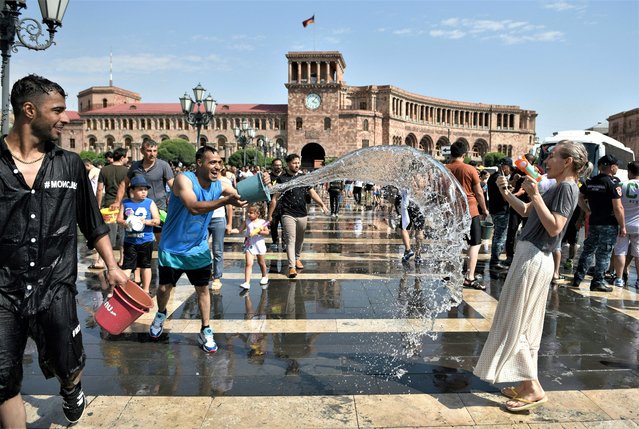
People splash each other in downtown Yerevan, Armenia during an annual Vardavar holiday on July 16, 2023. Vardavar is a traditional Armenian water festival, with people drenching each other, dating back to pagan times. The ancient festival is traditionally associated with the goddess Astghik, who was the goddess of water, beauty, love, and fertility. (Photo by Karen Minasyan/AFP Photo)
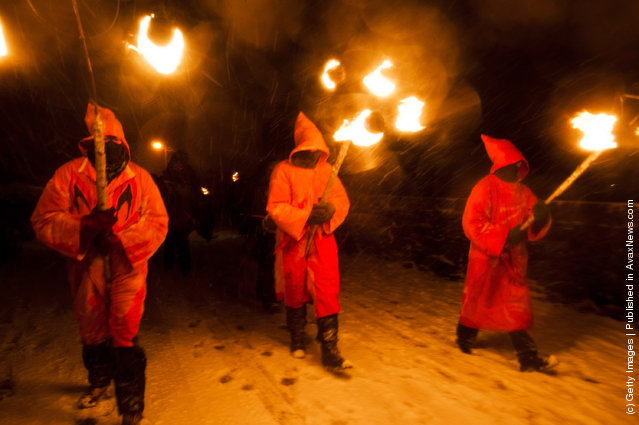
Hooded torch bearers lead the winter procession through the snow on February 4, 2012 in Huddersfield, England. Imbolc is a pagan festival that marks the half way point between the winter solstice and the spring equinox. Imbolc festivals celebrates the awakening of the land and the growing power of the Sun. (Photo by Bethany Clarke/Getty Images)