Loading...
Done
 Marble Caves, Patagonia, Chile

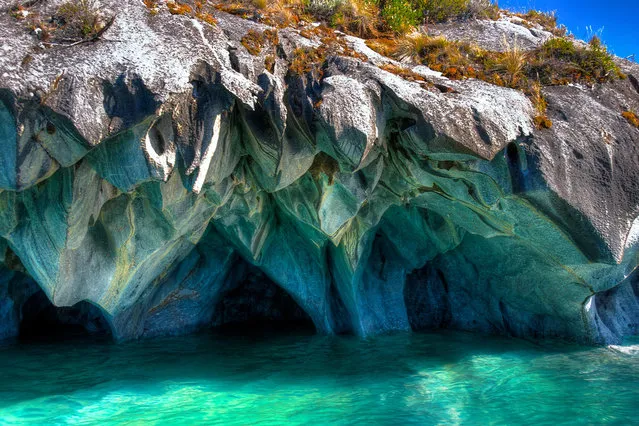
The Marble Caves of Patagonia, Chile, are beautiful vibrant blue caverns, partially submerged in the equally stunning turquoise waters of Carrera Lake. The lake itself is on the border of Argentina and Chile, with the caves located on the Chilean side. The caves are comprised of three main caverns: the Chapel (La Capilla), the Cathedral (El Catedral), and the Cave (La Cueva). Visitors to the caves can explore them in a small boat or kayak, but only when Carrera Lake’s waters are calm and gentle. A rare and invaluable natural wonder, the existence of these caves is currently threatened by plans to build five large dams in the area. If you visit these caves, please treat them with the utmost respect and care.
Details
15 Aug 2012 11:25:00
The Pothole Gardener

Steve Wheen understands that nobody likes to pay a pile of taxes only to hit potholes on their way to work every day, so he started filling up the pesky cracks in East London with mini living worlds comprised of soil, plants, and adorable props. The guerrilla gardener creates these mini (mostly domestic) scenes on quiet streets, dead end lanes, and foot paths, snaps photographs of his work, and then removes the props so that nobody gets a chair in their tire! When he's satisfied with his projects, he documents them over at The Pothole Gardener.
Details
17 Nov 2012 10:02:00
Slauerhoff Bridge, Netherlands

The Slauerhoffbrug (English: Slauerhoff Bridge) is a fully automatic bascule bridge (aka tail bridge) in the city of Leeuwarden in the Netherlands. It uses two arms to swing a section of road in and out of place within the road itself. It is also known as the “Slauerhoffbrug ‘Flying’ Drawbridge”. A tail bridge can quickly and efficiently be raised and lowered from one pylon (instead of hinges). This quickly allows water traffic to pass while only briefly stalling road traffic. The deck is 15 m by 15 m. It is painted in yellow and blue, representative of Leeuwarden's flag and seal.
Details
06 Nov 2013 10:34:00
Titanoboa: Monster Snake

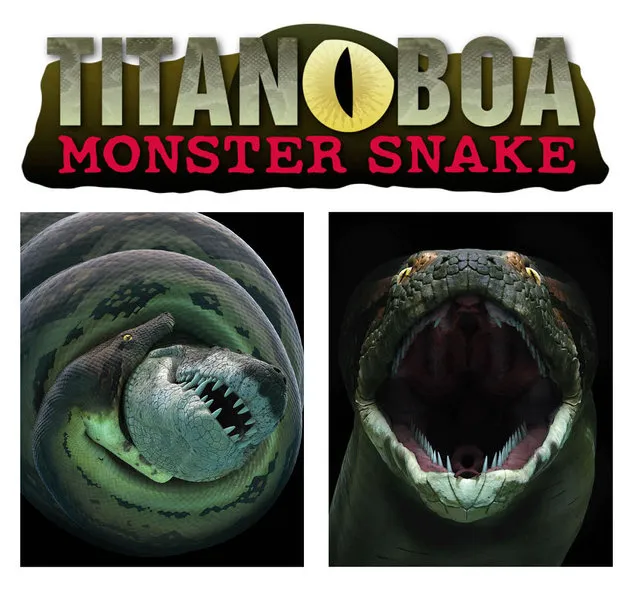
Titanoboa, meaning "titanic boa," is an extinct genus of snake that lived approximately 60–58 million years ago, during the Paleocene epoch, a 10-million-year period immediately following the dinosaur extinction event. The only known species is Titanoboa cerrejonensis, the largest, longest, and heaviest snake ever discovered, which supplanted the previous record holder, Gigantophis.

A full-scale model of the snake was unveiled at New York City's Grand Central station before the exhibit opens at the Smithsonian in Washington DC.
Details
06 Feb 2014 12:38:00
A reveller perches on a public hire bicycle outside a bar in Shoreditch, the weekend before new licensing rules come in to effect across Hackney on July 28, 2018 in London, England. (Photo by Jack Taylor/Getty Images)

A reveller perches on a public hire bicycle outside a bar in Shoreditch, the weekend before new licensing rules come in to effect across Hackney on July 28, 2018 in London, England. Hackney Council has voted to introduce strict new licensing rules which will see “core” curfews in place for new venues as well as extending the “Special Policy Area”, within which licenses are granted only in exceptional circumstances. (Photo by Jack Taylor/Getty Images)
Details
30 Jul 2018 10:28:00
A woman takes part in the procession of the “Virgem da Atalaia” procession during Holy Week at Alcochete, near Lisbon, Portugal March 27, 2016. (Photo by Rafael Marchante/Reuters)

A woman takes part in the procession of the “Virgem da Atalaia” procession during Holy Week at Alcochete, near Lisbon, Portugal March 27, 2016. Women ride on donkeys during the “Virgem da Atalaia” procession, that has been held annually for about 400 years. In the past, only single women rode the donkeys to ask for help from the Virgin to find a husband. (Photo by Rafael Marchante/Reuters)
Details
28 Mar 2016 10:30:00
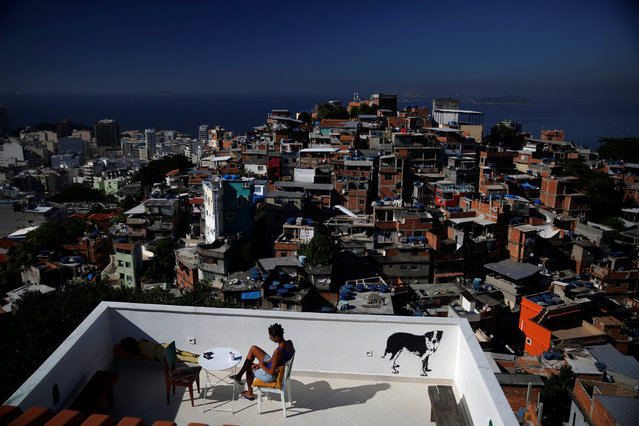
A woman sits on a terrace at Tiki hostel in Cantagalo favela, in Rio de Janeiro, Brazil, April 16, 2016. (Photo by Pilar Olivares/Reuters)

A woman sits on a terrace at Tiki hostel in Cantagalo favela, in Rio de Janeiro, Brazil, April 16, 2016. Hostels in a few of Rio's more than 1,000 slums serve not only as a cheap housing alternative for the more adventurous among the estimated 500,000 foreign tourists expected to arrive for the Olympics in August. The establishments also open up the rich culture of the city's shantytowns for travellers, giving them a glimpse into once “no-go” areas where about one-fifth of Rio's population lives. (Photo by Pilar Olivares/Reuters)
Details
04 May 2016 12:18:00
In this Thursday, March 28, 2019, photo, a “golden giant burger” is served at a restaurant of Hotel Grand Hyatt Tokyo in Tokyo. The $900 wagyu (Japanese-produced beef) burger was unveiled to commemorate the era change. What’s in a name? Quite a lot if you’re a Japanese citizen awaiting the official announcement Monday, April 1, 2019 of what the soon-to-be-installed new emperor’s next era will be called. It’s a proclamation that has happened only twice in nearly a century, and the new name will follow Emperor Naruhito, after his May 1 investiture, for the duration of his rule, attaching itself to much of what happens in Japan. (Photo by Kyodo News via AP Photo)

In this Thursday, March 28, 2019, photo, a “golden giant burger” is served at a restaurant of Hotel Grand Hyatt Tokyo in Tokyo. The $900 wagyu (Japanese-produced beef) burger was unveiled to commemorate the era change. What’s in a name? Quite a lot if you’re a Japanese citizen awaiting the official announcement Monday, April 1, 2019 of what the soon-to-be-installed new emperor’s next era will be called. It’s a proclamation that has happened only twice in nearly a century, and the new name will follow Emperor Naruhito, after his May 1 investiture, for the duration of his rule, attaching itself to much of what happens in Japan. (Photo by Kyodo News via AP Photo)
Details
02 Apr 2019 00:05:00