Loading...
Done
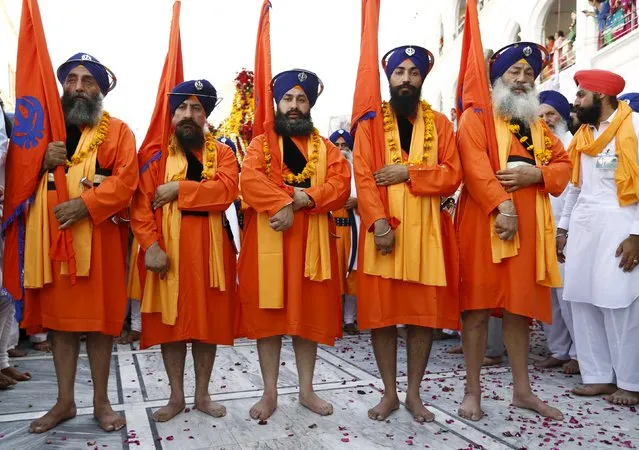
Sikh devotees participate in the Baisakhi festival at Panja Sahib shrine in Hassan Abdel April 13, 2015. (Photo by Caren Firouz/Reuters)

Sikh devotees participate in the Baisakhi festival at Panja Sahib shrine in Hassan Abdel April 13, 2015. Hundreds of Indian Sikh pilgrims arrived into Pakistan to celebrate the Baisakhi festival with Pakistani Sikhs at the shrines of Panja Sahib and Nankana Sahib, the birth place of Sikh faith founder Guru Nanak Dev. (Photo by Caren Firouz/Reuters)
Details
14 Apr 2015 10:42:00
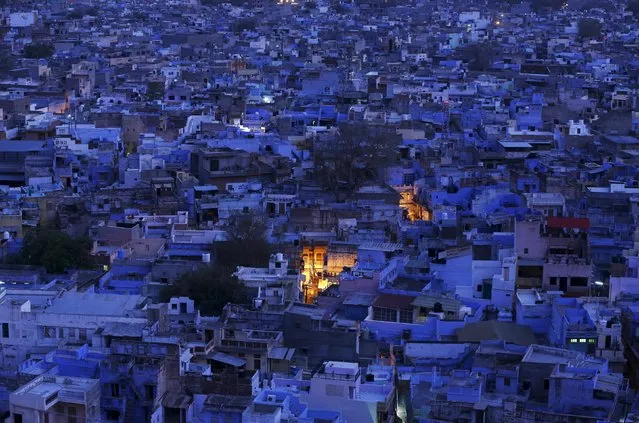
A general view of the residential area is pictured during dusk at Jodhpur in Rajasthan, April 5, 2015. Jodhpur, also known as the blue city in the desert Indian state of Rajasthan, which residents say originally, was used to show where the highest caste of priestly Hindus live, who wanted to set them apart from the rest of the population. Later the rest of the population followed suit. Another reason for the city to be blue is to keep the buildings cool during the summers, local residents said. (Photo by Adnan Abidi/Reuters)

A general view of the residential area is pictured during dusk at Jodhpur in Rajasthan, April 5, 2015. Jodhpur, also known as the blue city in the desert Indian state of Rajasthan, which residents say originally, was used to show where the highest caste of priestly Hindus live, who wanted to set them apart from the rest of the population. Later the rest of the population followed suit. Another reason for the city to be blue is to keep the buildings cool during the summers, local residents said. (Photo by Adnan Abidi/Reuters)
Details
12 Apr 2015 08:27:00
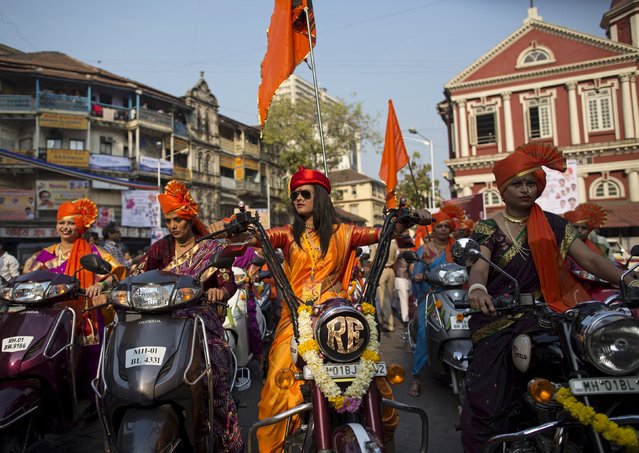
Maharashtrian women dressed in traditional costumes attend celebrations to mark the Gudi Padwa festival in Mumbai March 21, 2015. The festival marks the beginning of the new year for Maharashtrians and is celebrated widely in Maharashtra and in the Konkan region. (Photo by Danish Siddiqui/Reuters)

Maharashtrian women dressed in traditional costumes attend celebrations to mark the Gudi Padwa festival in Mumbai March 21, 2015. The festival marks the beginning of the new year for Maharashtrians and is celebrated widely in Maharashtra and in the Konkan region. (Photo by Danish Siddiqui/Reuters)
Details
02 Apr 2015 12:36:00
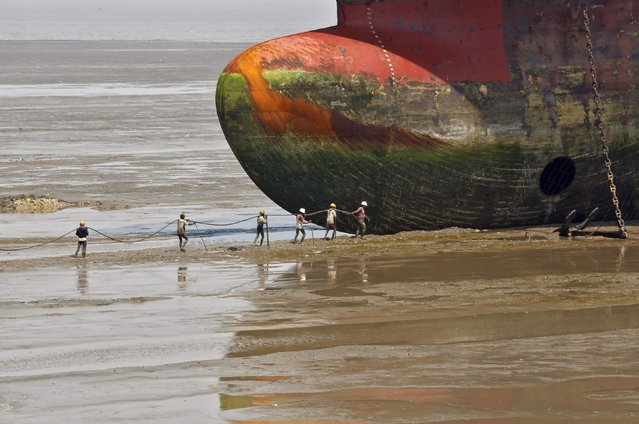
Workers carry a rope line to fasten a decommissioned ship at the Alang shipyard in the western Indian state of Gujarat, March 27, 2015. The European Union plans to impose strict new rules on how companies scrap old tankers and cruise liners, run aground and dismantled on beaches in South Asia. (Photo by Amit Dave/Reuters)

Workers carry a rope line to fasten a decommissioned ship at the Alang shipyard in the western Indian state of Gujarat, March 27, 2015. The European Union plans to impose strict new rules on how companies scrap old tankers and cruise liners, run aground and dismantled on beaches in South Asia. However the practice in India, Bangladesh and Pakistan, hazardous for humans and the environment, will still be hard to stop. European, Turkish and Chinese recyclers are set to benefit from the revamped standards. Depending on raw material prices, ship owners can make up to $500 per tonne of steel from an Indian yard, compared with $300 in China and just $150 in Europe. (Photo by Amit Dave/Reuters)
Details
01 Apr 2015 11:40:00
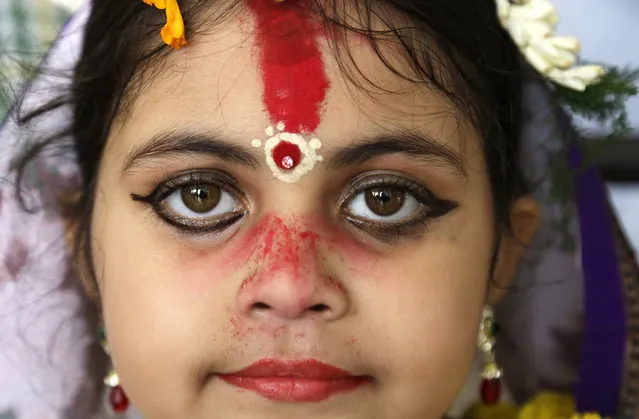
A young Hindu girl sits for a ceremony where she and other girls are worshipped as “Kumari”, or living goddess, during Ram Navami festival, at a temple in Kolkata, India, Saturday, March 28, 2015. (Photo by Bikas Das/AP Photo)

A young Hindu girl sits for a ceremony where she and other girls are worshipped as “Kumari”, or living goddess, during Ram Navami festival, at a temple in Kolkata, India, Saturday, March 28, 2015. Ram Navami marks the birth of Hindu God Rama. (Photo by Bikas Das/AP Photo)
Details
29 Mar 2015 12:23:00
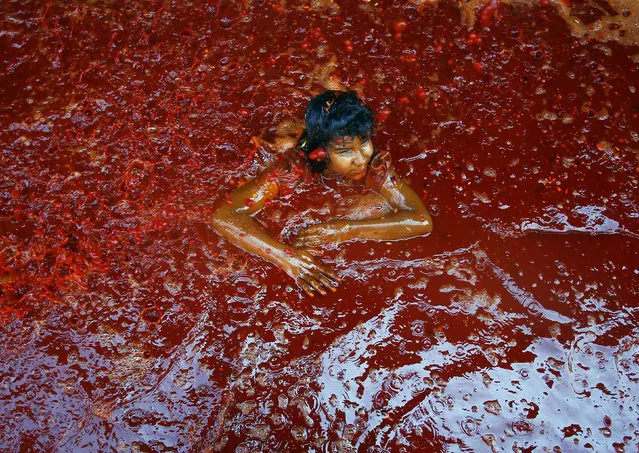
A child lies in a puddle of coloured water during “Huranga” at Dauji temple near the northern Indian city of Mathura, March 7, 2015. “Huranga” is a game played between men and women a day after Holi, the festival of colours, during which men drench women with liquid colours and women tear off the clothes of the men. (Photo by Anindito Mukherjee/Reuters)

A child lies in a puddle of coloured water during “Huranga” at Dauji temple near the northern Indian city of Mathura, March 7, 2015. “Huranga” is a game played between men and women a day after Holi, the festival of colours, during which men drench women with liquid colours and women tear off the clothes of the men. (Photo by Anindito Mukherjee/Reuters)
Details
14 Mar 2015 13:46:00
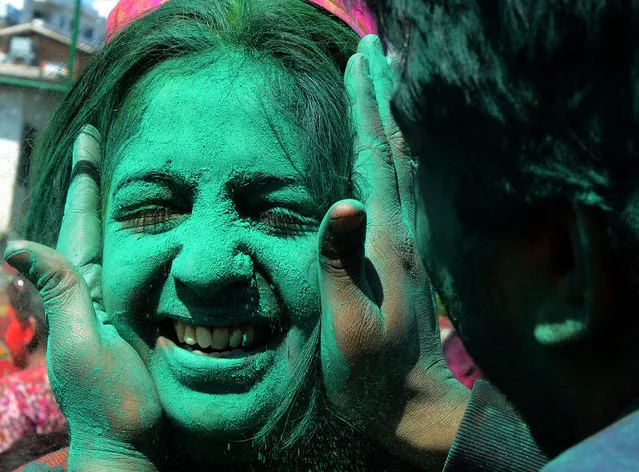
Members of the Nepalese ethnic Madhesi community daub each other's faces with coloured powders during Holi festival celebrations in Kathmandu on March 6, 2015. The Holi festival of colours is a riotous celebration of the coming of spring and falls on the day of the full moon in March every year. AFP PHOTO / PRAKASH MATHEMA        (PRAKASH MATHEMA/AFP/Getty Images)

Members of the Nepalese ethnic Madhesi community daub each other's faces with coloured powders during Holi festival celebrations in Kathmandu on March 6, 2015. The Holi festival of colours is a riotous celebration of the coming of spring and falls on the day of the full moon in March every year. AFP PHOTO / PRAKASH MATHEMA (PRAKASH MATHEMA/AFP/Getty Images)
Details
07 Mar 2015 22:35:00
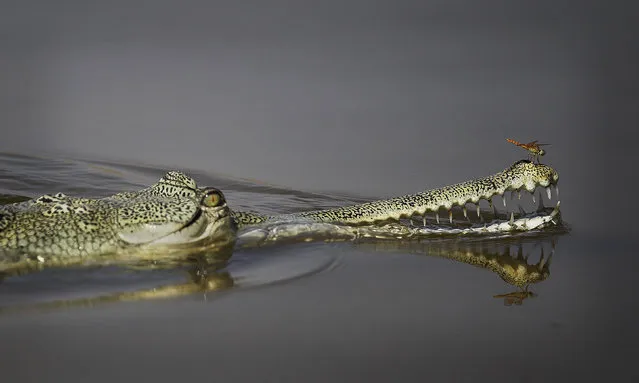
In this photo taken Wednesday, April 30, 2014, a dragonfly sits on the nose of a Gharial, rare crocodile-like creatures, in the River Chambal near Bhopepura village in the northern Indian state of Uttar Pradesh. The narrow 250-mile stretch of the Chambal is a place of crocodiles and jackals, of river dolphins and the occasional wolf. Hundreds of species of birds, storks, geese, babblers, larks, falcons and so many more, nest along the river. (Photo by Altaf Qadri/AP Photo)

In this photo taken Wednesday, April 30, 2014, a dragonfly sits on the nose of a Gharial, rare crocodile-like creatures, in the River Chambal near Bhopepura village in the northern Indian state of Uttar Pradesh. The narrow 250-mile stretch of the Chambal is a place of crocodiles and jackals, of river dolphins and the occasional wolf. Hundreds of species of birds, storks, geese, babblers, larks, falcons and so many more, nest along the river. Endangered birds lay small speckled eggs in tiny pits they dig in the sandbars. Gharials, rare crocodile-like creatures that look like they swaggered out of the Mesozoic Era, are commonplace here and nowhere else. (Photo by Altaf Qadri/AP Photo)
Details
23 Feb 2015 12:55:00