Loading...
Done
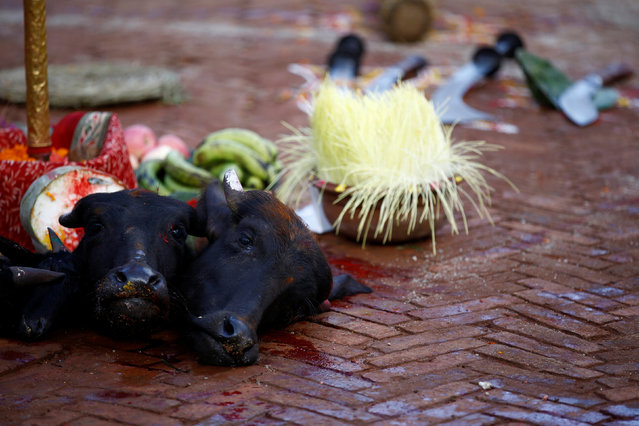
The heads of slaughtered water buffalos and a goat are lined up on the ground after the animals were sacrificed during “Dashain”, a Hindu religious festival in Kathmandu, Nepal October 10, 2016. (Photo by Navesh Chitrakar/Reuters)

The heads of slaughtered water buffalos and a goat are lined up on the ground after the animals were sacrificed during “Dashain”, a Hindu religious festival in Kathmandu, Nepal October 10, 2016. (Photo by Navesh Chitrakar/Reuters)
Details
12 Oct 2016 10:56:00
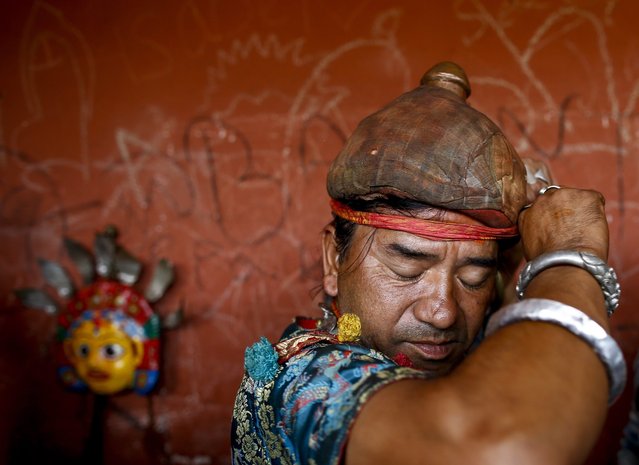
A Nepalese devotee prepares for a religious mask performance during the Seekaali Festival in Khokna village, near Kathmandu, Nepal, 07 October 2016. During the 300-year-old Seekali festival, elderly ethnic Newari devotees wear masks of 14 various goddesses including Lord Ganesha, Lord Shiva, Lord Laxmi, Lord Brahma and Lord Bishnu. The Khokna people celebrate the Seekaali festival as an alternative of the Dashain festival which is biggest festival of Nepalese Hindus that celebrates the victory of the gods over demons. (Photo by Narendra Shrestha/EPA)

A Nepalese devotee prepares for a religious mask performance during the Seekaali Festival in Khokna village, near Kathmandu, Nepal, 07 October 2016. During the 300-year-old Seekali festival, elderly ethnic Newari devotees wear masks of 14 various goddesses including Lord Ganesha, Lord Shiva, Lord Laxmi, Lord Brahma and Lord Bishnu. The Khokna people celebrate the Seekaali festival as an alternative of the Dashain festival which is biggest festival of Nepalese Hindus that celebrates the victory of the gods over demons. (Photo by Narendra Shrestha/EPA)
Details
09 Oct 2016 07:14:00
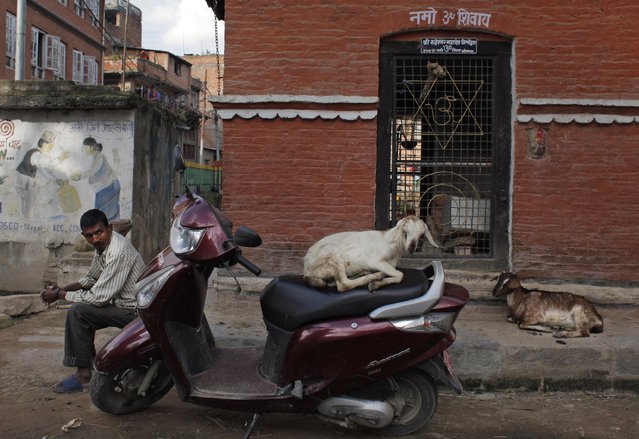
A Nepalese man sits outside a Hindu temple as a goat rests on a parked scooter in Khokana, Lalitpur District, Nepal, Monday, Sept. 26, 2016. Writing on the wall offers prayers to Hindu god Shiva. (Photo by Niranjan Shrestha/AP Photo)

A Nepalese man sits outside a Hindu temple as a goat rests on a parked scooter in Khokana, Lalitpur District, Nepal, Monday, September 26, 2016. Writing on the wall offers prayers to Hindu god Shiva. (Photo by Niranjan Shrestha/AP Photo)
Details
27 Sep 2016 09:27:00
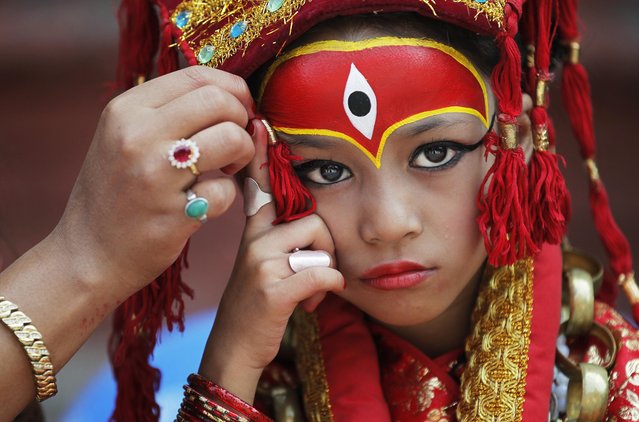
A Nepalese mother applies make up to her daughter dressed as the living goddess Kumari as they wait for Kumari puja to start at Hanuman Dhoka temple, in Kathmandu, Nepal, Wednesday, September 14, 2016. Girls under the age of nine gathered for the Kumari puja, a tradition of worshiping young prepubescent girls as manifestations of the divine female energy. The ritual holds a strong religious significance in the Newar community that seeks divine blessings to save small girls from diseases and bad luck in the years to come. (Photo by Niranjan Shrestha/AP Photo)

A Nepalese mother applies make up to her daughter dressed as the living goddess Kumari as they wait for Kumari puja to start at Hanuman Dhoka temple, in Kathmandu, Nepal, Wednesday, September 14, 2016. Girls under the age of nine gathered for the Kumari puja, a tradition of worshiping young prepubescent girls as manifestations of the divine female energy. The ritual holds a strong religious significance in the Newar community that seeks divine blessings to save small girls from diseases and bad luck in the years to come. (Photo by Niranjan Shrestha/AP Photo)
Details
15 Sep 2016 09:58:00
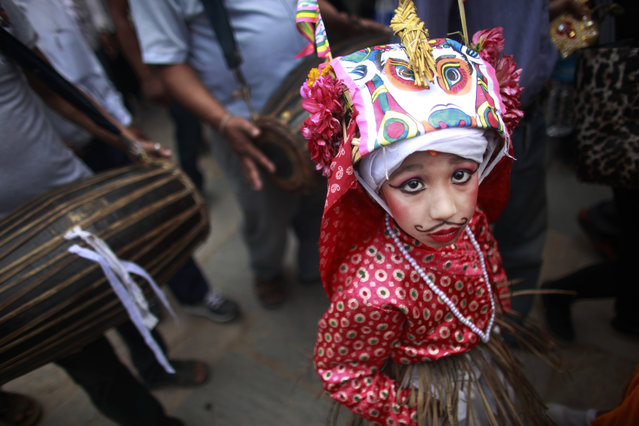
A Nepalese Hindu boy in festival attire walks in a procession during “Gai Jatra”, or Cow Festival in Kathmandu, Nepal, Friday, August 19, 2016. Members of Nepal's Newar Community celebrate the festival in memory of their family members who died the preceding year, believing that the cow will guide them in their journey to heaven. (Photo by Niranjan Shrestha/AP Photo)

A Nepalese Hindu boy in festival attire walks in a procession during “Gai Jatra”, or Cow Festival in Kathmandu, Nepal, Friday, August 19, 2016. Members of Nepal's Newar Community celebrate the festival in memory of their family members who died the preceding year, believing that the cow will guide them in their journey to heaven. (Photo by Niranjan Shrestha/AP Photo)
Details
20 Aug 2016 11:53:00
Nepalese Hindu priests perform rituals during Janai Purnima festival at Pashupatinath temple in Kathmandu, Nepal, Thursday, August 18, 2016. During this festival Hindus take holy baths and perform annual change of the Janai, a sacred cotton string worn around their chest or tied on the wrist, in the belief that it will protect and purify them. (Photo by Niranjan Shrestha/AP Photo)

Nepalese Hindu priests perform rituals during Janai Purnima festival at Pashupatinath temple in Kathmandu, Nepal, Thursday, August 18, 2016. During this festival Hindus take holy baths and perform annual change of the Janai, a sacred cotton string worn around their chest or tied on the wrist, in the belief that it will protect and purify them. (Photo by Niranjan Shrestha/AP Photo)
Details
19 Aug 2016 11:48:00
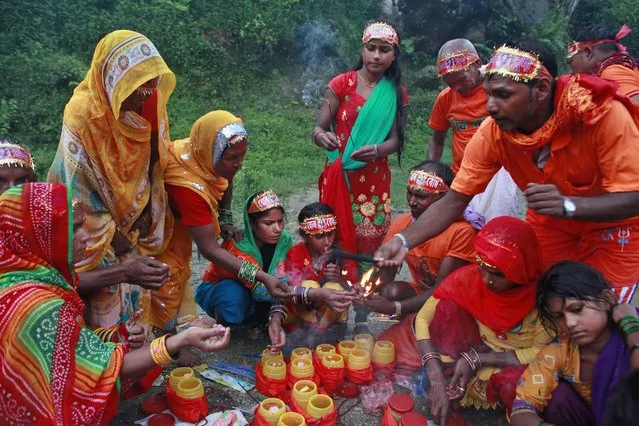
Hindu devotees perform rituals during the Bol Bom pilgrimage, on the outskirts of Kathmandu, Nepal, Monday, August 8, 2016. During this pilgrimage, devotees walk miles barefooted before offering water collected from Bagmati river, at the Pashupatinath temple in Katmandu. Shravan Somwar or Monday of Hindu calendar month of Shravan is considered auspicious for offering prayers to Lord Shiva, the god of destruction. (Photo by Niranjan Shrestha/AP Photo)

Hindu devotees perform rituals during the Bol Bom pilgrimage, on the outskirts of Kathmandu, Nepal, Monday, August 8, 2016. During this pilgrimage, devotees walk miles barefooted before offering water collected from Bagmati river, at the Pashupatinath temple in Katmandu. Shravan Somwar or Monday of Hindu calendar month of Shravan is considered auspicious for offering prayers to Lord Shiva, the god of destruction. (Photo by Niranjan Shrestha/AP Photo)
Details
09 Aug 2016 12:42:00
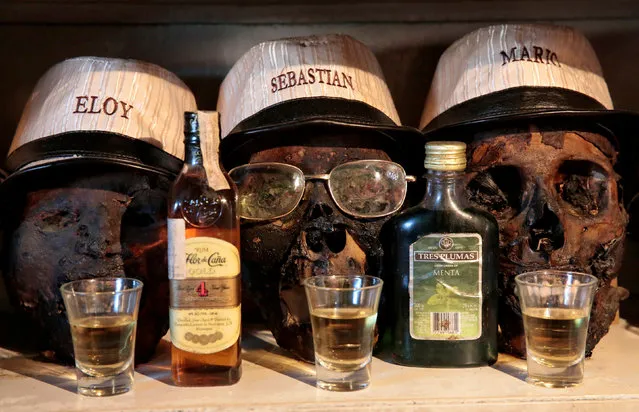
Skulls are seen at the witch doctor kiosk during the day of offerings to the “Pachamama” (Mother Earth) in El Alto, Bolivia, August 1, 2016. (Photo by David Mercado/Reuters)

Skulls are seen at the witch doctor kiosk during the day of offerings to the “Pachamama” (Mother Earth) in El Alto, Bolivia, August 1, 2016. Pachamama is a goddess revered by the indigenous people of the Andes. She is also known as the earth/time mother. In Inca mythology, Pachamama is a fertility goddess who presides over planting and harvesting, embodies the mountains, and causes earthquakes. (Photo by David Mercado/Reuters)
Details
02 Aug 2016 08:11:00