Loading...
Done


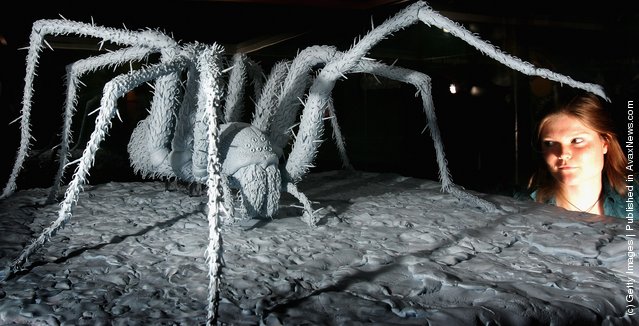
Artist Elizabeth Thompson poses next to her Blu-tack Spider sculpture at London Zoo on October 25, 2007 in London, England. The sculpture, known as “Blu-ey”, is a model of a common house spider and is completely made out of blu-tack. It is on show at BUGS! at ZSL London Zoo. The sculpture is made from around four thousand packets of Blu-tack and weighs over 200kg. (Photo by Chris Jackson/Getty Images)
Details
29 Apr 2011 08:24:00


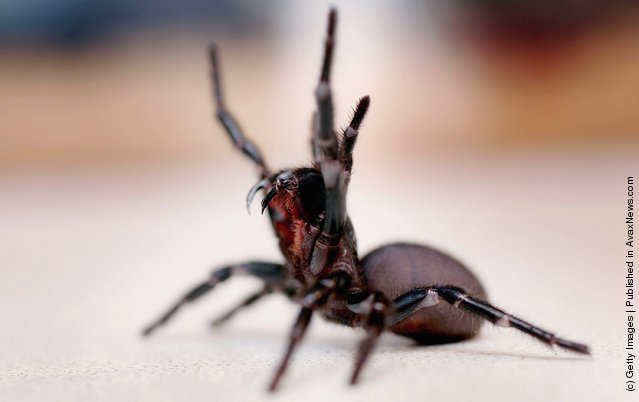
A Funnel Web spider is pictured at the Australian Reptile Park January 23, 2006 in Sydney, Australia. The Funnel Web is one of Australia's deadliest animals, with a venom that is packed with at least 40 different toxic proteins. A bite from a Funnel Web causes massive electrical over-load in the body's nervous system. Finally, fatalities occur from either heart attack or a pulmonary oedema, where the capillaries around the lungs begin to leak fluid and the patient effectively drowns. Death can come as quickly as two hours after a bite if no medical treatment is sought. Due to advances in anti-venom, there has been no death from a Funnel Web bite in Australia since 1980. Australia is home to some of the most deadly and poisonous animals on earth. (Photo by Ian Waldie/Getty Images)
Details
25 Apr 2011 07:49:00


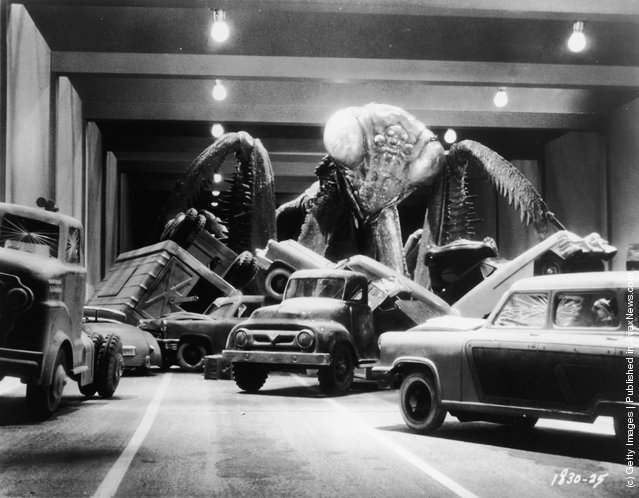
An oversized, prehistoric praying mantis wreaks havoc in a freeway underpass as it overturns cars and trucks, in a film still from “The Deadly Mantis”, directed by Nathan Juran, 1957. (Photo by Universal Pictures/Courtesy of Getty Images)
Details
10 Apr 2011 06:59:00


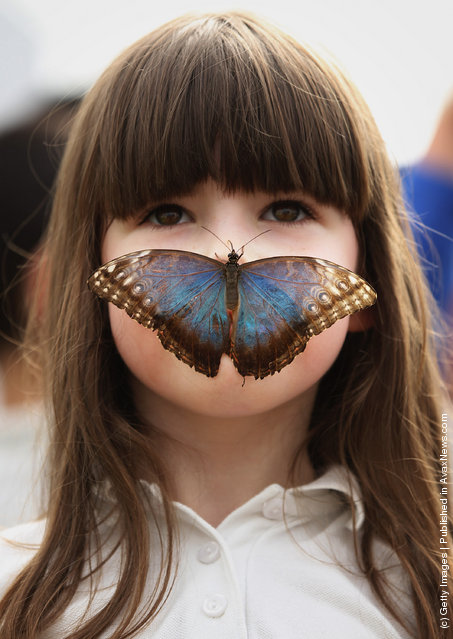
A girl allows a butterfly to be placed on her nose at the Sensational Butterflies exhibition at the Natural History Museum on April 6, 2011 in London, England. The exhibition is divided up into five sensory zones exploring how butterflies see, hear, taste, smell and touch. The display containing hundreds of butterflies runs from April 12 to September 11, 2011. (Photo by Peter Macdiarmid/Getty Images)
Details
07 Apr 2011 08:02:00


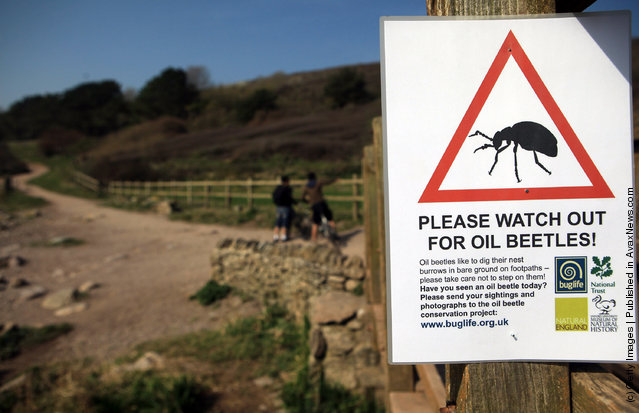
People enjoy the fine weather on the coast at Wembury during the first ever nationwide survey to map the location of the threatened and creatures on March 24, 2011 in near Plymouth, England. Often found on the coast, and particularly in the south west of England, the number of oil beetle species found in the UK has halved in the last 100 years and the survey will help establish the whereabouts of the remaining four species and boost efforts to secure their future. The survey is being launched today by Buglife: The Invertebrate Trust and the National Trust in partnership with Natural England and Oxford University Museum of Natural History. (Photo by Matt Cardy/Getty Images)
Details
25 Mar 2011 15:20:00