Loading...
Done
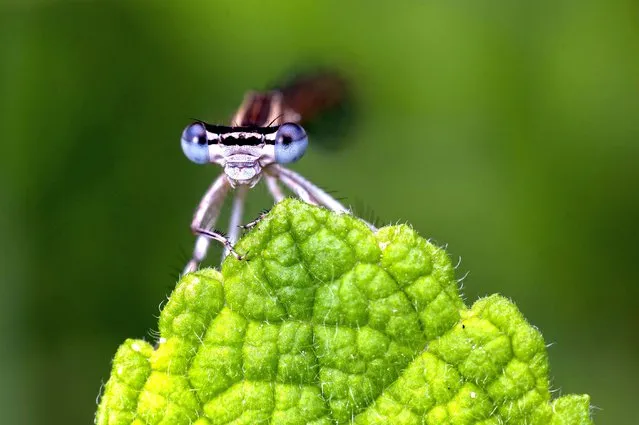
A dragonfly rests on a leaf in Hinojedo, Cantabria, northern Spain, 01 June 2023. (Photo by Pedro Puente Hoyos/EPA/EFE/Rex Features/Shutterstock)

A dragonfly rests on a leaf in Hinojedo, Cantabria, northern Spain, 01 June 2023. (Photo by Pedro Puente Hoyos/EPA/EFE/Rex Features/Shutterstock)
Details
26 Jul 2023 04:23:00
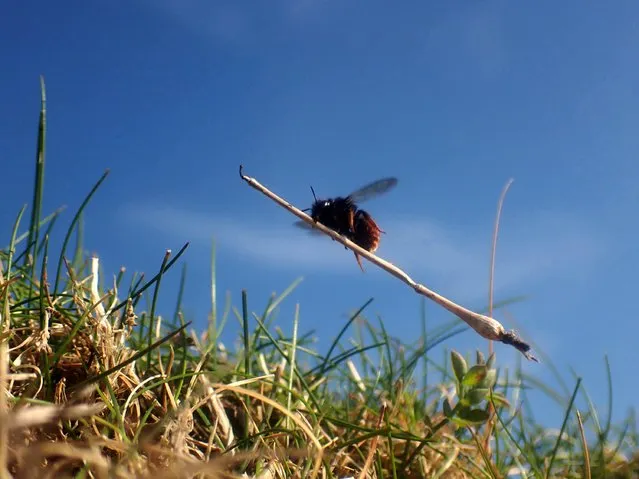
Undated BBC handout photo of a female two-coloured Mason Bee carrying a dried grass stalk back to her snail-shell nest on the British Isles in the latest episode of Sir David Attenborough's Wild Isles series. Issue date: Sunday March 26, 2023. (Photo by John Walters/Silverback Films/BBC/PA Wire)

Undated BBC handout photo of a female two-coloured Mason Bee carrying a dried grass stalk back to her snail-shell nest on the British Isles in the latest episode of Sir David Attenborough's Wild Isles series. Issue date: Sunday March 26, 2023. (Photo by John Walters/Silverback Films/BBC/PA Wire)
Details
31 Mar 2023 04:13:00
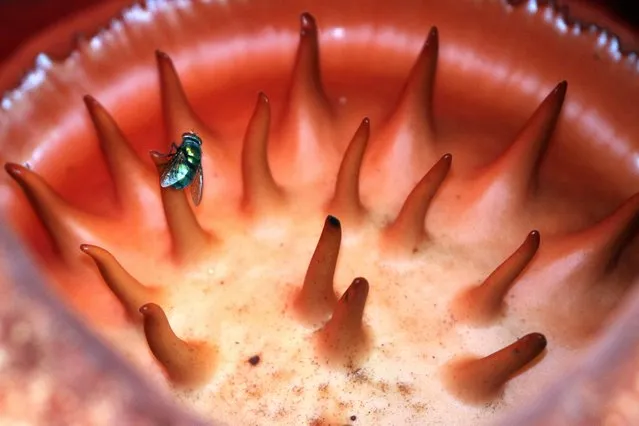
The Rafflesia Arnoldi flower (Amarphophallus titanum) which has been cultivated is seen in Palupuah Village, Agam District, West Sumatra, Indonesia, on April 13, 2022. The West Sumatera Nature Conservation Agency (BKSDA) estimates around seven Rafflesia Arnoldi flowers will bloom in Palupuah Village this year. (Photo by Adi Prima/Anadolu Agency via Getty Images)

The Rafflesia Arnoldi flower (Amarphophallus titanum) which has been cultivated is seen in Palupuah Village, Agam District, West Sumatra, Indonesia, on April 13, 2022. The West Sumatera Nature Conservation Agency (BKSDA) estimates around seven Rafflesia Arnoldi flowers will bloom in Palupuah Village this year. (Photo by Adi Prima/Anadolu Agency via Getty Images)
Details
11 Mar 2023 03:36:00
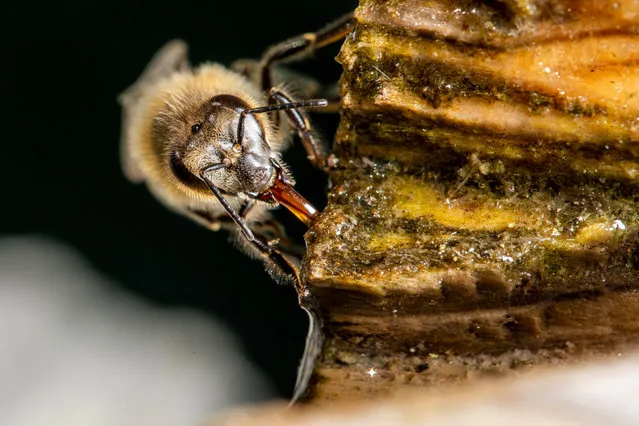
A Western honey bee feeds off acacia pollen at an apiary in Nagyszenas, eastern Hungary, 25 April 2020. The preparation of the bees for the acacia bloom began two weeks later than usual this year; due to the late frosts, this season's yield of Hungaricum acacia honey is expected to be lower. (Photo by Tibor Rosta/EPA/EFE)

A Western honey bee feeds off acacia pollen at an apiary in Nagyszenas, eastern Hungary, 25 April 2020. The preparation of the bees for the acacia bloom began two weeks later than usual this year; due to the late frosts, this season's yield of Hungaricum acacia honey is expected to be lower. (Photo by Tibor Rosta/EPA/EFE)
Details
08 Jan 2023 06:19:00
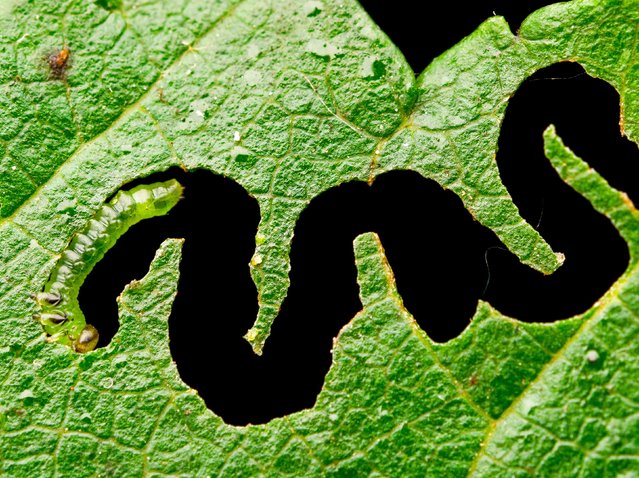
Miniscule larvae carve winding tunnels as they eat through small leaves in a small forest near the town of Velbert in western Germany in July 2022. The hungry green sawfly larvae measure just three millimetres in length and are difficult to spot on the leaves of the beech tree unless up close. (Photo by Christian Brockes/Solent News)

Miniscule larvae carve winding tunnels as they eat through small leaves in a small forest near the town of Velbert in western Germany in July 2022. The hungry green sawfly larvae measure just three millimetres in length and are difficult to spot on the leaves of the beech tree unless up close. (Photo by Christian Brockes/Solent News)
Details
24 Dec 2022 04:05:00
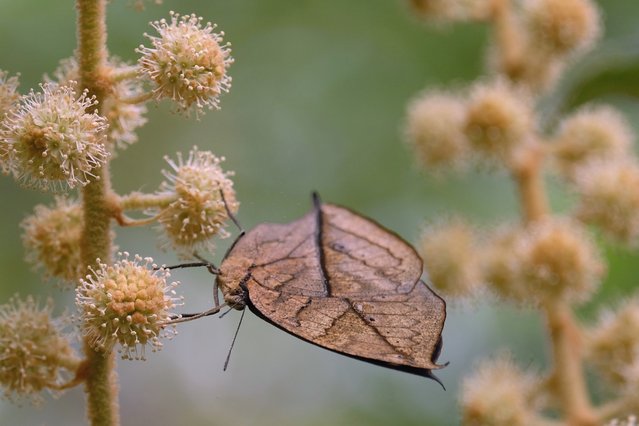
An orange oakleaf rests on a plant at the Taipei Zoo on November 26, 2020. (Photo by Sam Yeh/AFP Photo)

An orange oakleaf rests on a plant at the Taipei Zoo on November 26, 2020. (Photo by Sam Yeh/AFP Photo)
Details
10 Sep 2022 04:08:00
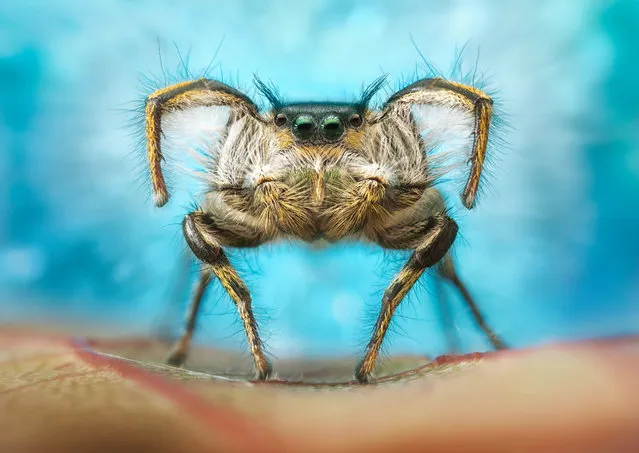
Arachnids category 3rd place: dancing spider by Raed Ammari. Male jumping spiders (in this case a Phidippus insignarius) perform a courtship dance in which they almost form a heart shape with their legs. This one was shot in Colorado. (Photo by Raed Ammari/Luminar Bug Photographer of the Year 2020)

Arachnids category 3rd place: dancing spider by Raed Ammari. Male jumping spiders (in this case a Phidippus insignarius) perform a courtship dance in which they almost form a heart shape with their legs. This one was shot in Colorado. (Photo by Raed Ammari/Luminar Bug Photographer of the Year 2020)
Details
24 Oct 2020 00:03:00
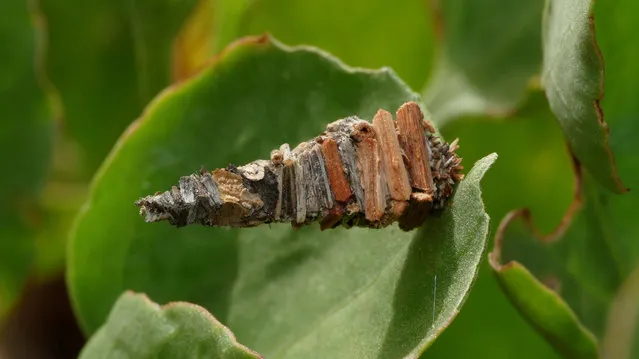
An undated handout photo made available by the Zerynthia Association shows the pupa of an amicta moneiba, a recently discovered species of moth endemic to La Gomera and El Hierro islands in the Canary Islands, Spain (issued 01 July 2020), as those two islands pulled apart from the rest of the Canary Islands 2.5 million years ago. The Institute of Evolutionary Biology of the Spanish National Research Council (CSIC) and the Zerynthia Association have recently discovered two new moth species in El Hierro and La Gomera. (Photo by Yeray Monasterio/Zerynthia/EPA/EFE)

An undated handout photo made available by the Zerynthia Association shows the pupa of an amicta moneiba, a recently discovered species of moth endemic to La Gomera and El Hierro islands in the Canary Islands, Spain (issued 01 July 2020), as those two islands pulled apart from the rest of the Canary Islands 2.5 million years ago. The Institute of Evolutionary Biology of the Spanish National Research Council (CSIC) and the Zerynthia Association have recently discovered two new moth species in El Hierro and La Gomera. (Photo by Yeray Monasterio/Zerynthia/EPA/EFE)
Details
11 Oct 2020 00:01:00