Loading...
Done
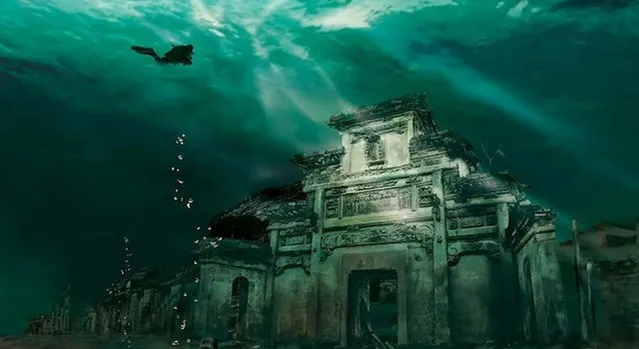
Lost City Shicheng found Underwater in China

Qiandao Lake (Chinese: 千島湖, lit. Thousand Island Lake), a man-made lake located in Chun'an County, Zhejiang, China, formed after the completion of the Xin'an River hydroelectric station in 1959. 1,078 large islands dot the lake and a few thousand smaller ones are scattered across it. The lake covers an area of 573 km² and has a storage capacity of 17.8 km³. The islands in the lake cover about 86 km²
Details
07 Feb 2014 13:25:00
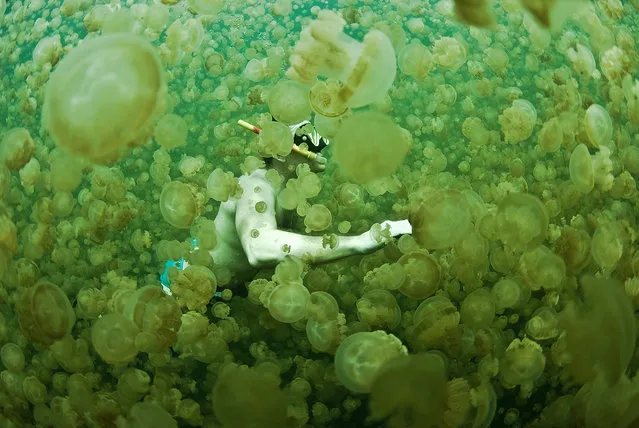
Jellyfish Lake

Jellyfish Lake (Palauan: Ongeim'l Tketau, “Fifth Lake”) is a marine lake located on Eil Malk island in Palau. Eil Malk is part of the Rock Islands, a group of small, rocky, mostly uninhabited islands in Palau's Southern Lagoon, between Koror and Peleliu. There are about 70 other marine lakes located throughout the Rock Islands. Jellyfish Lake is one of Palau's most famous dive (snorkeling only) sites. It is notable for the millions of golden jellyfish which migrate horizontally across the lake daily.
Details
02 Feb 2014 12:23:00
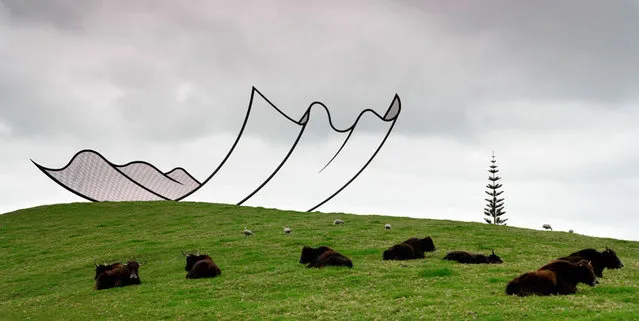
New Zealand Cartoon Kleenex Sculpture By Neil Dawsonby

This surreal metal sculpture is created by a famous sculptor, Neil Dawson in New Zealand. The masterpiece is made from steel and painted like if it’s a drawing from a cartoon. The artwork can be visited at Gibbs Farm, that is host to many other art sculptures as well.
Details
22 Jan 2014 13:05:00
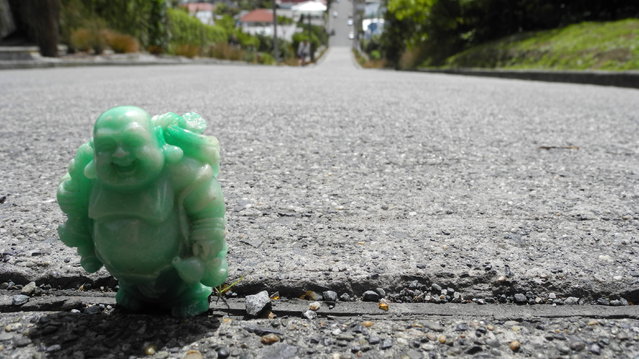
Baldwin Street - The World's Steepest Street

Baldwin Street, in Dunedin, New Zealand, is considered the world's steepest residential street. It is located in the residential suburb of North East Valley, 3.5 kilometres (2.2 mi) northeast of Dunedin's city centre.
Details
19 Jan 2014 15:26:00
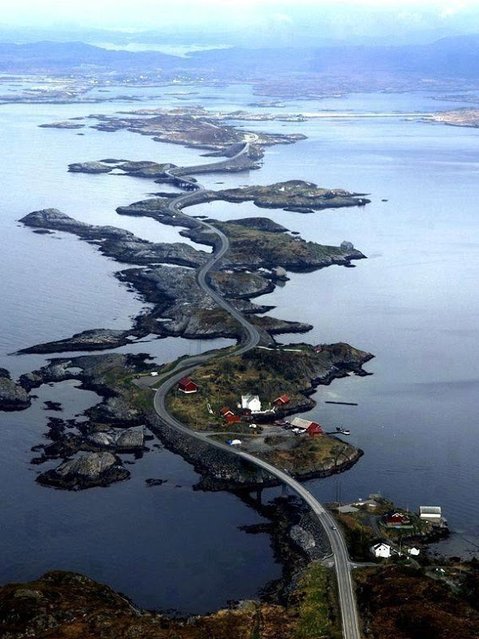
The Atlantic Road, Norway

The Atlantic Ocean Road or the Atlantic Road (Norwegian: Atlanterhavsveien) is a 8.3-kilometer (5.2 mi) long section of County Road 64 that runs through an archipelago in Eide and Averøy in Møre og Romsdal, Norway. It passes by Hustadvika, an unsheltered part of the Norwegian Sea, connecting the island of Averøy with the mainland and Romsdalshalvoya peninsula. It runs between the villages of Karvag on Averoy and Vevang in Eida. It is built on several small islands and skerries, which are connected by several causeways, viaducts and eight bridges – the most prominent being Storseisundet Bridge.
Details
18 Jan 2014 11:42:00
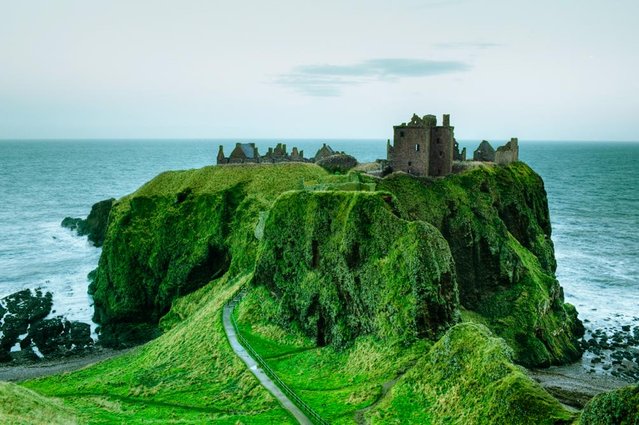
Dunnottar Castle In Scottish

Dunnottar Castleis a ruined medieval fortress located upon a rocky headland on the north-east coast of Scotland, about 3 kilometres (1.9 mi) south of Stonehaven. The surviving buildings are largely of the 15th and 16th centuries, but the site is believed to have been fortified in the Early Middle Ages. Dunnottar has played a prominent role in the history of Scotland through to the 18th-century Jacobite risings because of its strategic location and the strength of its situation. Dunnottar is best known as the place where the Honours of Scotland, the Scottish crown jewels, were hidden from Oliver Cromwell's invading army in the 17th century. The property of the Keiths from the 14th century, and the seat of the Earl Marischal, Dunnottar declined after the last Earl forfeited his titles by taking part in the Jacobite rebellion of 1715. The castle was restored in the 20th century and is now open to the public.
Details
13 Jan 2014 11:31:00
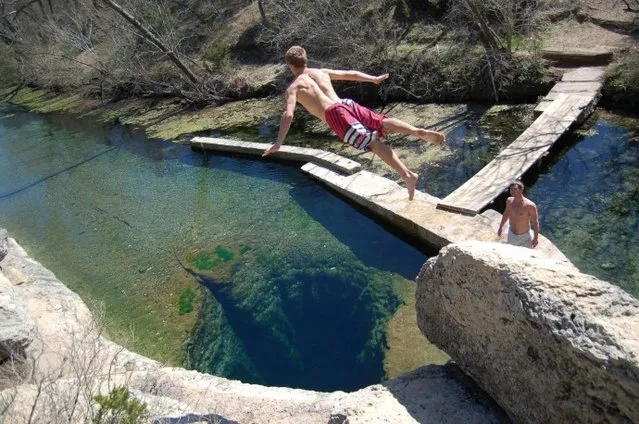
Dive The Deadly Jacob’s Well In Texas

Jacob's Well is a perennial karstic spring in the Texas Hill Country flowing from the bed of Cypress Creek, located northwest of Wimberley, Texas. The twelve foot (four meter) diameter mouth of the spring serves as a popular swimming spot for the local land owners whose properties adjoin Cypress Creek. From the opening in the creek bed, Jacob's Well cave descends vertically for about thirty feet (ten meters), then continues downward at an angle through a series of silted chambers separated by narrow restrictions, finally reaching a depth of one hundred and twenty feet (forty meters). Until the modern era, the Trinity Aquifer-fed natural artesian spring gushed water from the mouth of the cave, with a measured flow in 1924 of one hundred and seventy gallons per second (six hundred and forty liters per second) discharging six feet (two meters) into the air. The spring is the greatest source of water recharging the Edwards Aquifer.
Details
03 Jan 2014 08:20:00
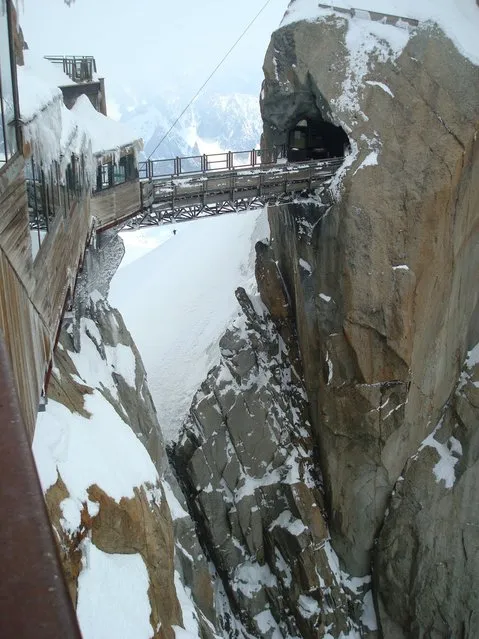
Aiguille du Midi In The French Alps

The name “Aiguille du Midi” translates literally as “Needle of the Noon” or “Needle of the South”. It gets its name from its tapered form and from its position when viewed from Chamonix: it approximately indicates noon when the sun passes over its summit.
Details
27 Dec 2013 10:52:00