Loading...
Done
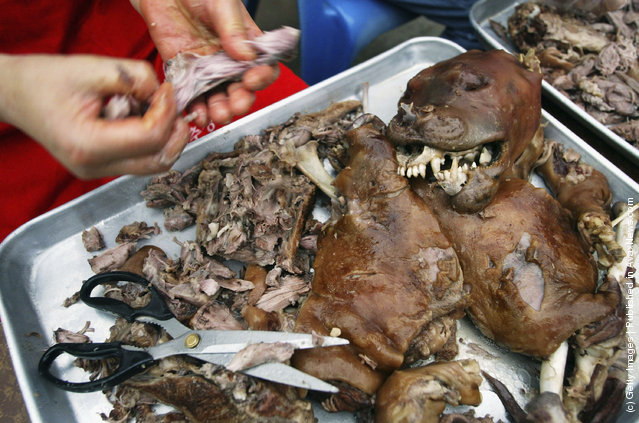
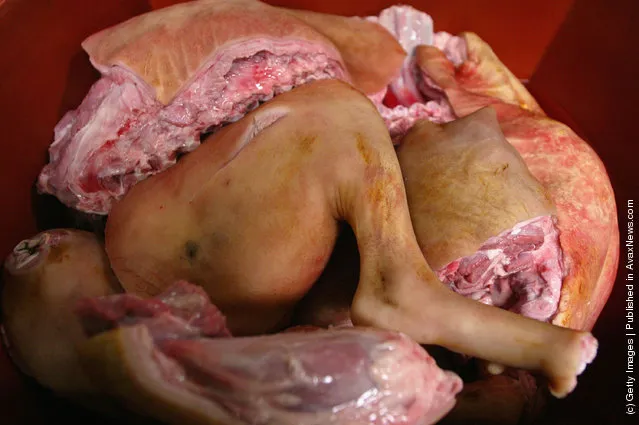
A chef cooks raw dog meat at a restaurant in Gwacheon, South Korea

A chef cooks raw dog meat at a restaurant on July 5, 2005 in Gwacheon, South Korea. Dog meat is a traditional dish in Korea dating back to the Samkuk period (period of the three kingdoms BC 57 – AD 668). Although many recipes existed historically for dog meat, now chefs only make soups, or dishes using boiled or roasted meat. Koreans traditionally eat dog meat on the hottest day of the summer, for it's reputed benefits of virility, invigoration and health. (Photo by Chung Sung-Jun/Getty Images)
Details
21 Feb 2012 12:54:00
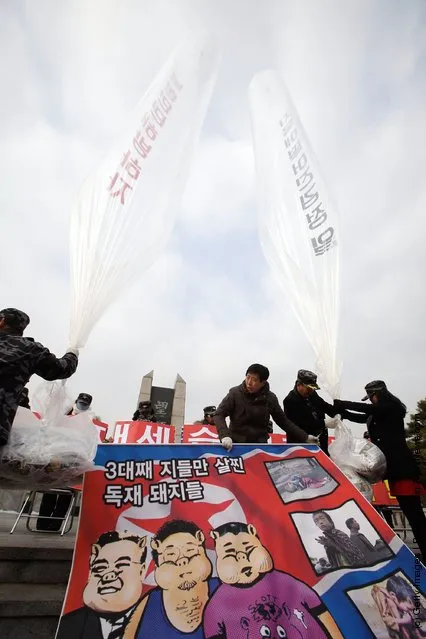
North Korean defectors, now living in South Korea, prepare to release balloons carrying propaganda leaflets denouncing North Korea's late leader Kim Jong-Il at Imjingak, near the Demilitarized zone

North Korean defectors, now living in South Korea, prepare to release balloons carrying propaganda leaflets denouncing North Korea's late leader Kim Jong-Il at Imjingak, near the Demilitarized zone (DMZ) separating South and North Korea on December 28, 2011 in Paju, South Korea. (Photo by Chung Sung-Jun/Getty Images)
Details
28 Dec 2011 07:58:00
Festival goers plays in mud during the 15th Annual Boryeong Mud Festival at Daecheon beach in Boryeong, southwest of Seoul

Festival goers plays in mud during the 15th Annual Boryeong Mud Festival at Daecheon beach in Boryeong, about 190 km (118 miles) southwest of Seoul, July 15, 2012. About 2 to 3 million domestic and international tourists visit the beach during the annual mud festival, according to the festival organisation. (Photo by Chung Sung-Jun)
Details
16 Jul 2012 08:45:00
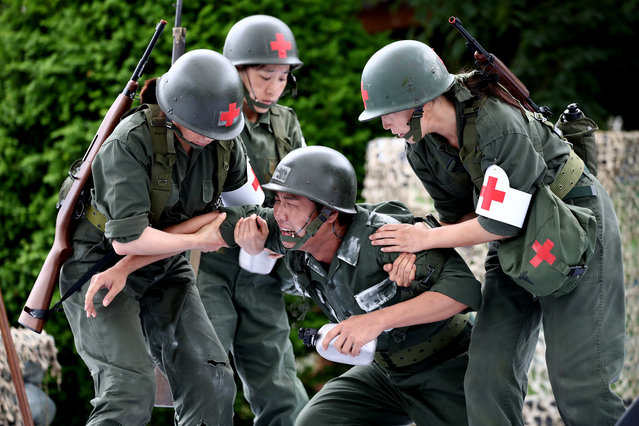
South Korean performers participate in a re-enactment of the battle of the Korean war during the ceremony to mark the 70th anniversary of the Korean War in Cheorwon, near the border with North Korea on June 25, 2020 in Cheorwon, South Korea. Over 66,000 South Koreans have been separated from their families during the Korean War which started on June 25, 1950, and effectively split the Korean Peninsula into two over the 3-year conflict. The fighting between North and South Korea ended on July 27, 1953, with the signing of the Korean Armistice Agreement and the heavily guarded Demilitarized Zone was created, however, both countries remain technically still at war since no peace agreement was signed and many Koreans died before they could reunite with their loved ones. (Photo by Chung Sung-Jun/Getty Images)

South Korean performers participate in a re-enactment of the battle of the Korean war during the ceremony to mark the 70th anniversary of the Korean War in Cheorwon, near the border with North Korea on June 25, 2020 in Cheorwon, South Korea. Over 66,000 South Koreans have been separated from their families during the Korean War which started on June 25, 1950, and effectively split the Korean Peninsula into two over the 3-year conflict. (Photo by Chung Sung-Jun/Getty Images)
Details
27 Jun 2020 00:03:00


“Dog meat refers to edible parts and the flesh derived from (predominantly domestic) dogs. Human consumption of dog meat has been recorded in many parts of the world, including ancient China, ancient Mexico, and ancient Rome. According to contemporary reports, dog meat is consumed in a variety of countries such as Switzerland, China, Vietnam, the Philippines, and Korea. In addition, dog meat has also been used as survival food in times of war and/or other hardships”. – Wikipedia

Photo: A chef prepares dog meat at a restaurant on July 4, 2005 in Gwacheon, South Korea. Dog meat is a traditional dish in Korea dating back to the Samkuk period (period of the three kingdoms BC 57 – AD 668). Although many recipes existed historically for dog meat, now chefs only make soups, or dishes using boiled or roasted meat. Koreans traditionally eat dog meat on the hottest day of the summer, for it's reputed benefits of virility, invigoration and health. (Photo by Chung Sung-Jun/Getty Images)
Details
24 Jul 2011 13:21:00
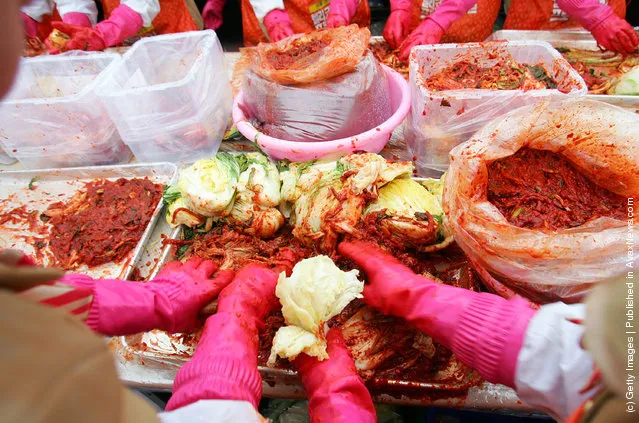
Kimchi

“Kimchi, also spelled gimchi, kimchee, or kim chee, is a traditional fermented Korean dish made of vegetables with varied seasonings. There are hundreds of varieties of kimchi made with a main vegetable ingredient such as napa cabbage, radish, green onions or cucumber. It is the most common banchan, or side dish, in Korean cuisine. Kimchi is also a main ingredient for many popular Korean dishes such as kimchi stew (kimchi jjigae), kimchi soup (kimchiguk), and kimchi fried rice (kimchi bokkeumbap)”. – Wikipedia

Photo: South Korean housewives, among more than two thousand who gathered for an event sponsored by state officials to help the needy, make kimchi, the traditional pungent vegetable dish on the grounds in front of Seoul City Hall on November 20 in Seoul, South Korea. (Photo by Chung Sung-Jun/Getty Images)
Details
21 Dec 2011 13:24:00
Students wearing masks rest amid the coronavirus disease (COVID-19) pandemic in Seoul, South Korea, August 25, 2020. (Photo by Kim Hong-Ji/Reuters)

Students wearing masks rest amid the coronavirus disease (COVID-19) pandemic in Seoul, South Korea, August 25, 2020. (Photo by Kim Hong-Ji/Reuters)
Details
04 Sep 2020 00:01:00
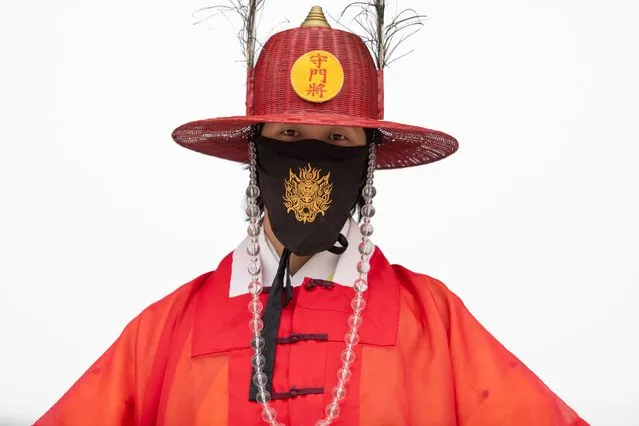
Coronavirus infection (COVID-19) is still continuing in the country, a guard of Gyeongbokgung Palace wears a protective mask with a goblin pattern at the entrance of the palace, which is currently not being opened to the public due to Covid-19 in Seoul, South Korea on June 18, 2020. (Photo by Chris Jung/NurPhoto via Getty Images)

Coronavirus infection (COVID-19) is still continuing in the country, a guard of Gyeongbokgung Palace wears a protective mask with a goblin pattern at the entrance of the palace, which is currently not being opened to the public due to Covid-19 in Seoul, South Korea on June 18, 2020. (Photo by Chris Jung/NurPhoto via Getty Images)
Details
20 Jun 2020 00:01:00