Loading...
Done
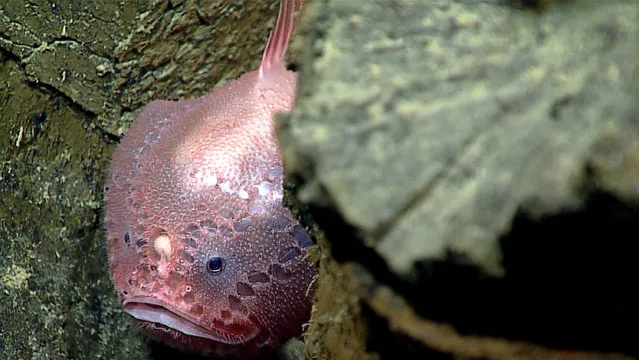
This April 30, 2016 image made available by NOAA shows a deep sea anglerfish living between pillow basalt rock formations, during a deepwater exploration of the Marianas Trench Marine National Monument area in the Pacific Ocean near Guam and Saipan. The ambush predator waits for prey to be attracted by its lure, located between its eyes, and gulps it with its large mouth. (Photo by NOAA Office of Ocean Exploration and Research via AP Photo)

This April 30, 2016 image made available by NOAA shows a deep sea anglerfish living between pillow basalt rock formations, during a deepwater exploration of the Marianas Trench Marine National Monument area in the Pacific Ocean near Guam and Saipan. The ambush predator waits for prey to be attracted by its lure, located between its eyes, and gulps it with its large mouth. (Photo by NOAA Office of Ocean Exploration and Research via AP Photo)
Details
21 Oct 2016 12:30:00
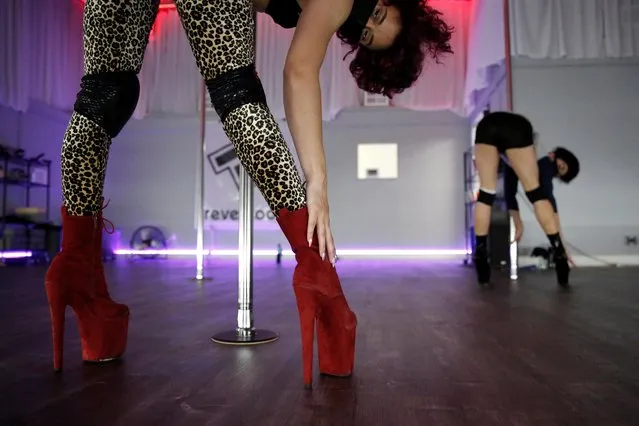
April Haze, a San Jose-based stripper, teaches a pole dance class to her students at Revel Room Studios in Milpitas, California, April 15, 2021. As some of the United States' estimated 3,821 strip clubs start to open up again, women who work as strippers are confronting a transformed industry. Revenue in the industry is estimated to have decreased 17.4% in 2020 and is forecast to fall another 1.5% this year, according to research by IBISWorld. (Photo by Brittany Hosea-Small/Reuters)

April Haze, a San Jose-based stripper, teaches a pole dance class to her students at Revel Room Studios in Milpitas, California, April 15, 2021. As some of the United States' estimated 3,821 strip clubs start to open up again, women who work as strippers are confronting a transformed industry. Revenue in the industry is estimated to have decreased 17.4% in 2020 and is forecast to fall another 1.5% this year, according to research by IBISWorld. (Photo by Brittany Hosea-Small/Reuters)
Details
30 Jan 2022 06:27:00
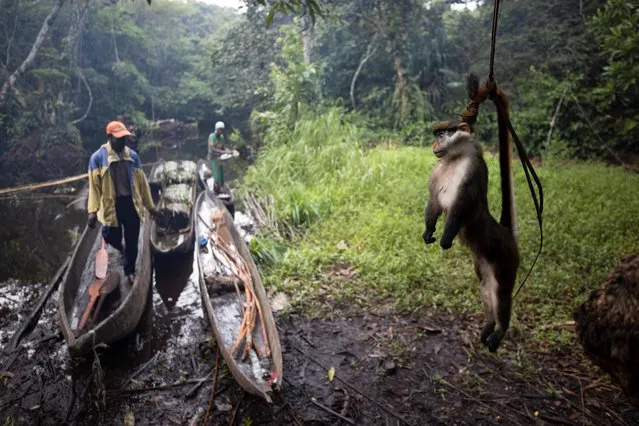
A dead red-tailed monkey hangs by its tail above the ground, in order to keep it away from ants, in the forest near the city of Mbandaka, Democratic Republic of the Congo, April 5, 2019. Bushmeat hunters are emptying Central Africa's forests at a high rate, researchers say. A growing appetite for wild meat in cities has ramped up the scale of hunting. Research shows around 6 million tonnes of bushmeat are sourced annually from the Congo Basin, whose forest spans across six countries and is second in size only to the Amazon. (Photo by Thomas Nicolon/Reuters)

A dead red-tailed monkey hangs by its tail above the ground, in order to keep it away from ants, in the forest near the city of Mbandaka, Democratic Republic of the Congo, April 5, 2019. Bushmeat hunters are emptying Central Africa's forests at a high rate, researchers say. A growing appetite for wild meat in cities has ramped up the scale of hunting. Research shows around 6 million tonnes of bushmeat are sourced annually from the Congo Basin, whose forest spans across six countries and is second in size only to the Amazon. (Photo by Thomas Nicolon/Reuters)
Details
14 Oct 2019 00:03:00


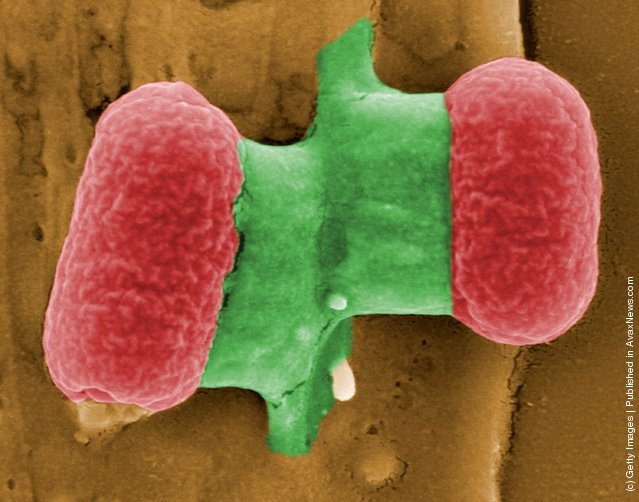
In this handout photo provided by the Helmholtz Center for Research on Infectious Diseases an EHEC bacteria is visible on May 30, 2011 in Berlin, Germany. German health authorities have attributed at least 14 deaths within the last two weeks to an outbreak of enterohemorrhagic E. coli, also known as the EHEC bacteria. (Photo Courtesay Manfred Rohde, Helmholtz-Zentrum fuer Infektionsforschung (HZI)/Getty Images)
Details
31 May 2011 06:43:00
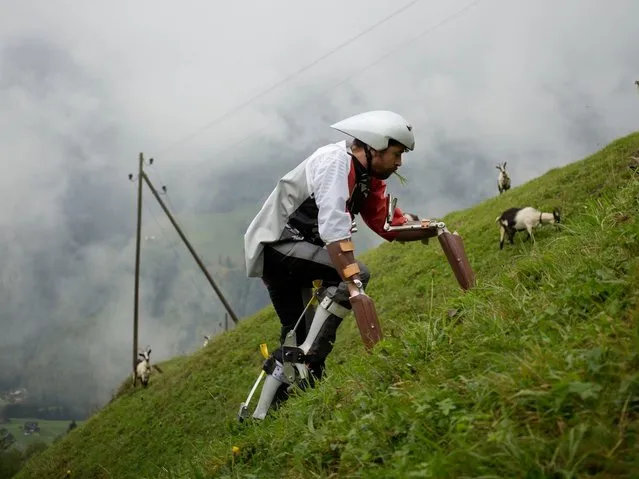
Thomas Thwaites Tried To Live As A Goat

Thomas Thwaites, a 34-year-old researcher from London, has spent the past year creating prosthetics that allow him to roam around on all fours like goat.
Details
19 Aug 2015 14:27:00
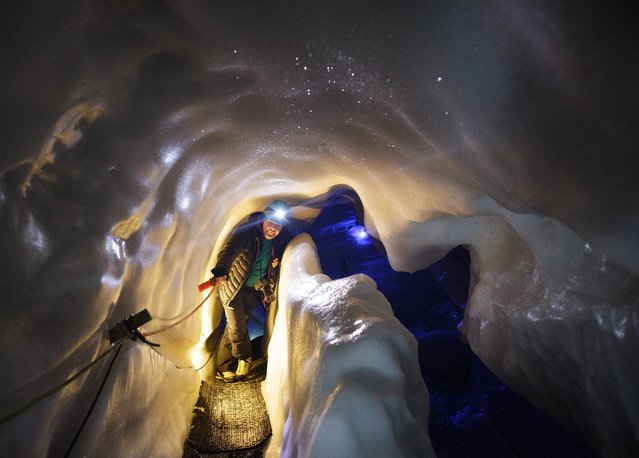
A tourist walks inside the Ice Palace glacier hollow at Hintertux glacier, located at around 3250 meters above sea level, in Zillertal, Austria, 02 March, 2016. The hollow's temperature remains constant at 0 degrees Celsius, in summer and winter alike, and is also used by the University of Innsbruck for scientific research projects. (Photo by Lisi Niesner/EPA)

A tourist walks inside the Ice Palace glacier hollow at Hintertux glacier, located at around 3250 meters above sea level, in Zillertal, Austria, 02 March, 2016. The hollow's temperature remains constant at 0 degrees Celsius, in summer and winter alike, and is also used by the University of Innsbruck for scientific research projects. (Photo by Lisi Niesner/EPA)
Details
03 Mar 2016 11:44:00
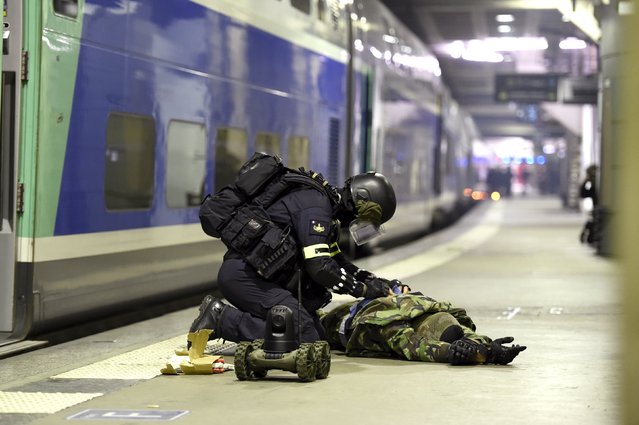
A member of the National Gendarmerie Intervention Group (GIGN) deactivates a bomb from a supposed terrorist during a training exercise in the event of a terrorist attack in collaboration with Recherche Assistance Intervention Dissuasion (RAID) and Research and Intervention Brigades (BRI) in presence of the French Interior minister Bernard Cazeneuve at la Gare Montparnasse, in central Paris on April 20, 2016. (Photo by Miguel Medina/Reuters)

A member of the National Gendarmerie Intervention Group (GIGN) deactivates a bomb from a supposed terrorist during a training exercise in the event of a terrorist attack in collaboration with Recherche Assistance Intervention Dissuasion (RAID) and Research and Intervention Brigades (BRI) in presence of the French Interior minister Bernard Cazeneuve at la Gare Montparnasse, in central Paris on April 20, 2016. (Photo by Miguel Medina/Reuters)
Details
21 Apr 2016 11:54:00
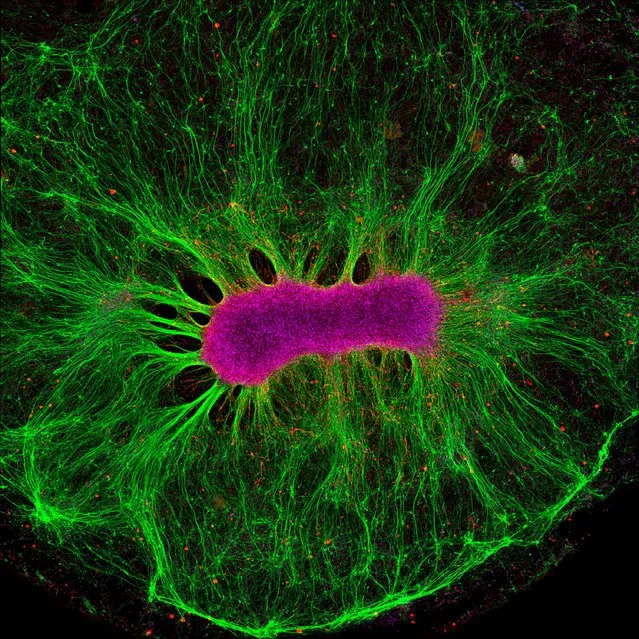
Brain-on-a-chip. Dazzling in green and magenta this image shows the nerve fibres (in green) produced by neural stem cells (in magenta) as they grow on a synthetic gel. Captured by a technique known as confocal microscopy, the image is part of research shedding light on how tinkering with the environment can affect the way in which nerve fibres grow. (Photo by Collin Edington and Iris Lee/Massachusetts Institute of Technology/Wellcome Images)

Brain-on-a-chip. Dazzling in green and magenta this image shows the nerve fibres (in green) produced by neural stem cells (in magenta) as they grow on a synthetic gel. Captured by a technique known as confocal microscopy, the image is part of research shedding light on how tinkering with the environment can affect the way in which nerve fibres grow. (Photo by Collin Edington and Iris Lee/Massachusetts Institute of Technology/Wellcome Images)
Details
17 Mar 2017 00:01:00