Loading...
Done
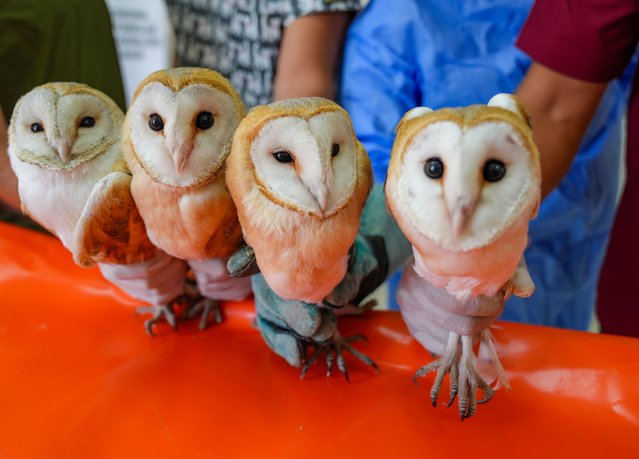
Four orphan barn owl chicks were found weak from hunger and thirst after their mother's death, are under treatment at the Dicle Wildlife Rescue and Rehabilitation Center before being released back into their natural habitat on September 23, 2025, in Diyarbakir, Turkiye. (Photo by Bestami Bodruk/Anadolu via Getty Images)

Four orphan barn owl chicks were found weak from hunger and thirst after their mother's death, are under treatment at the Dicle Wildlife Rescue and Rehabilitation Center before being released back into their natural habitat on September 23, 2025, in Diyarbakir, Turkiye. (Photo by Bestami Bodruk/Anadolu via Getty Images)
Details
05 Oct 2025 03:51:00
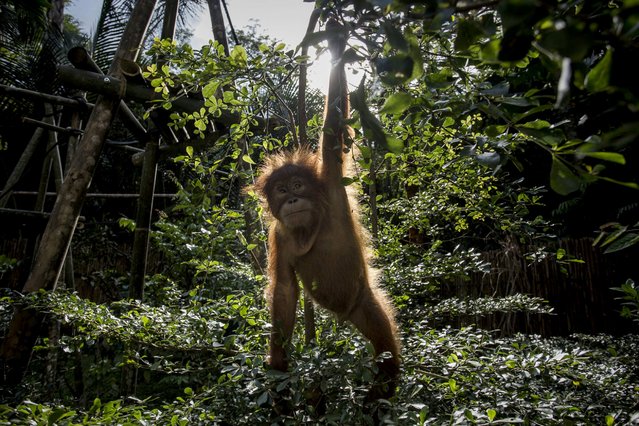
A Baby sumatran orangutan (Pongo abelii) plays around in a tree as they train at Sumatran Orangutan Conservation Programme's rehabilitation center on November 12, 2016 in Kuta Mbelin, North Sumatra, Indonesia. The Orangutans in Indonesia have been known to be on the verge of extinction as a result of deforestation and poaching. Found mostly in South-East Asia, where they live on the islands of Sumatra and Borneo, the endangered species continue to lose their habitat as a result of corporate expansion in a developing economy. Indonesia approved palm oil concessions on nearly 15 million acres of peatlands over the past years and thousands of square miles have been cleared for plantations, including the lowland areas that are the prime habitat for orangutans. (Photo by Ulet Ifansasti/Getty Images)

A Baby sumatran orangutan (Pongo abelii) plays around in a tree as they train at Sumatran Orangutan Conservation Programme's rehabilitation center on November 12, 2016 in Kuta Mbelin, North Sumatra, Indonesia. The Orangutans in Indonesia have been known to be on the verge of extinction as a result of deforestation and poaching. Found mostly in South-East Asia, where they live on the islands of Sumatra and Borneo, the endangered species continue to lose their habitat as a result of corporate expansion in a developing economy. Indonesia approved palm oil concessions on nearly 15 million acres of peatlands over the past years and thousands of square miles have been cleared for plantations, including the lowland areas that are the prime habitat for orangutans. (Photo by Ulet Ifansasti/Getty Images)
Details
16 Nov 2016 11:14:00
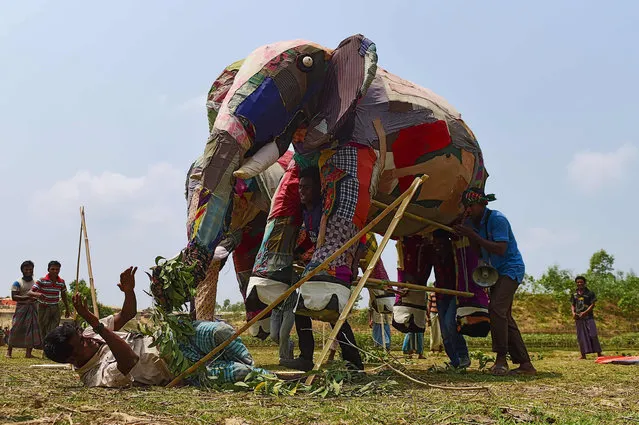
This photo taken on April 7, 2018 shows Rohingya refugee attending a demonstration of elephant resistance arranged by the UNHCR and IUCN at the Kutupalong refugee camp in Ukhia, Bangladesh. The purpose of the training day is sobering – a dozen Rohingya have been killed by wild elephants whose habitat has been consumed by Kutupalong refugee camp. (Photo by Munir Uz Zaman/AFP Photo)

This photo taken on April 7, 2018 shows Rohingya refugee attending a demonstration of elephant resistance arranged by the UNHCR and IUCN at the Kutupalong refugee camp in Ukhia, Bangladesh. The purpose of the training day is sobering – a dozen Rohingya have been killed by wild elephants whose habitat has been consumed by Kutupalong refugee camp. (Photo by Munir Uz Zaman/AFP Photo)
Details
16 May 2018 00:01:00
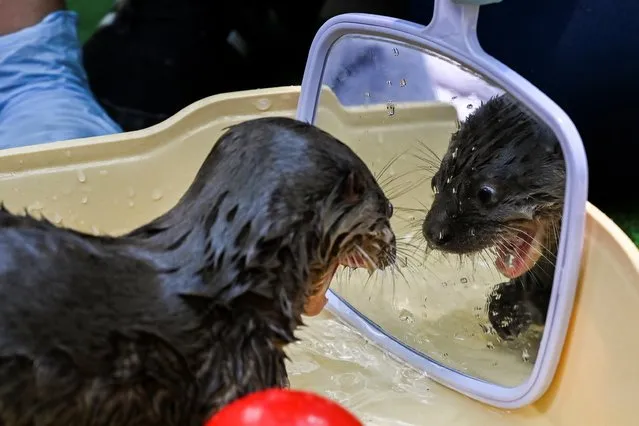
A river otter (lontra longicaudis) of 6-weeks-old looks in the mirror during a bath in the Animal Welfare Unit of the Zoo in Cali, Colombia, on October 22, 2019. The baby otter was found abandoned brought to the Cali Zoo for breeding, for its extensive experience in raising these species. According to the International Union for Conservation of Nature the river otter (lontra longicaudis) are in danger of extinction, because of mining, agriculture, pollution of rivers and housing construction in their habitat. (Photo by Luis Robayo/AFP Photo)

A river otter (lontra longicaudis) of 6-weeks-old looks in the mirror during a bath in the Animal Welfare Unit of the Zoo in Cali, Colombia, on October 22, 2019. The baby otter was found abandoned brought to the Cali Zoo for breeding, for its extensive experience in raising these species. According to the International Union for Conservation of Nature the river otter (lontra longicaudis) are in danger of extinction, because of mining, agriculture, pollution of rivers and housing construction in their habitat. (Photo by Luis Robayo/AFP Photo)
Details
27 Oct 2019 00:03:00
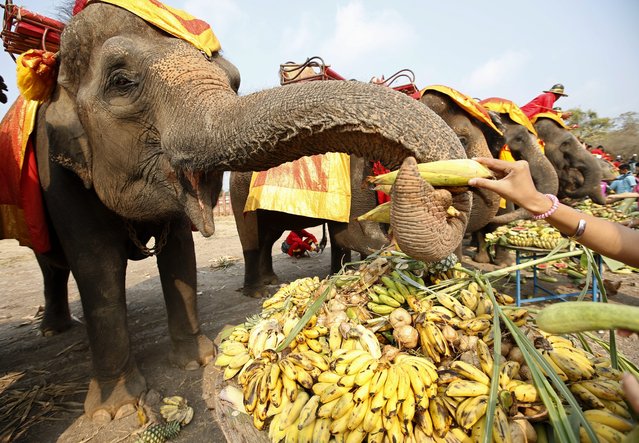
Elephants enjoy various kinds of fruits and vegetables during an all-you-can-eat elephant buffet held to mark the National Elephant Day at the ancient historical city of Ayutthaya, Thailand, 13 March 2014. The annual National Thai Elephant Day is held on 13 March to celebrate and drawing public attention for more concerted effort to save the species and protect its habitat. Thailand sees a severe decline with less than 3,000 wild elephants left in the kingdom. (Photo by Rungroj Yongrit/EPA)

Elephants enjoy various kinds of fruits and vegetables during an all-you-can-eat elephant buffet held to mark the National Elephant Day at the ancient historical city of Ayutthaya, Thailand, 13 March 2014. The annual National Thai Elephant Day is held on 13 March to celebrate and drawing public attention for more concerted effort to save the species and protect its habitat. Thailand sees a severe decline with less than 3,000 wild elephants left in the kingdom. (Photo by Rungroj Yongrit/EPA)
Details
14 Mar 2014 07:16:00
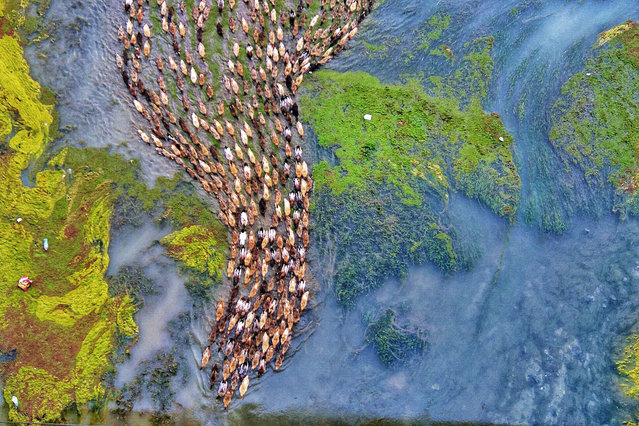
Ducks in the river Baral in Bangladesh. (Photo by Rafeur Rahman/Caters News Agency)

These photographs of hundreds of ducks following their leader down a river are truly mesmerizing. Rafeur Rahman of Bangladesh climbed a high bridge and saw hundreds of ducks apparently playing a game of follow the leader. More than 500 ducks live on the river, where the mosses and snails provide the perfect habitat. Here: Ducks in the river Baral in Bangladesh. (Photo by Rafeur Rahman/Caters News Agency)
Details
08 May 2018 00:05:00
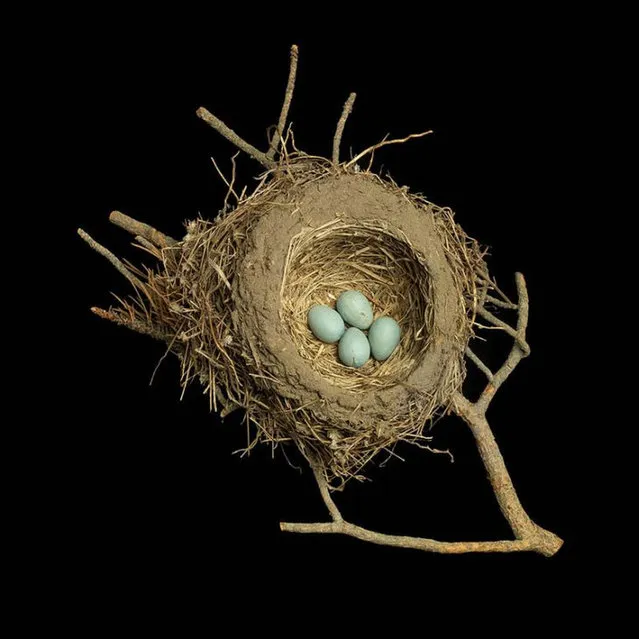
Bird Nest By Sharon Beals

Sharon Beals is a San Francisco based photographer who has photographed nest and eggs specimens collected over the last two centuries at The California Academy of Sciences, The Museum of Vertebrate Zoology, and The Western Foundation of Vertebrate Zoology. While few nests are collected today, these nests and eggs are used for research, providing important information about their builder’s habitats, DNA, diseases and other survival issues.
Details
20 Aug 2013 09:49:00
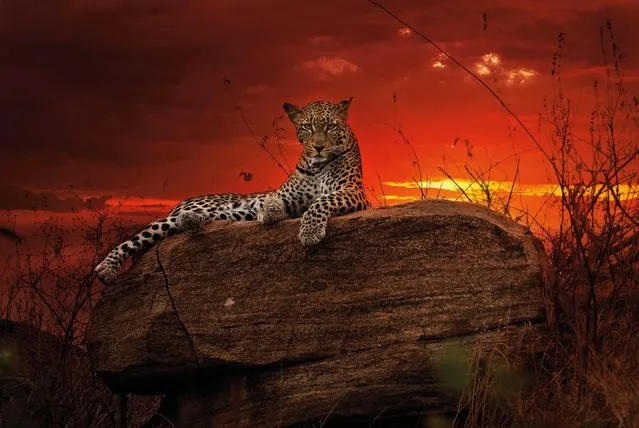
“Wild Africa”. (Photo by Alex Bernasconi)

Award-winning photographer Alex Bernasconi has captured thousands of images – from hiding hippos to wandering zebras – in his travels across Africa. His amazing work features in a new edition of his book Wild Africa. These amazing pictures create a snapshot of the life of some of the planet’s most spectacular animals and natural habitats. Photo: “Wild Africa”. (Photo by Alex Bernasconi)
Details
15 Sep 2013 10:12:00