Loading...
Done
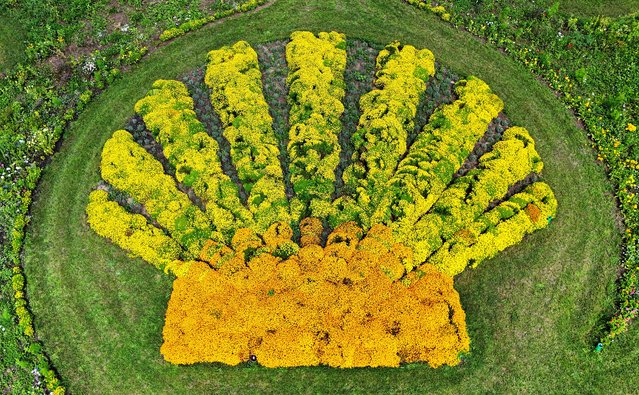
A picture taken with a drone shows a huge work of art created with various flowers and flowering plants in Jacobsdorf, Germany, 29 July 2024. Artist Michael Uy has transformed a piece of fallow land into an insect paradise for bees, bumblebees and butterflies. Using plants, the artist has planted and sown oversized images in the shape of a shell and a winding path of life on a large meadow in Jacobsdorf. (Photo by Hannibal Hanschke/EPA/EFE)

A picture taken with a drone shows a huge work of art created with various flowers and flowering plants in Jacobsdorf, Germany, 29 July 2024. Artist Michael Uy has transformed a piece of fallow land into an insect paradise for bees, bumblebees and butterflies. Using plants, the artist has planted and sown oversized images in the shape of a shell and a winding path of life on a large meadow in Jacobsdorf. (Photo by Hannibal Hanschke/EPA/EFE)
Details
04 Sep 2024 02:53:00
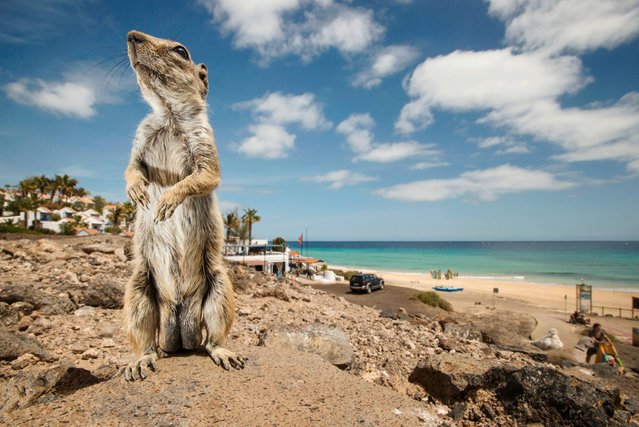
A ground squirrel. (Photo by Sam Hobson/Wildscreen Photography Festival 2014)

From towering elephants to tiny insects, photographers will be offering a rare insight into the natural world at this year’s Wildscreen Photography Festival 2014. The festival, formerly known as WildPhotos, is the UK’s largest wildlife photography show. The Wildscreen Photography Festival 2014 will be taking place between 24-26 October at London’s Royal Geographical Society. (Photo by Sam Hobson/Wildscreen Photography Festival 2014)
Details
25 Sep 2014 13:21:00
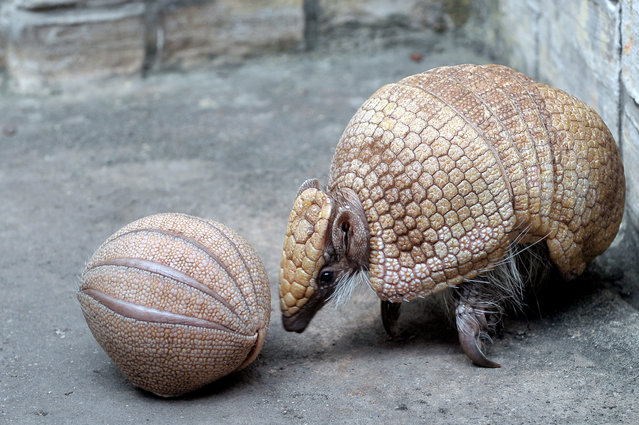
A four-week old southern three-banded armadillo (Tolypeutes matacus) is rolled up into a ball next to its mother in the tropical house of Budapest Zoo in Budapest, Hungary on May 3, 2019. The South American insect-eating mammal and its close relative, the Brasilian three-banded armadillo (Tolypeutes tricinctus) are the only two species of armadillos capable of rolling into a complete ball to defend themselves when feeling threatened. (Photo by Attila Kovács/EPA/EFE)

A four-week old southern three-banded armadillo (Tolypeutes matacus) is rolled up into a ball next to its mother in the tropical house of Budapest Zoo in Budapest, Hungary on May 3, 2019. The South American insect-eating mammal and its close relative, the Brasilian three-banded armadillo (Tolypeutes tricinctus) are the only two species of armadillos capable of rolling into a complete ball to defend themselves when feeling threatened. (Photo by Attila Kovács/EPA/EFE)
Details
05 May 2019 00:03:00
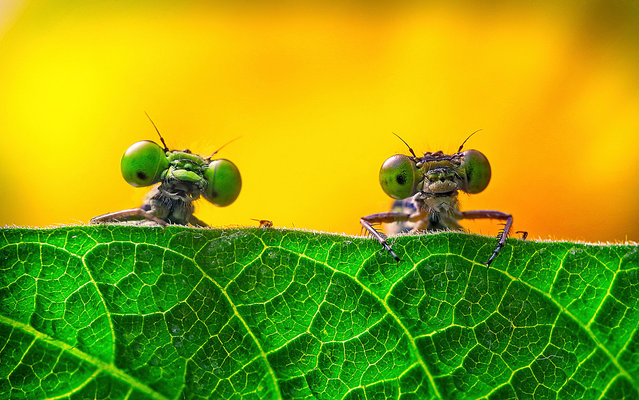
Shortlisted: “Two big eyes” by Miao Yong (Zejiang province, China). Damselflies look over the leaves. “I was photographing insects in a park near my home when suddenly I found two damselflies in the grass. They kept flying and it was very difficult to focus until suddenly they parked behind a leaf”. (Photo by Miao Yong/2017 Royal Society of Biology Photographer of the Year)

Shortlisted: “Two big eyes” by Miao Yong (Zejiang province, China). Damselflies look over the leaves. “I was photographing insects in a park near my home when suddenly I found two damselflies in the grass. They kept flying and it was very difficult to focus until suddenly they parked behind a leaf”. (Photo by Miao Yong/2017 Royal Society of Biology Photographer of the Year)
Details
16 Oct 2017 09:04:00
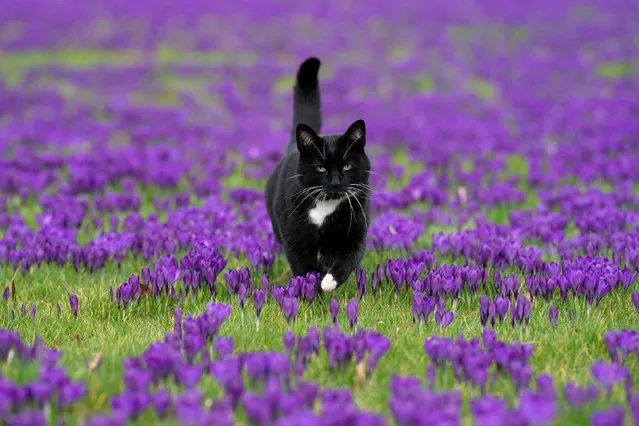
Lord Roscoe the cat runs through the crocuses on the lawns at the National Trust's 17th-century Ham House and Garden in Richmond, London on Monday, March 6, 2023. In recent years more than 500,000 bulbs have been planted to create a spectacle for visitors and to attract bees, butterflies and other pollinating insects. (Photo by Kirsty O'Connor/PA Images via Getty Images)

Lord Roscoe the cat runs through the crocuses on the lawns at the National Trust's 17th-century Ham House and Garden in Richmond, London on Monday, March 6, 2023. In recent years more than 500,000 bulbs have been planted to create a spectacle for visitors and to attract bees, butterflies and other pollinating insects. (Photo by Kirsty O'Connor/PA Images via Getty Images)
Details
26 Apr 2023 02:59:00
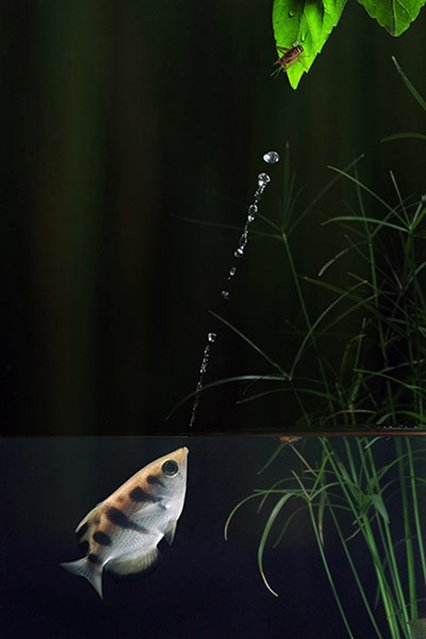
The Archerfish

The archerfish (spinner fish or archer fish) are a family (Toxotidae) of fish known for their habit of preying on land based insects and other small animals by literally shooting them down with water droplets from their specialized mouths. The family is small, consisting of seven species in the genus Toxotes; which typically inhabit brackish waters of estuaries and mangroves, but can also be found in the open ocean as well as far upstream in fresh water They can be found from India to the Philippines, Australia, and Polynesia.
Details
21 Nov 2012 12:54:00
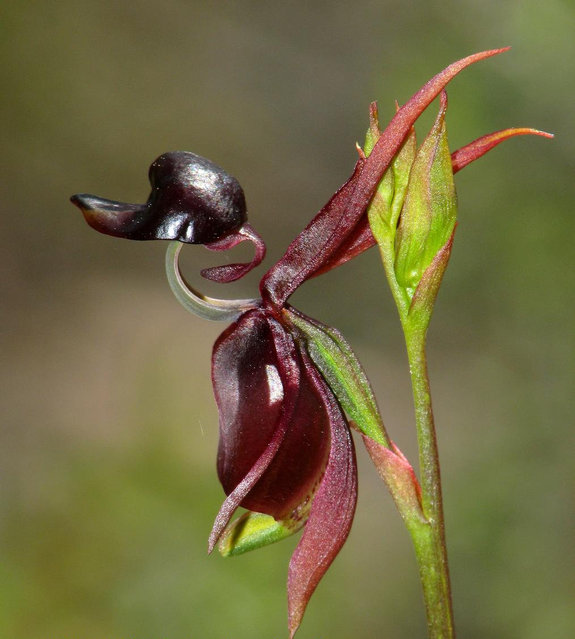
The Flying Duck Orchid

Caleana major, the Flying Duck Orchid is a small orchid found in eastern and southern Australia. This terrestrial plant features a remarkable flower, resembling a duck in flight. The flower is an attractant to insects, such as male sawflies which pollinate the flower in a process known as pseudocopulation. In 1986 this orchid was featured on an Australian postage stamp.


See Also: Monkey Orchid
Details
22 Apr 2013 10:56:00
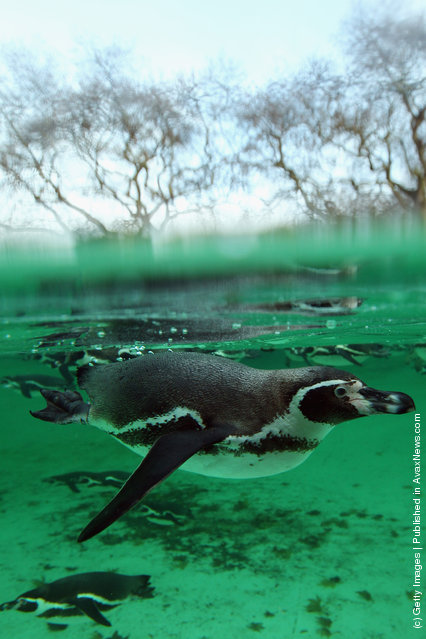
A penguin swims in its enclosure during a photocall to promote London Zoo's annual stock take of animals

A penguin swims in its enclosure during a photocall to promote London Zoo's annual stock take of animals on January 4, 2012 in London, England. The zoo's stocktake takes place annually, and gives keepers a chance to check on the numbers of every one of the animals from stick insects and frogs to tigers and camels. (Photo by Dan Kitwood/Getty Images)
Details
05 Jan 2012 12:37:00