Loading...
Done
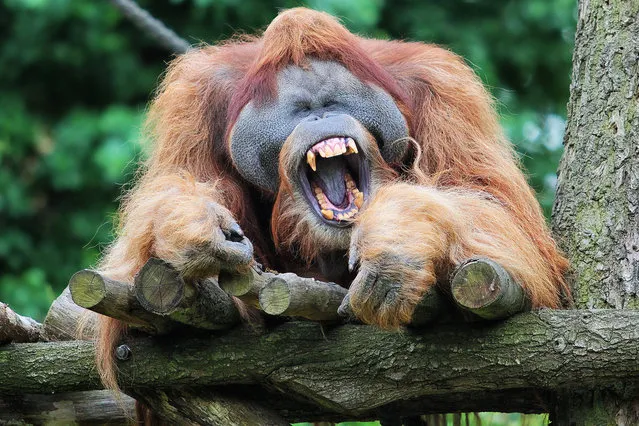
This huge male orangutan is having a right old laugh as he squints his eyes and shows his huge teeth.  The orangutan, called Bimbo, was relaxing on a platform around 5m high in his enclosure when he broke out into a laugh. But his happy smile soon disappeared when another orangutan came over to see what was going on.  Bimbo – the only male in the group of five apes at Leipzig Zoo, in Germany - appears to be laughing in much the same way as a human would. (Photo by Martina Radtke/Solent News)

This huge male orangutan is having a right old laugh as he squints his eyes and shows his huge teeth. The orangutan, called Bimbo, was relaxing on a platform around 5m high in his enclosure when he broke out into a laugh. But his happy smile soon disappeared when another orangutan came over to see what was going on. Bimbo – the only male in the group of five apes at Leipzig Zoo, in Germany - appears to be laughing in much the same way as a human would. (Photo by Martina Radtke/Solent News)
Details
29 Aug 2015 11:10:00
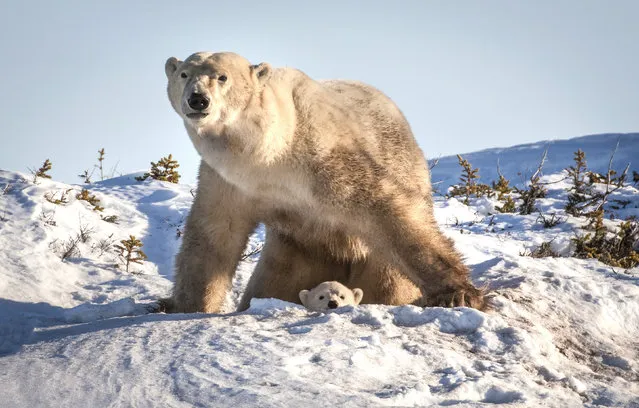
A Polar bear with its cub. (Photo by David Jenkins/Caters News)

These adorable images of new born polar bears are bound to warm the hearts of even the biggest Ba-humbugs this Christmas. The stunning collection of photographs, taken over the space of ten years, manage to capture the tender bond between both mother and child as they emerge from their den for the very first time. Here: a Polar bear with its cub. (Photo by David Jenkins/Caters News)
Details
22 Dec 2014 13:07:00
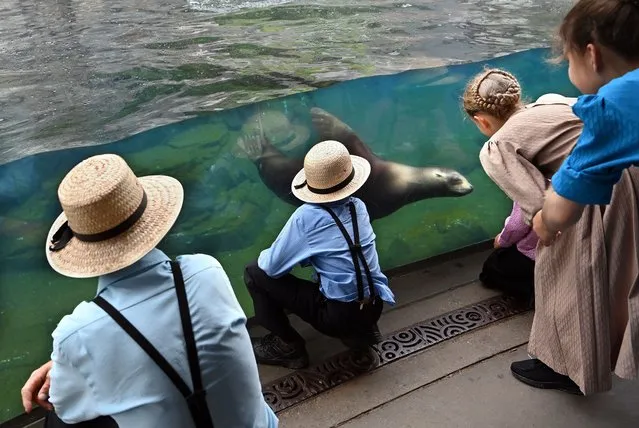
Visitors watch a California sea lion at the Smithsonian National Zoological Park on Thursday May 26, 2022 in Washington, DC. (Photo by Matt McClain/The Washington Post)

Visitors watch a California sea lion at the Smithsonian National Zoological Park on Thursday May 26, 2022 in Washington, DC. (Photo by Matt McClain/The Washington Post)
Details
10 Jun 2022 04:33:00
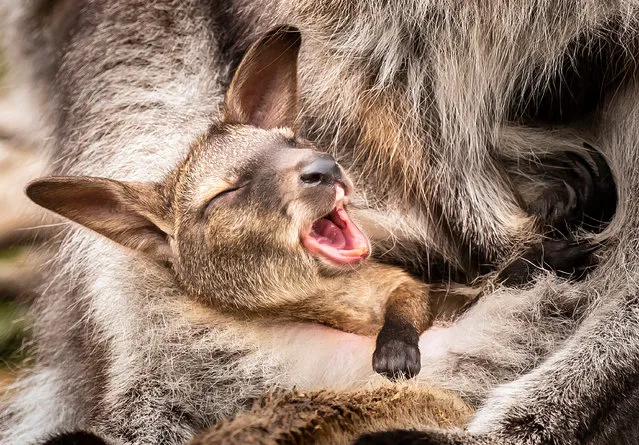
The head of a Bennett's Wallaby Joey emerges from its mothers' pouch at Yorkshire Wildlife Park in Doncaster, England on March 19, 2020, where the park still remains open to the public as coronavirus continues to hit the UK. (Photo by Danny Lawson/PA Images via Getty Images)

The head of a Bennett's Wallaby Joey emerges from its mothers' pouch at Yorkshire Wildlife Park in Doncaster, England on March 19, 2020, where the park still remains open to the public as coronavirus continues to hit the UK. (Photo by Danny Lawson/PA Images via Getty Images)
Details
22 Mar 2020 00:03:00
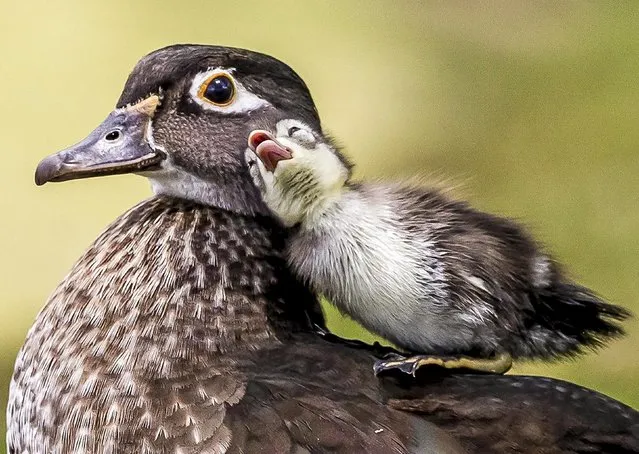
A newly hatched chick cuddles up to its mother at Santee Lakes near San Diego, California in May 2023. (Photo by Tammy Kokjohn/Solent News)

A newly hatched chick cuddles up to its mother at Santee Lakes near San Diego, California in May 2023. (Photo by Tammy Kokjohn/Solent News)
Details
18 Jun 2023 04:14:00
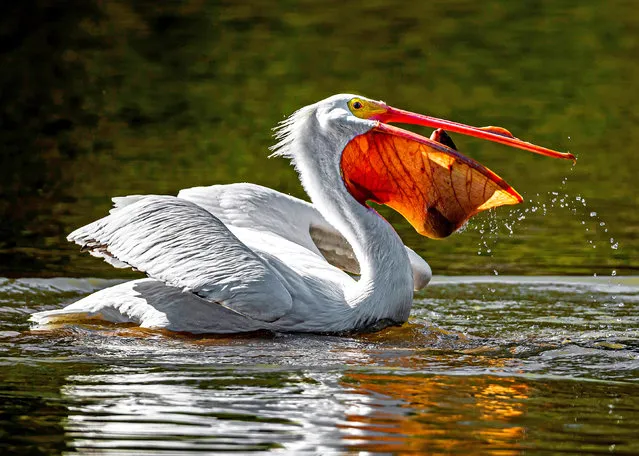
A pelican on a lake in California in the first decade of January 2024 deftly snares a large trout after scooping it up, tossing it into the air and catching it in its bill. (Photo by Jiahong Zeng/Solent news)

A pelican on a lake in California in the first decade of January 2024 deftly snares a large trout after scooping it up, tossing it into the air and catching it in its bill. (Photo by Jiahong Zeng/Solent news)
Details
21 Jan 2024 09:06:00
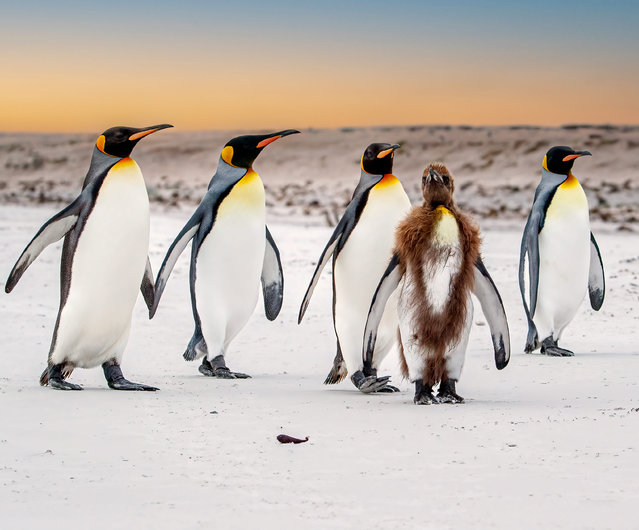
The king penguin in his moulting suit joins his waddle on their way to the water despite not being waterproof yet at Volunteer Point on the Falkland Islands, 2023. (Photo by Judy Rogero/Media Drum Images)

The king penguin in his moulting suit joins his waddle on their way to the water despite not being waterproof yet at Volunteer Point on the Falkland Islands, 2023. (Photo by Judy Rogero/Media Drum Images)
Details
26 Mar 2023 04:41:00
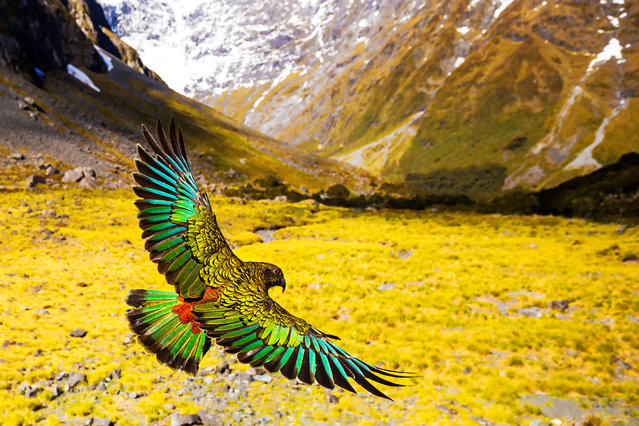
Kea are the only true alpine parrots in the world and thrive as cunning opportunists in the freezing conditions of the Southern Alps. Kea are thought to have developed their wide array of food-finding strategies during the last great ice age, where they learned to adapt using their unusual powers of curiosity. (Photo by Tom Walker/BBC Pictures/The Guardian)

Kea are the only true alpine parrots in the world and thrive as cunning opportunists in the freezing conditions of the Southern Alps. Kea are thought to have developed their wide array of food-finding strategies during the last great ice age, where they learned to adapt using their unusual powers of curiosity. (Photo by Tom Walker/BBC Pictures/The Guardian)
Details
19 Jul 2016 13:03:00