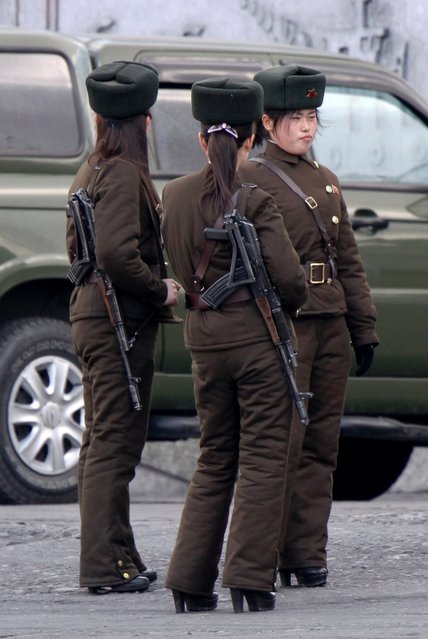
In this Thursday, April 11, 2013 photo, North Korean female soldiers stand watch on the river bank of the North Korean town of Sinuiju, opposite to the Chinese border city of Dandong. (Photo by AP Photo)
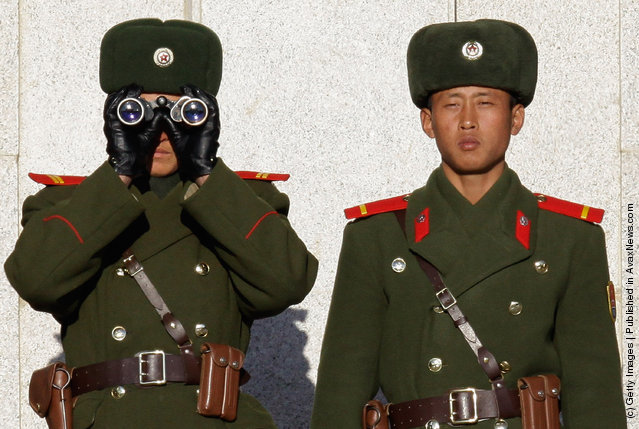
North Korean soldiers look at South Korea across the Korean Demilitarized Zone (DMZ), on December 22, 2011 in Panmunjom, South Korea. (Photo by Chung Sung-Jun/Getty Images)
A picture released by the North Korean Central News Agency (KCNA) shows Kim Jong-un convening an urgent operation meeting at 0:30 am on March 29, 2013 at an undisclosed location, in which he ordered strategic rocket forces to be on standby to strike US and South Korean targets at any time. (Photo by KCNA via EPA)
In this Friday, March 28, 2014 photo, singers of the Moranbong Band, Jong Su Hyang, foreground, and Pak Mi Kyong, left perform on their stage in Pyongyang, North Korea. Step aside, Sea of Blood Opera. North Korean leader Kim Jong Un's favorite guitar-slinging, miniskirt-sporting girl group, the Moranbong Band, is back. And these ladies know how to shimmy. (Photo by Jon Chol Jin/AP Photo)
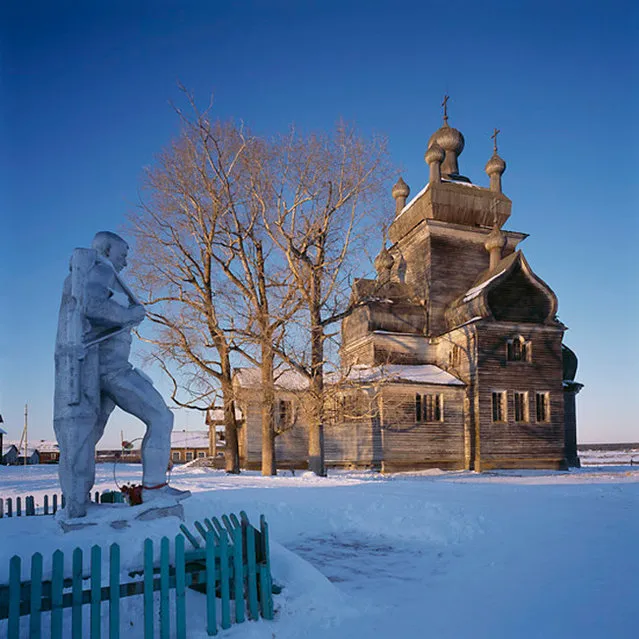
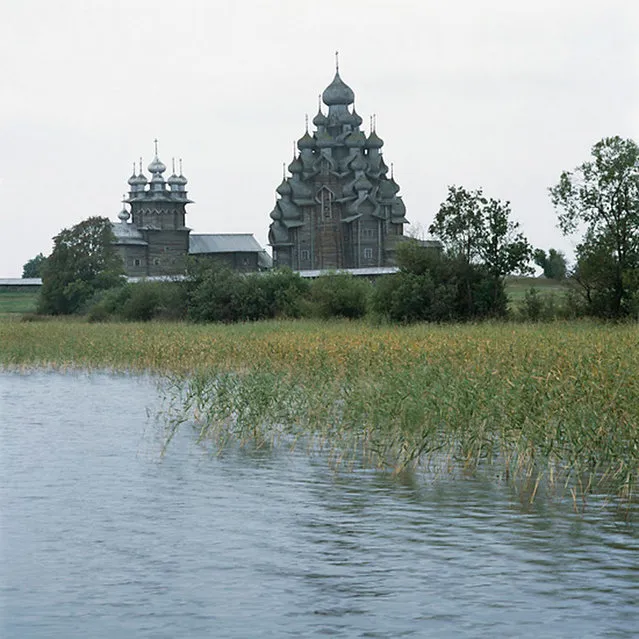
While communism, collectivism, worms, dry rot and casual looting failed to destroy the majestic wooden churches of Russia, it may be ordinary neglect that finally does them in. Dwindled now to several hundred remaining examples, these glories of vernacular architecture lie scattered amid the vastness of the world’s largest country. Just over a decade ago, Richard Davies, a British architectural photographer, struck out on a mission to record the fragile and poetic structures. Austerely beautiful and haunting, “Wooden Churches: Traveling in the Russian North” (White Sea Publishing; $132) is the result. Covering thousands of miles, Mr. Davies described how he and the writer Matilda Moreton tracked down the survivors from among the thousands of onion-domed structures built after Prince Vladimir converted to Christianity in 988.
While communism, collectivism, worms, dry rot and casual looting failed to destroy the majestic wooden churches of Russia, it may be ordinary neglect that finally does them in. Dwindled now to several hundred remaining examples, these glories of vernacular architecture lie scattered amid the vastness of the world’s largest country. Just over a decade ago, Richard Davies, a British architectural photographer, struck out on a mission to record the fragile and poetic structures. Austerely beautiful and haunting, “Wooden Churches: Traveling in the Russian North” (White Sea Publishing; $132) is the result. Covering thousands of miles, Mr. Davies described how he and the writer Matilda Moreton tracked down the survivors from among the thousands of onion-domed structures built after Prince Vladimir converted to Christianity in 988.
A participant takes photographs of his friend while climbing up the stairs during Sky Run, a vertical marathon event, held in the 123-story Lotte World Tower, in Seoul, South Korea on April 22, 2023. (Photo by Kim Soo-hyeon/Reuters)