Loading...
Done
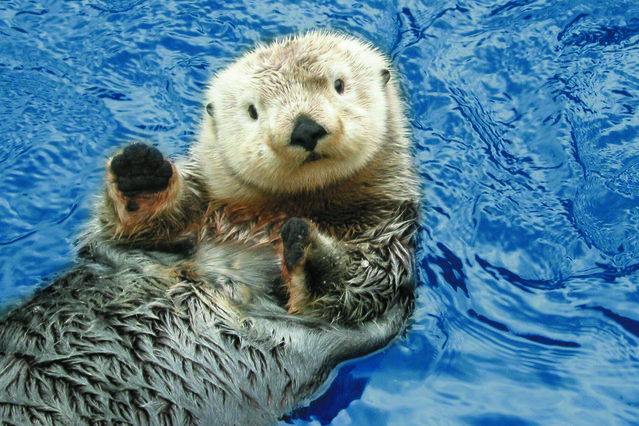
The Sea Otter

The sea otter (Enhydra lutris) is a marine mammal native to the coasts of the northern and eastern North Pacific Ocean. Adult sea otters typically weigh between 14 and 45 kg (31 and 99 lb), making them the heaviest members of the weasel family, but among the smallest marine mammals. Unlike most marine mammals, the sea otter's primary form of insulation is an exceptionally thick coat of fur, the densest in the animal kingdom. Although it can walk on land, the sea otter lives mostly in the ocean.
Details
26 Jan 2014 12:20:00
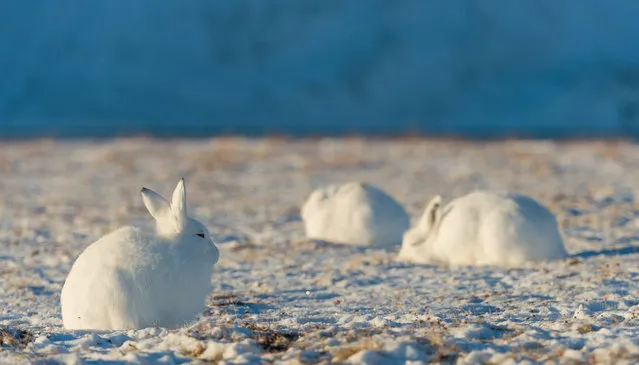
Arctic Hare

The arctic hare, or polar rabbit, is a species of hare which is adapted largely to polar and mountainous habitats. The arctic hare survives with a thick coat of fur and usually digs holes in the ground or under snow to keep warm and sleep. Arctic hares look like rabbits but have shorter ears, are taller when standing, and, unlike rabbits, can thrive in cold climates. They can travel together with many other hares, sometimes huddling with dozens or more, but are usually found alone, taking, in some cases, more than one partner. The arctic hare can run up to 60 kilometres per hour (40 mph). Its predators include the arctic wolf, arctic fox, and ermine.
Details
17 Mar 2014 13:56:00
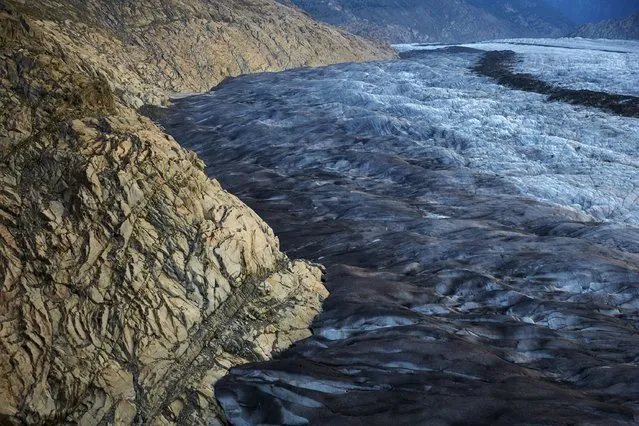
The Aletsch Glacier is pictured at dusk in Fiesch, Switzerland, August 11, 2015. (Photo by Denis Balibouse/Reuters)

The Aletsch Glacier is pictured at dusk in Fiesch, Switzerland, August 11, 2015. One of Europe's biggest glaciers, the Great Aletsch coils 23 km (14 miles) through the Swiss Alps – and yet this mighty river of ice could almost vanish in the lifetimes of people born today because of climate change. The glacier, 900 metres (2,950 feet) thick at one point, has retreated about 3 km (1.9 miles) since 1870 and that pace is quickening. (Photo by Denis Balibouse/Reuters)
Details
18 Oct 2015 08:05:00
Canadian slackliner Mia Noblet walks on a slackline (25mm wide, 3mm thick and 60m long) during “Tianmen Mountain Female High-Heeled Highline Challenge” at Zhangjiajie National Forest Park on May 27, 2018 in Zhangjiajie, Hunan Province of China. 23-year-old Canadian slackliner Mia Noblet became the first one who finished the challenge in 22 minutes and 36 seconds while 32-year-old French slackliner Mini Guesdon broke the record in 9 minutes and 24 seconds during her second attempt on Sunday. (Photo by VCG/VCG via Getty Images)

Canadian slackliner Mia Noblet walks on a slackline (25mm wide, 3mm thick and 60m long) during “Tianmen Mountain Female High-Heeled Highline Challenge” at Zhangjiajie National Forest Park on May 27, 2018 in Zhangjiajie, Hunan Province of China. 23-year-old Canadian slackliner Mia Noblet became the first one who finished the challenge in 22 minutes and 36 seconds while 32-year-old French slackliner Mini Guesdon broke the record in 9 minutes and 24 seconds during her second attempt on Sunday. (Photo by VCG/VCG via Getty Images)
Details
29 May 2018 07:07:00
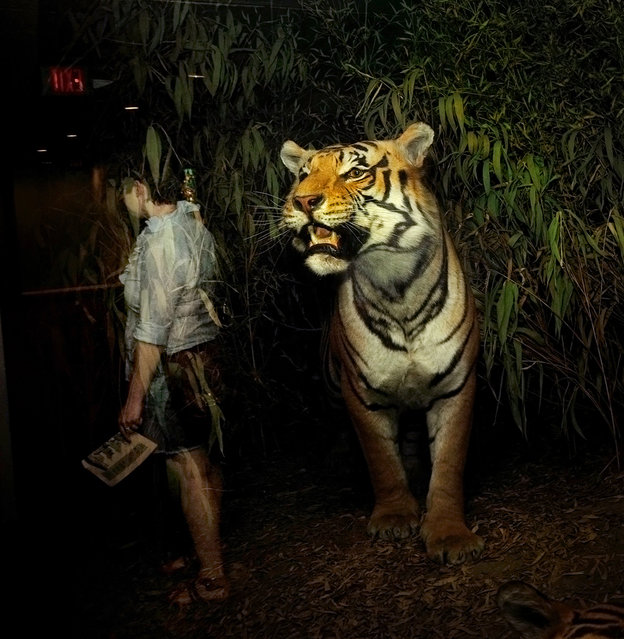
“Natural History”: Tiger. (Photo by Traer Scott)

“Natural History” is a series of completely candid single exposure images that merge the living and the dead to create allegorical narratives of our troubled co-existence with nature. Ghost-like reflections of modern visitors viewing wildlife dioramas are juxtaposed against the antique taxidermied subjects housed behind thick glass, their faces molded into permanent expressions of fear, aggression or fleeting passivity. After decades of over-hunting, climate change, poaching and destruction of habitat, many of these long dead diorama specimens now represent endangered or completely extinct species”. – Traer Scott. (Photo by Traer Scott)
Details
27 Oct 2014 11:39:00
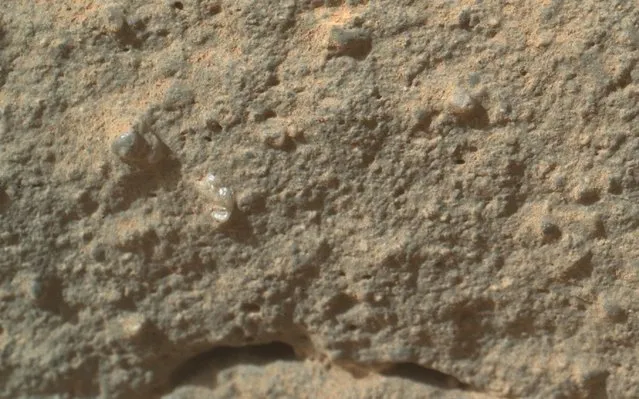
Scientists say that a “Martian flower”, seen here in an image from the Curiosity rover's Mars Hand Lens Imager, is a 2-millimeter-wide grain or pebble that's embedded in the surrounding rock. Another, darker-colored mineral grain can be seen above and to the left. (Photo by NASA)

“The scientists behind NASA's $2.5 billion Curiosity rover mission on Mars on Tuesday explained the nature of a tiny, gleaming "flower" embedded in Red Planet rock, and revealed where they'll be using the SUV-sized robot's drill for the first time”. – Alan Boyle via NBCNews.com

Photo: Scientists say that a “Martian flower”, seen here in an image from the Curiosity rover's Mars Hand Lens Imager, is a 2-millimeter-wide grain or pebble that's embedded in the surrounding rock. Another, darker-colored mineral grain can be seen above and to the left. (Photo by NASA)
Details
16 Jan 2013 11:12:00
Students stand on the roof of a wooden boat as haze blankets the Musi River while they travel to school in Palembang, on Indonesia's Sumatra island, September 10, 2015. (Photo by Reuters/Beawiharta)

Students stand on the roof of a wooden boat as haze blankets the Musi River while they travel to school in Palembang, on Indonesia's Sumatra island, September 10, 2015. Indonesia is investigating 10 firms over worsening forest fires that have created a blanket of smog over Southeast Asia, threatening them with sanctions if they are found responsible, a government minister said on Tuesday. The thick haze from Indonesia's Sumatra and Kalimantan islands has forced the repeated cancellation of flights in the area and pushed air quality to unhealthy levels in neighbouring Singapore and Malaysia. (Photo by Reuters/Beawiharta)
Details
11 Sep 2015 12:09:00
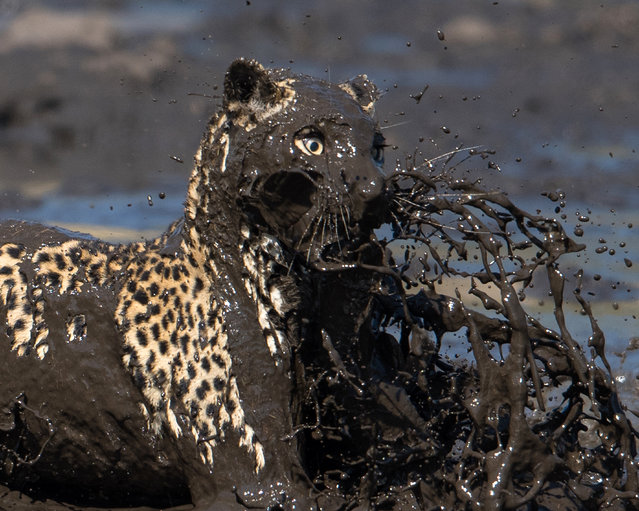
A leopard leaps into a muddy waterhole to catch a fish on August 13, 2015, in the Savuti Channel in Botswana. A leopard leaps into a muddy waterhole to catch a fish in the Savuti Channel in Botswana. The spotted predator stood poised waiting for a fish to appear – before leaping in ferociously with lightening reflexes. (Photo by Greatstock/Barcroft Media)

A leopard leaps into a muddy waterhole to catch a fish on August 13, 2015, in the Savuti Channel in Botswana. A leopard leaps into a muddy waterhole to catch a fish in the Savuti Channel in Botswana. The spotted predator stood poised waiting for a fish to appear – before leaping in ferociously with lightening reflexes. Coated in a layer of thick dark mud the big cat emerged from the water clutching the fish in its jaws. The fishing leopards of Savuti are known for their unique skills in catching fish – but have rarely been photographed. (Photo by Greatstock/Barcroft Media)
Details
06 Sep 2015 13:00:00